
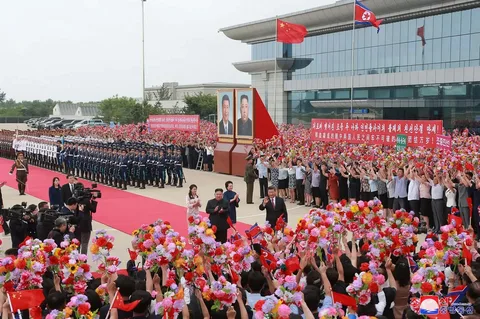
China and North Korea have once again moved closer diplomatically as discussions surrounding Xi in North Korea continue to attract global attention. Reports linked with Wsj North Korea coverage suggest that Beijing and Pyongyang are working toward strengthening political trust, economic cooperation, and regional coordination at a sensitive time for Asia.
The renewed focus on China-North Korea relations comes amid rising geopolitical tensions in East Asia. International observers believe that stronger engagement between President Xi Jinping and North Korean leader Kim Jong Un could reshape regional diplomacy and influence security discussions involving the United States, South Korea, and Japan.
Growing Attention on Xi in North Korea
Speculation about Xi in North Korea increased after diplomatic meetings and public statements from both countries highlighted “deeper understanding” and long-term friendship. Chinese officials emphasized the importance of maintaining stability on the Korean Peninsula while supporting regional peace efforts.
According to several international reports connected with Wsj North Korea discussions, Beijing views North Korea as an important strategic partner in the region. China has consistently supported diplomatic engagement rather than military escalation, especially during periods of increased sanctions and international pressure on Pyongyang.
Political analysts say China’s leadership is attempting to maintain influence in Northeast Asia while balancing relations with Western countries. The growing diplomatic coordination between Xi Jinping and Kim Jong Un reflects broader geopolitical competition taking place across the region.
Historical Background of China-North Korea Relations
China and North Korea share a long political and historical relationship dating back decades. Beijing was one of North Korea’s earliest allies and remains Pyongyang’s most important economic and diplomatic partner today.
The relationship strengthened during the Korean War when Chinese forces supported North Korea militarily. Since then, economic trade, political cooperation, and border connectivity have continued despite changing global politics.
In recent years, the relationship experienced occasional tensions because of North Korea’s missile testing programs and nuclear ambitions. However, diplomatic communication between Xi Jinping and Kim Jong Un gradually improved through high-level meetings and renewed cooperation agreements.
Experts believe China wants to avoid instability near its border while also preventing North Korea from becoming completely isolated internationally. This strategic concern continues to shape Beijing’s approach toward Pyongyang.
Why Xi in North Korea Matters Globally
The possibility of Xi in North Korea carries significant global implications. Any strengthening of China-North Korea ties is closely monitored by Washington, Seoul, Tokyo, and Western allies due to concerns about regional security and military balance.
China remains North Korea’s largest trading partner and one of the few countries with direct influence over Pyongyang. Because of this relationship, Beijing often plays a central role in diplomatic negotiations involving sanctions, nuclear discussions, and humanitarian support.
International observers linked with Wsj North Korea analysis argue that stronger diplomatic coordination between Xi Jinping and Kim Jong Un may also affect trade routes, military cooperation, and future negotiations with the United States.
Some experts believe China is attempting to counter growing American influence in Asia by reinforcing ties with neighboring allies. North Korea’s strategic geographic location makes the country highly important in regional power dynamics.
Economic Cooperation Between China and North Korea
Economic ties between China and North Korea continue to grow despite international sanctions affecting Pyongyang. Border trade, food supplies, fuel support, and infrastructure cooperation remain important components of their partnership.
Chinese businesses have historically played a major role in supplying goods to North Korea. While sanctions have reduced some trade activities, informal economic connections remain active through border regions.
Reports connected with Wsj North Korea coverage suggest that China may seek greater economic engagement with North Korea in sectors like transportation, agriculture, and industrial support. Analysts say Beijing wants to maintain economic stability in North Korea to avoid refugee crises or political instability near the Chinese border.
At the same time, China must carefully balance its international image while complying with certain global sanctions frameworks. This creates a complex diplomatic situation for Chinese policymakers.
Regional Reactions to Xi in North Korea
South Korea and Japan continue monitoring developments closely as reports about Xi in North Korea gain international attention. Officials in both countries remain concerned about North Korea’s missile activities and growing military capabilities.
The United States has also expressed concern over closer cooperation between Beijing and Pyongyang. American officials argue that stronger political support for North Korea could weaken international pressure aimed at limiting nuclear expansion.
However, Chinese authorities maintain that diplomatic engagement and dialogue are essential for maintaining peace on the Korean Peninsula. Beijing frequently calls for negotiations instead of confrontation.
Regional experts believe increased communication between China and North Korea could either reduce tensions through diplomacy or deepen divisions between global powers depending on future developments.
Statements From Officials and Analysts
Chinese officials recently described the relationship with North Korea as a “traditional friendship” built on mutual trust and cooperation. They emphasized the importance of maintaining regional stability and protecting shared interests.
North Korean state media also praised relations with China, highlighting the importance of strategic communication between Xi Jinping and Kim Jong Un. Officials from Pyongyang said stronger ties would support economic growth and national development.
Political analysts connected with Wsj North Korea reporting noted that China’s diplomatic approach is partly influenced by broader competition with the United States. As tensions between Beijing and Washington continue, North Korea may become increasingly important to China’s regional strategy.
Security experts additionally warn that future missile tests or military exercises could complicate diplomatic efforts despite current cooperation between the two countries.
Impact on Global Politics
The growing focus on Xi in North Korea could influence international diplomacy across Asia and beyond. China’s relationship with North Korea affects trade discussions, military alliances, and global security policies.
Countries in the region are carefully watching whether stronger cooperation will lead to renewed diplomatic talks or increased strategic rivalry. Any major political agreement between Beijing and Pyongyang may also affect future sanctions discussions at the United Nations.
Global investors and markets are similarly paying attention because geopolitical tensions in East Asia often impact international trade and economic confidence. Stability in the region remains important for global supply chains and manufacturing industries.
Experts believe future meetings between Chinese and North Korean leaders could shape diplomatic negotiations for years to come.
Future Expectations
Analysts expect diplomatic engagement between China and North Korea to continue in the coming months. While no major policy announcements have been confirmed publicly, both governments appear interested in maintaining strong communication and cooperation.
Some observers believe Xi Jinping may continue expanding China’s role as a regional mediator while supporting North Korea economically and politically. Others argue that increasing geopolitical tensions could make the partnership even more strategically important.
The international community will likely continue monitoring developments involving Xi in North Korea, especially regarding nuclear diplomacy, sanctions enforcement, and regional security cooperation.
Future meetings between Beijing and Pyongyang may ultimately determine how East Asian diplomacy evolves in the years ahead.
FAQs
Are LGBTQ allowed in North Korea?
North Korea does not officially recognize LGBTQ rights in the same way many Western countries do. There are no public laws supporting same-sex marriage or LGBTQ protections. Information about LGBTQ life inside North Korea is very limited because of the country’s closed political system and restricted media environment. Human rights organizations often state that open discussion about LGBTQ identity is extremely rare in North Korean society.
What does Xi think of Kim Jong Un?
Chinese President Xi Jinping has publicly described Kim Jong Un as an important partner in maintaining regional stability and strengthening China-North Korea relations. Both leaders have exchanged diplomatic messages emphasizing friendship, cooperation, and mutual respect. Analysts believe Xi views North Korea as strategically important for China’s security and geopolitical interests in East Asia.
Who is North Korea’s best friend country?
China is widely considered North Korea’s closest ally and most important international partner. The two countries maintain strong diplomatic, economic, and historical ties that date back decades. China provides significant trade support and political backing to North Korea while also encouraging regional stability and diplomatic engagement.