
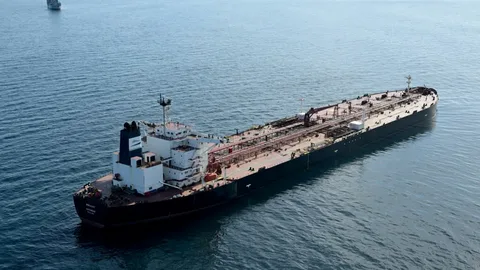
The Russian shadow fleet has moved from being a subject of specialist maritime analysis into mainstream international headlines — and the reasons are not difficult to understand. This network of oil tankers, assembled specifically to keep Russian crude oil moving despite Western sanctions, represents one of the most sophisticated sanction-evasion operations in modern trade history.
Recent seizures and enforcement actions by European authorities have pulled the shadow fleet further into public view. But tracking it, let alone stopping it, is proving to be a genuinely complex challenge one that involves opaque ownership structures, ships that disappear from tracking systems, and a global logistics apparatus that keeps adapting faster than regulators can map it.
Background: What Is a Shadow Fleet Tanker?
A shadow fleet tanker is not a secret in the way that phrase might initially suggest these ships are real, they move real oil, and some of them have been publicly identified. What makes them “shadow” is the deliberate opacity of how they operate.
These vessels typically involve layered ownership structures that make tracing the ultimate beneficial owner extremely difficult. They operate under flags of convenience registered in countries with minimal maritime oversight that ask few questions about the vessels flying their flag. They switch registrations frequently, sometimes multiple times within a single voyage. And they often use older ships that were approaching the end of their commercial lives when Western-linked oil companies would no longer touch them.
The Russian shadow fleet explained concept did not come from nowhere. It emerged as a direct response to the comprehensive package of Western sanctions imposed on Russia following the Ukraine conflict. Faced with restrictions on insurance, port access, and financial services for vessels carrying Russian oil, Russia and its trading partners constructed an alternative logistics system using ships that operate largely outside the framework those sanctions were designed to control.
In the maritime security community, these vessels are sometimes called “dark fleet” ships a reference to their tendency to operate with limited transparency and, frequently, with their tracking systems switched off.
How Many Russian Shadow Fleet Tankers Are There?
This is the question that drives the most analytical effort and produces the least certainty. Estimates for the total size of the Russian shadow fleet tankers network vary considerably depending on how analysts define membership in the fleet and what data sources they use to construct their counts.
The range most commonly cited by serious analysts runs from approximately 400 to over 600 vessels globally a number that reflects the scale of the operation while acknowledging significant uncertainty at the margins. The uncertainty is structural rather than incidental. Ships change ownership regularly. Tracking systems are disabled. Vessels move between different flag registries. What counts as a “shadow fleet” ship versus an independent operator making opportunistic decisions about cargo is not always clear.
Questions like “how many Russian shadow fleet are there” and searches for a “Russian shadow fleet tracker” reflect genuine public and institutional interest in understanding the scale of what is happening — but the honest answer from analysts who study this professionally is that no one has a fully reliable count, and the nature of the fleet is designed specifically to make counting it difficult.
Russian Shadow Fleet Sanctions and Enforcement
The response from Western governments to the shadow fleet has been escalating, and the enforcement actions of 2026 represent a more aggressive posture than was visible in earlier stages of the sanctions regime.
Russia shadow fleet sanctions now encompass a broader range of targets than just the ships themselves. Western governments particularly in Europe and the UK have been moving toward restricting insurance coverage for suspected shadow fleet vessels, limiting port access for ships that cannot demonstrate compliant documentation, and applying financial pressure on the intermediaries who enable the network’s logistics.
The recent tanker seizures that have generated headlines are part of this shift in enforcement posture. Authorities are no longer content to identify vessels as problematic and add them to lists they are actively detaining ships in ports where they can be reached. This sends a signal both to vessel operators and to the financial and logistics service providers whose participation makes the fleet function.
The challenge for enforcement agencies is that the shadow fleet has shown consistent capacity to adapt. When one mechanism for moving oil is closed off, another tends to emerge, often involving different intermediaries, different flags, and different routing that makes the same underlying activity harder to identify through the markers that previous enforcement targeted.
Shadow Fleet Russia Oil Trade Mechanism
Understanding how the shadow fleet Russia oil system actually works requires looking past the headline concept of “tankers avoiding sanctions” to the operational details that make it function.
The most common mechanism involves ship-to-ship transfers where oil is moved from a vessel that can be clearly linked to Russian origin to another vessel that carries less traceable documentation, making the cargo appear to have a different origin by the time it reaches its destination port. These transfers happen at sea, often in international waters, using tankers that have positioned themselves specifically for this purpose.
Cargo documentation practices are another key element. The rebranding of cargo to obscure its origin involves generating paperwork that describes the oil differently from how it would be documented if its true source were acknowledged. This is not unique to Russian oil cargo documentation fraud exists across multiple trade sectors but the scale at which it is being applied here is significant.
The older vessels involved in the fleet often operate without the insurance coverage that legitimate commercial tankers carry as standard. This creates maritime safety risks that extend beyond the sanctions enforcement question ships operating without proper insurance and without access to high-quality maintenance facilities are more likely to be involved in accidents, and the environmental consequences of a major spill involving an uninsured vessel in international waters are considerably more difficult to manage than they would be with a fully insured, regulated ship.
Russian Shadow Fleet Tracker and Map Challenges
The tools available for tracking the shadow fleet are real but limited, and the limitations are partly a product of design. The Russian shadow fleet tracker systems used by maritime intelligence firms and government agencies draw on satellite imagery, Automatic Identification System data, port movement records, and ship registration databases to piece together a picture of where vessels are and what they are doing.
The fundamental problem is that the most valuable information the location and cargo of a vessel that has turned off its AIS transponder — is precisely the information that cannot be obtained from AIS data. Ships that disappear from tracking systems do so because their operators have made a deliberate choice to disappear, and reconstructing their routes requires inference from satellite imagery and circumstantial evidence rather than direct observation.
The Russian shadow fleet map that analysts publish is therefore always partial. It shows what can be confirmed known vessels, documented port calls, satellite-confirmed ship-to-ship transfers while acknowledging that the full network extends beyond what is currently visible. Suspected routes between Russia and the primary destinations for shadow fleet oil India, China, parts of the Middle East, and various African ports can be traced with varying degrees of confidence, but treating any published map as comprehensive would be a mistake.
Shadow Fleet List and Global Monitoring
Maintaining an accurate shadow fleet list is one of the more technically demanding tasks in contemporary sanctions enforcement, and the challenge is not purely analytical it is also political and legal.
Some vessels have been publicly designated by Western governments and added to official sanctions lists. Once designated, they face clear legal restrictions on the services they can access from entities in jurisdictions that recognize those sanctions. But designation is a slow process relative to the speed at which the fleet adapts, and there is always a gap between ships that are suspected of involvement and ships that have been formally confirmed and designated.
Maritime organizations and intelligence firms publish their own assessments of shadow fleet membership based on behavioral indicators — patterns of movement, ownership changes, flag switches, and cargo behavior that collectively suggest a vessel is operating in the grey or dark end of the market. These assessments are useful but not legally binding, and they require continuous updating as the fleet evolves.
The dynamic nature of the shadow fleet means that a list accurate today may be substantially incomplete within months. This is not a reason to abandon the effort it is a reason to understand that global monitoring of the shadow fleet is an ongoing process rather than a project with a definable endpoint.
Expert and Official Views
The people who study the Russian shadow fleet most closely are fairly united in their assessment of its significance and the difficulty of the challenge it represents.
Maritime security experts describe the shadow fleet as one of the most sophisticated sanction-evasion mechanisms in modern trade history — not because any individual element is technically unprecedented, but because of the scale at which known techniques have been deployed and the speed with which the network has adapted to enforcement pressure. The combination of opacity at the vessel level, complexity at the ownership level, and flexibility at the routing level makes this genuinely difficult to disrupt comprehensively.
Western government officials who have spoken publicly about enforcement priorities have been explicit that the focus is expanding beyond ships to the ecosystem that enables them. Insurers who provide coverage to shadow fleet vessels, brokers who arrange the transactions, logistics companies that coordinate the transfers all of these are now being treated as potential enforcement targets rather than peripheral participants.
Some analysts have raised a different concern alongside the enforcement arguments: that aggressive disruption of the shadow fleet carries the risk of tightening global oil supply in ways that increase prices for importing countries who are not party to the sanctions regime and did not choose to bear the consequences of enforcing them. This is a real tension that policymakers are navigating without fully resolving.
Global Impact of the Russian Shadow Fleet
The shadow fleet’s existence has ripple effects that extend well beyond the immediate question of whether Russian oil revenue is being effectively constrained.
The complications it creates for international sanctions enforcement are significant. When a major economy builds an effective alternative logistics system around a comprehensive sanctions regime, it raises genuine questions about the long-term effectiveness of economic sanctions as a foreign policy tool questions that affect how other governments think about designing and enforcing sanctions in future contexts.
Global oil pricing has been affected by the fleet’s operation in ways that are difficult to isolate precisely. Russian oil reaching global markets even at discounted prices through shadow fleet channels contributes to global supply in ways that moderate what prices would otherwise be under a more complete embargo. Whether this is a feature or a bug depends on which side of the importing/exporting divide you sit on.
The maritime safety dimension is one that deserves more attention than it typically receives in coverage focused on the geopolitical angle. Older vessels without proper insurance coverage, operating in ways designed to avoid inspection, present genuine environmental and safety risks. A major spill or collision involving an uninsured shadow fleet tanker in international waters would create a humanitarian and environmental problem that the political context of why the ship was operating the way it was would not make easier to manage.
Conclusion
The Russian shadow fleet 2026 represents one of the clearest examples of how determined actors adapt to pressure in this case, building an entire parallel maritime logistics system to keep oil moving when the conventional system was closed to them.
For regulators and enforcement agencies, the fleet presents a challenge that is technical, legal, and political simultaneously. Improved tracking technology helps at the margins. Expanding enforcement to target the ecosystem of enablers rather than just the vessels themselves is changing the cost-benefit calculation for some participants. International cooperation on maritime enforcement is more developed than it was when the fleet began scaling up.
But the shadow fleet has shown consistent capacity to absorb enforcement pressure and keep adapting. The future of this contest will be determined by whether the regulatory response can evolve faster than the network it is trying to constrain and on the current evidence, that race is genuinely close.
FAQs
Who hit the Russian oil tanker?
Various incidents involving Russian-linked tankers have been reported across different regions and contexts, and responsibility differs significantly depending on the specific event being referenced. Some incidents involve formal enforcement actions seizures or detentions by Western maritime authorities exercising sanctions enforcement powers in ports where the vessels docked. Others involve accidents or operational incidents that reflect the safety risks associated with older, poorly maintained vessels operating outside normal regulatory frameworks. A smaller number of incidents have involved what appear to be deliberate attacks in contested maritime environments. Without knowing which specific incident is being referenced, it is not possible to give a single accurate answer the category of “Russian tanker incident” covers quite different types of events.
Who is the largest buyer of Russian oil?
India and China have consistently emerged as the primary destinations for Russian crude oil since Western sanctions significantly reduced European purchases. Both countries have continued importing Russian oil through channels that remain legal under their own regulatory frameworks, often at prices that reflect the discount Russia has had to accept to move oil through alternative channels. India in particular has substantially increased its share of Russian oil imports relative to pre-conflict levels, making it one of the most important markets keeping Russian oil revenue flowing. Other buyers in the Middle East, Africa, and parts of Asia have also participated in the trade, though typically at smaller volumes than the two largest purchasers.
How much of Russia’s Black Sea Fleet is left?
Russia’s Black Sea Fleet has sustained significant losses during the ongoing regional conflict, with multiple vessels including some high-profile naval assets being destroyed or damaged by Ukrainian strikes using sea drones, missiles, and other weapons. The exact current composition of what remains operational is difficult to confirm with precision, as military asset information is not fully disclosed by either side and independent verification is limited. What is publicly acknowledged is that the fleet’s operational capacity has been meaningfully degraded from its pre-conflict state, and Russia has had to adapt its naval posture in the Black Sea in response. For the most current and verified assessment, reporting from established defence analysts and institutions tracking the conflict provides the most reliable available picture.