
Pakistan’s food scene is going through a quiet revolution and it carries the bold aroma of gochujang and fermented kimchi. From Karachi’s trendy DHA Phase 8 eateries to the farmers’ markets of Islamabad, the Korean food trend Pakistan has moved far beyond a fleeting K-drama craze. It is now a full-blown culinary movement touching street food carts, restaurant tables, and home delivery boxes across the country.
Background: How K-Drama Sparked a Food Revolution
The Korean Wave, or Hallyu, landed in Pakistani living rooms through K-dramas and K-pop. Young audiences binge-watched shows on streaming platforms and fell in love not just with the storylines, but with the food being eaten on screen steaming bowls of ramen, sizzling meat on tabletop grills, and the vivid red of kimchi on every table.
That screen-to-street journey has been swift and remarkable. By 2023, Korean street food had already made its presence felt on Sharfabad food carts in Karachi. By 2024 and 2025, it had moved into fine-casual dining, home delivery, and dedicated Korean food product brands selling kimchi Pakistan-wide.
The Karachi Story: From Gimmick to Genuine Love
Banchan Changed Everything
For years, live Korean BBQ in Karachi was dismissed as a novelty. Diners would try it once out of curiosity driven largely by K-drama influence then move on. That changed when Banchan opened quietly beside the iconic BBQ Tonight on Karachi’s dining strip.
The restaurant took a different approach. It trained servers to educate diners about what they were eating, not just serve them. Complimentary side dishes or banchan in Korean arrived at every table: pickled radish, kimchi, spicy radish salad, seasoned bean sprouts, and more. Word spread through genuine dining experiences rather than social media hype, and soon Banchan was running on back-to-back reservations with no empty seats.
Magal: International KBBQ Comes to DHA
Magal, a well-known international Korean BBQ chain, has established its Karachi outpost at Murtaza Commercial, DHA Phase 8. Known globally for premium quality and generous portions, Magal brings a fully authentic KBBQ experience to Pakistan. The brand has already built a loyal following in the city among those who want international standard Korean dining without leaving home.
The Street Food Angle
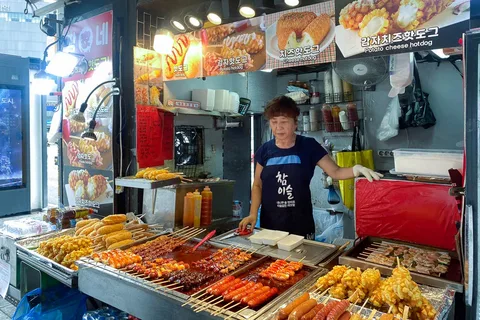
It is not all fine dining. In 2023, Korean food ruled Karachi’s street food scene, especially in the Sharfabad area, where food carts selling dumplings, ramen, and K-style fried chicken became a daily attraction. Affordable hotpot at prices as low as Rs. 350 has been spotted going viral on social media, showing that the Korean food trend in Pakistan is accessible to everyone not just those dining at upscale restaurants.
Korean Food Products in Pakistan: The Rise of Local Korean Brands
The Korean food trend extends well beyond restaurants. A growing number of brands are now producing and distributing Korean food products in Pakistan, making it possible to bring K-flavours into the home kitchen.
Guy Knows Food: Pakistan’s #1 Kimchi Brand
One of the most talked-about names in this space is Guy Knows Food (@GuyKnowsFood on Instagram). With over 88,000 Instagram followers and more than 1,800 verified five-star reviews, Guy Knows Food has positioned itself as Pakistan’s premier source for authentic, naturally fermented Kimchi Pakistan lovers can trust.
What separates this brand from imitators is the use of real Gochugaru imported Korean red chili pepper powder — rather than local chili powder that many brands use to fake the color. The kimchi is made fresh from scratch using premium ingredients: seaweed, fish sauce, shiitake mushrooms, fresh fruit from northern Pakistan, and more. No preservatives, no additives, no shortcuts.
Customers consistently praise both the taste and the health benefits. The natural fermentation process makes this kimchi rich in probiotics, supporting gut health in a way that processed alternatives cannot match.
The Kimchi Guys: Premium Kimchi for Every Budget
The Kimchi Guys is another local brand making waves in the Korean food products in Pakistan market. Available in hot and mild variants, their kimchi is priced at Rs. 2,200–2,300 for 300g reflecting the premium nature of authentically prepared Korean fermented vegetables. The brand is part of a broader wave of specialty food entrepreneurs who saw the gap in the market and moved quickly to fill it.
Where to Buy Kimchi in Islamabad
For those wondering where to buy kimchi in Islamabad, options have expanded considerably. Guy Knows Food ships nationwide and has been spotted at Islamabad farmers’ markets. Kimchi Pakistan also offers organic, homemade vegan kimchi with direct order availability in Islamabad. Specialty grocery stores like Xpress Grocers in Lahore’s MM Alam Road are stocking Korean kimchi as well, reflecting growing demand across all major cities.
Korean Restaurants in Islamabad: The Capital Catches Up
Karachi may have led the KBBQ charge, but Korean restaurants in Islamabad are gaining ground. The capital city, with its diplomatic community and internationally minded youth, has shown consistent appetite for East Asian cuisine. Restaurants like Arirang Korean Restaurant have built reputations for authentic dishes including bibimbap, bulgogi, and hearty kimchi stews.
Korean language courses at Islamabad’s National University of Modern Languages (NUML) have seen enrollment grow from just three students in 2006 to approximately 180 students per semester a clear signal that cultural interest in Korea runs deep in the capital. Students learning the language naturally become ambassadors for Korean culture, including its cuisine.
What Makes Korean Food So Popular in Pakistan?
The appeal of Korean cuisine in Pakistan is not accidental. Several factors align perfectly with Pakistani food culture and lifestyle.
Spice compatibility is one of the biggest reasons. Pakistani palates are built for bold, spicy flavors and Korean food delivers that through gochujang chili paste, fermented kimchi, and fiery tteokbokki rice cakes. The heat feels familiar, even if the flavor profile is entirely new.
The social dining experience also resonates strongly. Korean BBQ, where friends and family cook meat together at a tabletop grill, mirrors the communal eating culture that Pakistanis already love. Going out to eat is one of Karachi’s favorite pastimes, and Korean BBQ turns a meal into an event.
Health consciousness is another driver. Kimchi’s reputation as a probiotic superfood has found a receptive audience in Pakistan, especially among urban millennials and Gen Z who are increasingly aware of gut health and fermented foods.
Pakistan and South Korea: A Friendship That Helps
The growing popularity of Korean food products in Pakistan and Korean restaurants is supported by a warm diplomatic relationship. Pakistan and South Korea have maintained friendly ties since establishing consular relations in 1968, later upgrading to full diplomatic relations in 1983.
South Korea has invested heavily in Pakistan, with cumulative investment reaching $5.75 billion by 2020 across energy, construction, and manufacturing sectors. More recently, South Korea has expressed interest in transferring its industrial base to Pakistan, covering sectors including food, IT, minerals, and textiles. The two governments have signed multiple memoranda of understanding covering trade, technology, and cultural cooperation.
This bilateral warmth creates a favorable environment for Korean cultural exports including food to thrive in Pakistan. The growing Pakistani community in South Korea (estimated at around 18,000–20,000 people) also acts as a cultural bridge, with many returning home and bringing K-food knowledge and tastes with them.
Impact: From Trend to Transformation
The Korean food trend in Pakistan is no longer just a trend it is becoming part of the country’s evolving food identity. Fusion dishes are emerging that marry Korean and Pakistani culinary traditions. Kimchi parathas, Korean BBQ-inspired rolls, and K-style fried chicken with desi spice tweaks are appearing on creative menus.
The economic impact is equally significant. Local Korean food brands are creating small businesses and employment. Restaurants are driving reservation-led dining culture, pushing quality standards upward across Karachi and other cities. Food delivery apps are now listing Korean restaurants as a distinct category, confirming mainstream status.
Conclusion: What Comes Next?
The Korean food trend in Pakistan shows no signs of slowing down. As more Korean restaurants in Islamabad and Karachi open, as Korean food products in Pakistan become more widely available, and as platforms like The Kimchi Guys, Guy Knows Food, and Kimchi Pakistan continue to grow, Korean cuisine will only deepen its roots in the country.
The next wave is likely to bring more fusion creativity, wider availability of Korean ingredients in supermarkets, and possibly the arrival of more international Korean restaurant chains following Magal’s lead. Pakistan’s food culture has always been bold, communal, and adventurous and Korean food fits that spirit perfectly.
FAQs
Is South Korea friendly to Pakistan?
Yes, South Korea and Pakistan maintain warm and cooperative diplomatic relations. Formal ties were established in 1983, but the friendship dates back further Pakistan provided aid to Korea during the Korean War in the early 1950s. Today, both countries cooperate on trade, technology, defense, and cultural exchange. South Korea is also one of Pakistan’s significant investment partners, with cumulative investment exceeding $5.75 billion.
Which food is most popular in Pakistan?
Pakistani cuisine is dominated by rich, spiced meat dishes. Biryani is widely considered the national favorite, followed by nihari, karahi, kebabs, and haleem. Street food staples like gol gappay, chaat, and samosas are also enormously popular. In recent years, international cuisines particularly East Asian have gained traction in urban centers.
Which Korean food is most popular?
Globally and in Pakistan, Korean BBQ (KBBQ) tops the popularity charts. Beyond that, kimchi (fermented spiced vegetables), ramen/ramyun (spicy noodle soup), bibimbap (mixed rice bowl), tteokbokki (spicy rice cakes), and Korean fried chicken are the dishes most commonly found at Pakistani Korean restaurants and most searched online by Pakistani food lovers.