
The Europe Heatwave 2026 is here and it’s hitting hard. Temperatures are climbing to dangerous levels across multiple countries, authorities are issuing urgent warnings, and millions of people are dealing with heat conditions that go well beyond uncomfortable.
France, Spain, Italy, Portugal the heat wave Europe is spreading across the continent and creating real problems for public health, infrastructure, and power systems simultaneously.
Meteorologists watching the heatwave in Europe now say this could end up being one of the most significant weather events of the entire year. Temperature records are being tested daily, and forecasts suggest the extreme conditions aren’t going anywhere soon.
Background
Europe’s summers have been getting more brutal for years. Scientists have been consistent on why: climate change is making heatwaves more frequent, more intense, and harder to shake.
The Europe heatwave 2026 predictions put out by weather agencies earlier this year flagged above-average temperatures across southern and western Europe. That warning has now become reality, with multiple countries logging temperatures that are well outside normal ranges for June.
The culprit driving the current pattern is a persistent high-pressure system what meteorologists call a heat dome. It traps warm air over a large area and effectively blocks cooler weather from getting through. Once one of these systems locks in, it tends to stay.
Extreme Temperatures Spread Across Europe
The Europe heatwave 2026 temperature readings coming in from across the continent are alarming. Cities in Spain, France, Italy, Greece, and Portugal are recording figures far above what’s typical for this time of year.
Some areas are approaching or already exceeding 40 degrees Celsius. Local authorities have been clear in their advice: stay indoors during peak afternoon hours, drink water consistently, and don’t underestimate the heat.
Hospitals and emergency services are bracing for a surge in heat-related cases. The groups most at risk are the ones who always are elderly residents, young children, and anyone with underlying health conditions.
As the heatwave in Europe now grinds on, governments are setting up cooling centers and pushing public health guidance out through every available channel. The goal is simple: keep people out of harm’s way before the heat does damage.
Power Grids and Infrastructure Under Pressure
The heat wave Europe isn’t just a health story it’s an infrastructure story too. Air conditioning and cooling systems running flat out across entire countries put enormous strain on energy networks, and that pressure is already showing.
Localized disruptions have been reported in several regions, and concerns about grid stability are growing. Transportation is feeling it as well railway tracks, roads, and public infrastructure don’t handle sustained extreme heat particularly well.
Officials are keeping a close watch on essential services, and emergency response teams have been deployed where temperatures are expected to stay at dangerous highs. Rural communities are also struggling water shortages and elevated wildfire risk are adding another layer of difficulty beyond the urban centers.
Europe Heatwave 2026 Map Shows Widespread Impact
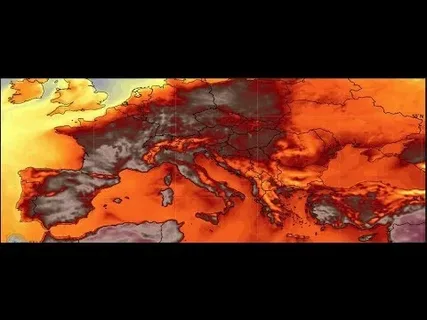
Take one look at the Europe heatwave 2026 map and the scale of this event becomes clear. The most intense heat is concentrated across southern and western Europe, but it’s pushing northward into central Europe and even parts of the north that don’t typically see temperatures like this.
Meteorological agencies have placed large portions of Spain, France, Italy, and Portugal under red and orange warning zones. The sheer geographic spread of those alerts says something important about how climate-related extremes are evolving they’re covering bigger areas than they did even a decade ago.
Forecasters say the Europe heatwave 2026 map will keep shifting as atmospheric patterns change over the coming days. No one is calling an all-clear yet.
Health Concerns Rise Across the Region
Public health officials are watching the human toll closely. The Europe Heatwave 2026 creates real medical risks dehydration, heat exhaustion, and heat stroke can develop faster than people expect when temperatures stay this high for this long.
The advice from medical experts is practical and worth repeating: drink water regularly, avoid being outdoors during the hottest part of the afternoon, and check in on elderly neighbors and family members who may not be managing well.
The heatwave has also put a spotlight on heat stroke in Pakistan 2026, where extreme temperatures have been battering communities for months. Climate experts point to both situations as evidence that dangerous heat is no longer a regional problem it’s a global one.
Health agencies across Europe are continuing to push guidance aimed at reducing hospital admissions and keeping fatalities as low as possible.
Climate Scientists Explain the Causes
Climate researchers are pointing to two layers of explanation for the current heat wave Europe event. The immediate trigger is the high-pressure system sitting stubbornly over the continent and refusing to move. That’s the short-term meteorology.
The longer-term picture is climate change. Scientists have been clear for years that rising global temperatures create the conditions for heatwaves to become more extreme and more persistent. Europe, research consistently shows, is warming faster than most other regions on the planet which means the probability of summer temperatures breaking records keeps going up.
The uncomfortable conclusion is that what’s happening right now may not be exceptional for much longer. Unless greenhouse gas emissions come down significantly, events like this are likely to become the norm rather than the exception.
Public Discussion Grows Online
The heatwave has taken over online conversation across Europe. Searches for Europe heatwave 2026 Reddit have spiked as people look for real-time updates, local reports, and community discussion about what’s happening on the ground.
Social media is full of it photographs of scorched landscapes, thermometer readings, coping tips, and a lot of frustration about the heat and what it represents. Discussions about climate change and infrastructure resilience are running alongside the more immediate conversation about staying cool.
Searches for Europe heatwave 2026 Wikipedia have climbed too, as people look for historical context — how does this compare to previous European heatwaves, and what happened last time things got this bad?
The level of online engagement reflects something genuine: people are concerned, and not just about the immediate discomfort.
Economic Impact of the Heatwave
The economic damage from the Europe Heatwave 2026 is still being tallied, but some sectors are already feeling it sharply. Agriculture is taking some of the hardest hits prolonged heat combined with limited rainfall is a bad combination for crops and livestock alike.
Farmers in several countries have raised concerns about reduced yields and the cost of increased irrigation. Water authorities are watching reservoir levels with growing anxiety as demand climbs and natural replenishment slows.
Tourism is a mixed picture some destinations keep drawing visitors, but extreme temperatures push people away from outdoor activities and put real pressure on local services. Businesses are rearranging work schedules to keep employees safe during peak heat hours, adding another layer of economic disruption.
What Experts Expect Next
The Europe heatwave how long will it last question is the one everyone is asking, and meteorologists are updating their models daily trying to answer it.
Current forecasts suggest some regions could start seeing relief within the next week or so, while others are likely to stay under elevated temperatures for longer. It depends heavily on when the atmospheric circulation pattern finally shifts and that’s difficult to predict precisely.
Experts are also flagging something people might not think about: even once temperatures drop, the effects of this heatwave won’t just disappear. Agricultural losses, public health impacts, and infrastructure damage all take time to recover from. The immediate emergency may pass before the full consequences are understood.Authorities are urging residents to keep following official weather updates rather than assuming the worst is over.
Conclusion
The Europe Heatwave 2026 has cemented itself as one of the defining climate events of the year. Record temperatures, health emergencies, and stressed infrastructure have arrived simultaneously and governments across the continent are managing all of it at once.
Beyond the immediate crisis, the heatwave is forcing a harder conversation about climate adaptation and long-term resilience. These events are becoming more frequent, more intense, and more widespread. What Europe is experiencing right now isn’t just a bad summer it’s a preview of what an insufficiently addressed climate future looks like.
Weather agencies, health services, and emergency responders remain on high alert. For millions of Europeans, the priority right now is simply getting through the heat safely and hoping the forecasts for relief prove accurate.
FAQs
How many people died in Europe’s heat wave?
The full death toll from the Europe Heatwave 2026 is still being assessed. Heat-related fatalities take time to calculate accurately because extreme heat often accelerates or worsens existing medical conditions rather than being recorded as a direct cause of death. Health authorities across Europe are monitoring hospital admissions and mortality data closely as the heatwave continues.
How long will the Europe heat dome last?
Meteorologists say the current heat dome could remain in place for several more days, though the timeline varies by region. Some countries may begin seeing temperatures ease within a week, while others are likely to remain under above-average heat for longer. Forecasts are being updated regularly as atmospheric conditions evolve.
What is causing the heatwave in Europe?
The immediate cause is a powerful high-pressure system trapping hot air across the continent and blocking cooler weather from moving in. But climate scientists are equally emphatic about the bigger picture: long-term climate change is raising global temperatures in ways that make extreme heat events like this one more likely, more severe, and more prolonged. Both factors are working together to produce what Europe is experiencing right now.