
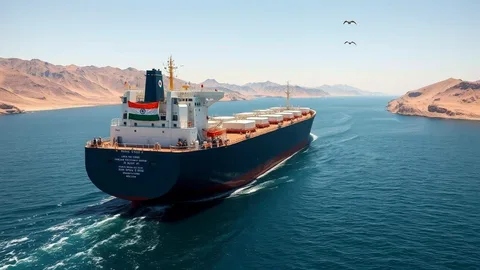
Oman has announced the opening of temporary Strait of Hormuz shipping routes to support the safe movement of commercial vessels through one of the world’s most strategically important waterways. The announcement comes at a time of heightened regional tensions and growing international concern over maritime security in the Gulf.
Officials emphasized that no tolls will be charged for ships using the temporary routes. The decision is aimed at maintaining the uninterrupted flow of global trade while reducing uncertainty among shipping companies, energy markets, and international investors. The development has quickly become a major topic in global Strait of Hormuz News coverage.
Oman Announces Temporary Shipping Routes
The government of Oman said the temporary Strait of Hormuz shipping routes were established to facilitate maritime traffic and prevent disruptions in international commerce. The routes are intended to support commercial vessels traveling through the narrow passage that connects the Persian Gulf to the Gulf of Oman and the Arabian Sea.
Maritime authorities stated that the temporary channels were designed in coordination with regional and international stakeholders. The move is expected to improve navigation safety while providing additional flexibility for shipping companies operating in the area.
The announcement has attracted significant global attention because the Strait of Hormuz remains one of the most important energy corridors in the world. A large share of global oil and liquefied natural gas exports passes through this strategic waterway every day.
Why the Strait of Hormuz Matters
A look at any Strait of Hormuz map highlights the significance of the narrow waterway. Located between Iran and Oman, the strait serves as a vital route connecting Gulf energy producers to global markets.
Countries including Saudi Arabia, the United Arab Emirates, Kuwait, Iraq, and Qatar depend heavily on the strait for exports. Any disruption to maritime traffic can have immediate consequences for global energy prices and supply chains.
Shipping analysts note that even small security concerns in the area can lead to increased insurance costs, higher transportation expenses, and volatility in international oil markets. This explains why developments involving the Strait of Hormuz news open to commercial traffic receive worldwide attention.
No Tolls Will Be Charged
Omani officials made it clear that vessels using the temporary shipping routes will not face any new fees or transit charges. The statement was intended to reassure international shipping companies and counter speculation regarding possible maritime toll systems.
Recent discussions on social media and financial platforms had fueled rumors about a potential Strait of Hormuz toll crypto payment mechanism or alternative digital payment systems for vessel transit. However, officials indicated that no such arrangements are being implemented.
The clarification also addressed online conversations regarding a possible Strait of Hormuz toll yuan settlement system. According to available information, the temporary routes are open for commercial navigation without any transit tolls regardless of the currency used in international trade transactions.
Industry observers say the announcement is likely to ease concerns among ship operators that additional costs could be imposed during a period of heightened regional uncertainty.
Debate Over Potential Hormuz Tolls
The issue of transit fees gained international attention after reports and political discussions raised questions about whether any country could impose charges on vessels passing through the waterway.
The idea of a Hormuz toll booth became a widely discussed topic across media platforms and policy circles. Experts pointed out that the Strait of Hormuz is recognized as an international transit route governed by international maritime law.
Many legal analysts argue that unilateral toll systems could face significant legal and diplomatic challenges. As a result, Oman’s decision to emphasize free passage through the temporary routes has been welcomed by many stakeholders in the maritime sector.
The latest Strait of Hormuz News suggests that maintaining freedom of navigation remains a priority for regional governments and international shipping organizations.
International Reactions
Governments and industry groups have closely monitored developments surrounding the waterway. Several countries dependent on Gulf energy supplies have expressed support for measures designed to maintain safe and uninterrupted shipping operations.
Energy-importing nations in Asia and Europe remain particularly sensitive to changes in the Strait of Hormuz because of their reliance on oil and gas shipments from the Gulf region. Market analysts say stability in the waterway is essential for preventing sudden disruptions in global energy supplies.
The announcement from Oman has therefore been viewed as a positive step toward ensuring continuity in maritime trade while reducing the risk of commercial bottlenecks.
Hormuz Toll Trump Debate Resurfaces
Political discussions surrounding the strait have also revived references to previous comments made by US political figures regarding maritime security and international shipping responsibilities.
The phrase Hormuz toll Trump has reappeared in public discussions as commentators revisit past debates about protecting shipping lanes and sharing the costs of maritime security operations.
While no new toll system has been introduced, the renewed conversation highlights the strategic importance of the waterway and the broader geopolitical issues surrounding Gulf security.
Experts note that discussions about maritime security funding often emerge during periods of regional tension, particularly when global energy supplies are perceived to be at risk.
Impact on Global Oil Markets
The opening of temporary Strait of Hormuz shipping routes could help reassure energy traders and investors concerned about potential disruptions. Oil prices often react quickly to developments affecting the strait because of its role in global energy transportation.
Market participants generally view uninterrupted shipping access as a stabilizing factor. Reduced uncertainty can help limit price volatility and support confidence in global supply chains.
Financial analysts believe that the absence of transit fees is also significant. Additional shipping costs could have increased transportation expenses and potentially contributed to higher energy prices worldwide.
By confirming that no tolls will be charged, Oman has provided greater clarity to shipping operators and commodity markets.
Regional Security Considerations
Security remains a central concern in the Gulf region. Naval forces from multiple countries continue to monitor maritime traffic and support safe navigation through key shipping corridors.
The temporary routes announced by Oman are expected to complement existing maritime safety measures. Shipping companies are likely to continue following guidance from maritime authorities regarding route planning and risk management.
Experts caution that regional developments can evolve rapidly. As a result, governments and commercial operators will continue monitoring the situation closely in the coming weeks.
Nevertheless, the latest Strait of Hormuz news open announcement represents an effort to reduce uncertainty and support international trade during a sensitive period.
Economic Importance Beyond Energy
Although the Strait of Hormuz is most commonly associated with oil exports, the waterway also supports a wide range of commercial shipping activities. Consumer goods, industrial products, food supplies, and manufactured items all move through the region.
Any prolonged disruption could affect numerous industries beyond the energy sector. Therefore, ensuring the efficient operation of shipping routes remains important for both regional economies and global commerce.
Business leaders have welcomed measures that improve predictability and reduce the risk of delays. Many believe that maintaining open navigation channels is essential for sustaining international economic growth.
Looking Ahead
The opening of temporary shipping routes by Oman marks a significant development in regional maritime management. By allowing commercial vessels to continue operating without additional fees, authorities hope to maintain confidence in one of the world’s most important trade corridors.
While geopolitical tensions remain a concern, the decision provides reassurance to shipping companies, energy markets, and governments that depend on reliable access through the Strait of Hormuz.
Future developments will likely focus on regional security, maritime cooperation, and efforts to ensure that international shipping can continue safely and efficiently through the strategic waterway.
FAQs
Has Iran agreed to open the Strait of Hormuz?
Iran has repeatedly stated that the Strait of Hormuz remains an important international waterway, but discussions regarding access and security often depend on broader regional and geopolitical developments. Recent reports have focused on efforts by regional countries, including Oman, to maintain stable shipping operations. Any long-term arrangements involving the strait typically require coordination among multiple stakeholders and maritime authorities.
Who is Iran’s biggest ally?
Iran maintains strategic relationships with several countries and regional partners. Analysts often point to its close cooperation with countries such as China and Russia in areas including diplomacy, trade, and regional security. However, alliances can vary depending on the issue being discussed, and international relationships continue to evolve in response to changing geopolitical conditions.
Can Strait of Hormuz be bypassed?
The Strait of Hormuz is difficult to fully bypass because it serves as the primary maritime outlet for many Gulf energy producers. Some countries have developed pipelines and alternative export routes to reduce dependence on the strait, but these alternatives generally cannot replace its full capacity. As a result, the waterway remains one of the most important shipping corridors for global energy and trade flows.