
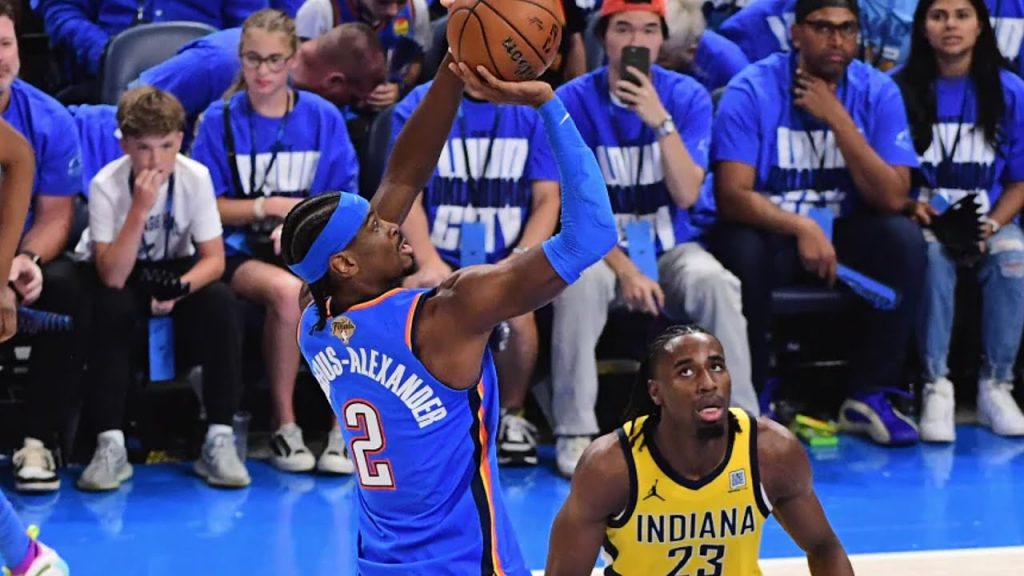
Oklahoma City Thunder bounced back in a big way on Wednesday night. Shai Gilgeous-Alexander, the NBA’s back-to-back MVP, scored 30 points to lead the Thunder to a 122-113 victory over the San Antonio Spurs in Game 2 of the Western Conference Finals, evening the series at 1-1. But the win came with a serious price on both sides.
Background: A Series Born From an Instant Classic
Game 1 had set an impossibly high bar. The Spurs had defeated the Thunder 125-118 in a double-overtime instant classic, powered by Victor Wembanyama’s 41 points and 24 rebounds a performance that put him alongside Wilt Chamberlain as the only players ever to post 40+ points and 20+ rebounds in a Conference Finals debut.
That historic loss lit a fire under Oklahoma City. Thunder head coach Mark Daigneault took the long view: “Ultimately, my job is to keep the team present and to help the team find the next solution. I can’t do that if I’m drunk on emotion, win or lose.” His team came out Wednesday with a clear mission and delivered.
SGA Answers the Bell
After a dismal Game 1 shooting display, Gilgeous-Alexander reminded everyone exactly why he is a two-time MVP. After shooting just 30.4% from the floor and posting a game-worst minus-15 in Game 1, Gilgeous-Alexander bounced back to shoot 50% and finished plus-14 in Game 2, finishing with 30 points, 9 assists, 2 blocks and 1 steal.
Gilgeous-Alexander also hit a deep jumper in the final minute to seal the game and send the series to San Antonio all tied up. “The guys brought it tonight,” he said. “Knowing what it would have meant if we lost this one, we brought the energy from the jump.”
It was the kind of composed, dominant performance that defines elite playoff performers.
Hartenstein Steps Up, Spurs’ Defense Shifts
One of the key tactical adjustments in Game 2 was how Oklahoma City deployed Isaiah Hartenstein against Wembanyama. The Thunder opted to put Hartenstein on Wembanyama, and although the Spurs’ superstar still posted 22 points on 8-of-16 shooting with 17 rebounds, 6 assists and 4 blocks, it was a significant step down from his historic Game 1 output.Hartenstein racked up 8 offensive rebounds and 11 total in the game a level of physicality that helped prevent Wembanyama from fully taking over, aided perhaps by some more passive officiating compared to Game 1.
For a player who had barely featured in Game 1, it was a massive bounce-back night.
Spurs’ Turnovers Prove Costly
San Antonio’s biggest issue in Game 2 was the turnover battle. Spurs coach Mitch Johnson acknowledged the problem postgame: “When you’re down some of your primary creators and initiators, it causes extra strain. We’ll just have to be sharper in that area because it’s tough fully loaded against these guys 27 points off turnovers is not a winning formula.”Through the first three quarters alone, Oklahoma City scored 23 points off 18 Spurs giveaways, with seven coming from Stephon Castle. San Antonio’s backcourt depth issue became a glaring problem as the game wore on particularly with Fox already sidelined.
Castle Shines With a Highlight-Reel Night
One bright spot for the Spurs was Stephon Castle. Castle led the Spurs in scoring with 25 points, including what many are calling the dunk of the postseason.
Castle drove from beyond the arc, launched himself over Isaiah Hartenstein and threw down a hammer dunk over the Thunder big man one of the nastiest plays of this or any postseason. He brought energy and fearlessness, even as San Antonio’s injuries mounted.
Injuries: The Storyline That Could Define This Series
The biggest shadow over Game 2 was the injury news from both benches. Spurs rookie Dylan Harper and Thunder star Jalen Williams both left Game 2 early and were ruled out for the remainder of the night, both dealing with apparent hamstring and leg issues.Williams had already missed six games in these playoffs with a left hamstring strain and suffered a recurrence in the first half of Game 2. For Oklahoma City, losing Williams in a Conference Finals is deeply concerning.
Harper, meanwhile, was already filling in for De’Aaron Fox who has missed both games with lingering ankle soreness and now the Spurs face even greater uncertainty heading into Game 3.No return timelines have been provided for either Williams or Harper, leaving both franchises in a worrying state of uncertainty.
Impact: Series Heading to San Antonio Wide Open
What started as a potential OKC blowout series has quickly become anyone’s game. The Thunder improved to 14-5 after a loss this season, having beaten the Spurs for just the second time in seven meetings this year. Yet San Antonio now gets the enormous advantage of heading home.
The Spurs won Game 1 on OKC’s court. Game 3 on their home floor, with the crowd behind them, gives San Antonio a genuine opportunity to retake control if their injury situation stabilizes.
Quotes
Gilgeous-Alexander summed up the Thunder’s mindset after the win: “The guys brought it tonight. Knowing what it would have meant if we lost this one, we brought the energy from the jump.”Coach Daigneault kept it measured: “I try to really discipline myself so that I can do my job as well as I can keeping the team present and helping them find the next solution.”
Conclusion: Game 3 on Friday Could Be the Turning Point
Game 3 of the Western Conference Finals is scheduled for Friday, May 22 at Frost Bank Center in San Antonio. With injuries threatening both rosters and the series perfectly level, the pressure shifts massively to the home team.If Wembanyama can again dominate and the Spurs solve their turnover problem without Fox and possibly without Harper, this series may already be slipping away from Oklahoma City. If OKC gets healthy and SGA keeps playing at this level, the defending champions could quickly flip momentum again.
One thing is certain: this is shaping up to be the series of the postseason.
FAQs
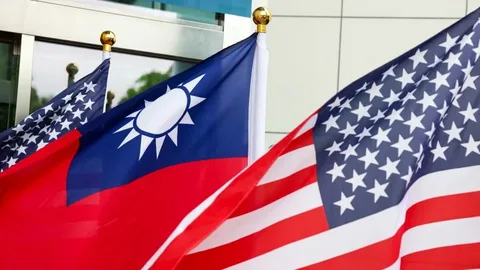
Why is Taiwan so important for the USA?
Taiwan is strategically vital for the U.S. both economically and militarily. It produces the world’s most advanced semiconductors, making it essential to global tech supply chains. Its location in the Indo-Pacific also sits along critical shipping routes, and its security directly impacts U.S. relationships with Japan, South Korea, and other regional allies.
Does Taiwan have U.S. support?
Yes. While there is no formal U.S.-Taiwan defense treaty, the Taiwan Relations Act obligates the United States to provide Taiwan with defensive weapons and treat any forceful change to its status as a serious concern to U.S. security. The U.S. has sold billions in arms to Taiwan and regularly patrols the Taiwan Strait.
Why is the U.S. defending Taiwan?
The U.S. supports Taiwan for strategic, democratic, and economic reasons. Taiwan’s semiconductor dominance is critical to the global economy. Its democratic governance represents a values-based interest for Washington. And allowing China to take Taiwan by force would fundamentally alter the balance of power in the Indo-Pacific something U.S. policy has sought to prevent for over four decades.