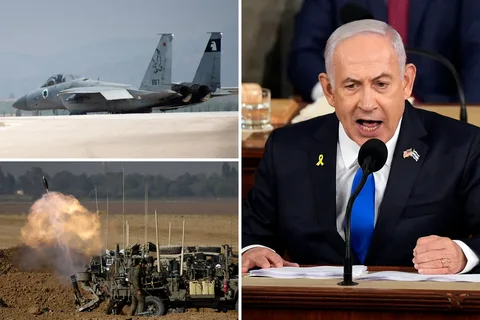

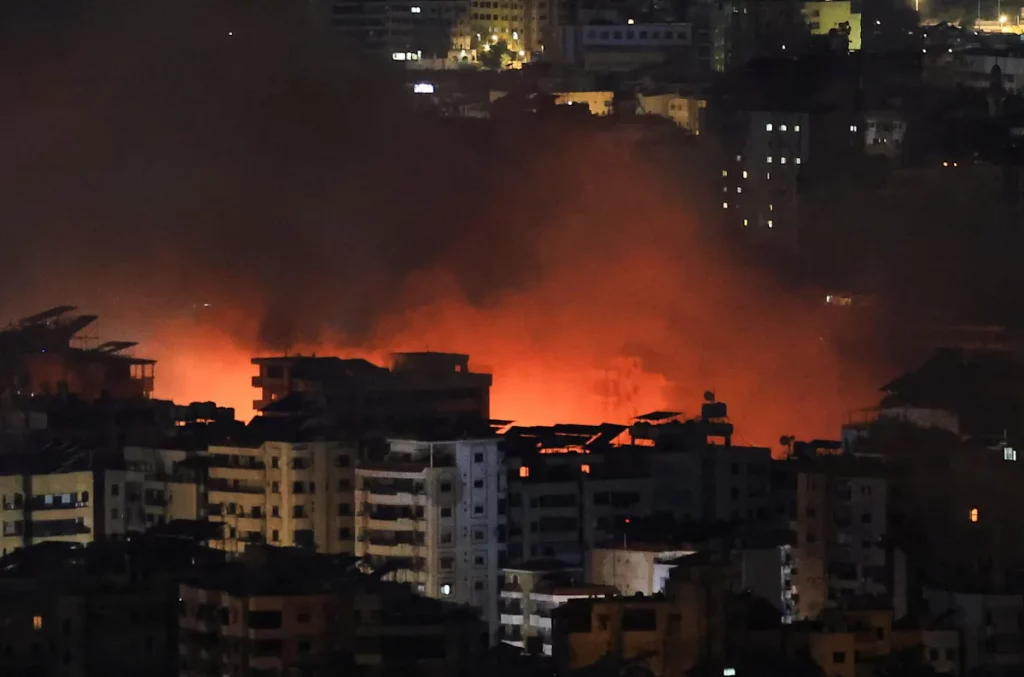
The Middle East escalation 2026 has reached a dangerous new level as Israel launched a series of deadly airstrikes on southern Lebanon on May 25, killing at least three people and ordering residents of ten villages to evacuate immediately. Israeli drone attacks targeted vehicles on key highways in the Nabatieh area, with the Lebanese National News Agency confirming the fatalities. The strikes come despite a US-mediated ceasefire that has been largely ignored on the ground, deepening fears of a wider regional war.
Background: How the Middle East Escalation 2026 Began
The Middle East escalation 2026 did not begin overnight. It is rooted in months of mounting tensions between Israel, Iran, and their respective allies across the region.
On February 28, 2026, the United States and Israel jointly launched Operation Epic Fury a series of coordinated military strikes against Iran that opened with the killing of Iran’s Supreme Leader Ali Khamenei and triggered a massive wave of retaliatory missiles and drones from Iran across the entire Middle East. The operation marked the beginning of the most serious regional conflict in decades.
The attacks have left enormous destruction in their wake, with thousands of people killed in Iran, Lebanon, Israel, and Gulf Arab states, and millions more displaced across the region. This broader backdrop explains why the Middle East escalation 2026 continues to intensify week after week, with Lebanon becoming one of the most active and deadly frontlines.
Latest Details: Strikes, Evacuations, and a Broken CeasefireIsraeli Strikes Kill Three in Southern Lebanon
On the morning of May 25, 2026, Israeli drone attacks struck vehicles on the Kafr Rumman-Jarmaq highway and the Jarmaq-Khardali road in the Nabatieh area, killing three people. The attacks were swift and targeted, hitting civilians traveling on public roads in southern Lebanon.
Shortly after the deadly strikes, Israel ordered residents of ten villages to evacuate their homes before expected strikes, with the Israeli military’s Arabic-language spokesman Colonel Avichay Adraee citing Hezbollah’s alleged violations of the ceasefire agreement as justification.
The evacuation orders covered residents of Nabatieh al-Tahta, al-Louizeh, Sajd, Ain Qana, Harouf, Zibdin, Kfar Reman, Doueir, Adshit al-Shaqif, and Maydun all located mostly in southern Lebanon with people ordered to move at least 1,000 metres away from these towns to open areas.
Multiple Towns Struck in Coordinated Campaign
The Middle East escalation 2026 map on this day showed strikes spread across a wide area. Israeli forces struck the towns of al-Mansouri, Siddiqin, Zibqin, Qlayaa, Yohmor al-Shaqif, Zawtar al-Sharqiyah, and al-Haniya, while in the southern city of Tyre, an Israeli attack destroyed two homes in the Arzoun municipality.
The scale and spread of the strikes across southern Lebanon locations underline how the Middle East escalation 2026 map has expanded far beyond any single flashpoint. Israeli drones have become a constant presence in Lebanese skies. Al Jazeera’s correspondent reporting from Beirut described Israeli drones hovering over the Lebanese capital for the second consecutive day, flying at low altitude and creating a nonstop buzzing sound over central Beirut and its southern suburbs.
Death Toll and Human Cost
The human cost of the Middle East escalation 2026 in Lebanon has been staggering. More than 3,000 people have been killed since fighting between Israel and Hezbollah resumed on March 2, according to Lebanon’s Ministry of Public Health
April was the deadliest month in Gaza this year as well, with more than 140 reported fatalities from Israeli violence, and the number of violent events increasing by 35 percent compared with March. The Middle East escalation 2026 has thus taken lives on multiple fronts simultaneously Lebanon, Gaza, Iran, and beyond.Lebanon’s government is grappling with a deepening humanitarian crisis, with more than one million people now displaced across the country. Entire villages in southern Lebanon have been emptied as residents flee repeated Israeli bombardment.
Quotes: What Officials Are Saying
Lebanese President Joseph Aoun spoke out firmly on May 25, the anniversary of Israel’s withdrawal from Lebanon in 2000. He described Israel’s withdrawal from Lebanese territory as a “non-negotiable” demand, and said his government would pursue this goal through negotiations. He called the current situation a “painful reality,” noting that Israeli attacks had not stopped and that southern Lebanese villages were suffering under what he called a “renewed occupation.”
Hezbollah’s leader also weighed in on the diplomatic efforts. Hezbollah chief Naim Qassem reiterated his opposition to direct talks with Israel and his group’s refusal to disarm, saying that if the Lebanese government could not guarantee sovereignty, it should step aside, and questioning why the United States was running the cogs of the Lebanese state.
From the Iranian side, Iran’s Foreign Ministry spokesman Esmaeil Baghaei confirmed that nuclear negotiations between Washington and Tehran were also addressing the war in Lebanon, indicating that the two conflicts are diplomatically intertwined.
Ceasefire in Name Only
A key feature of the Middle East escalation 2026 update is the complete breakdown of ceasefire arrangements. Despite a US-mediated ceasefire that took effect on April 17 and was later extended into early July, Israeli military operations in southern Lebanon and Beirut have continued without pause.
The Israeli military also confirmed on May 25 that one of its soldiers was killed in southern Lebanon, with another wounded reportedly due to a Hezbollah drone attack. The total number of Israeli soldiers killed since hostilities resumed now stands at 23, along with one civilian contractor.
The ceasefire exists on paper but not on the ground. Both sides continue to launch attacks, making the Middle East escalation 2026 a conflict with no immediate end in sight.
Regional Impact and the Middle East Escalation 2026 Map
The Middle East escalation 2026 map stretches across an enormous geographic area. The conflict has pulled in multiple state and non-state actors.
After two days of US and Israeli military operations against Iran, Hezbollah launched its first missile and drone attacks on northern Israel on March 2, 2026, expanding the conflict across the region.
Houthi attacks against Israeli territory, framed as a response to US-Israeli strikes on Iran, also continued through late March and early April before ceasing following a ceasefire arrangement. Meanwhile, Jordan’s Royal Air Force intercepted Iranian drones and missiles entering its airspace, drawing even Amman into the military dynamics of the Middle East escalation 2026.
The UAE was not spared either. The United Arab Emirates went on high alert, with authorities temporarily shutting down the Habshan gas facility in Abu Dhabi as a precaution after attempted strikes in the region.
Diplomatic talks are ongoing but fragile. Lebanon and Israel are preparing for a fourth round of US-brokered peace talks in early June, preceded by a military-to-military meeting at the Pentagon on May 29. However, with Hezbollah refusing to disarm and Israel continuing strikes, the path to peace remains deeply uncertain.
Conclusion: What Comes Next
The Middle East escalation 2026 shows no clear signs of de-escalation. Israel is pressing its military campaign in Lebanon while diplomatic negotiations inch forward slowly in Washington. Lebanon’s government is calling for an Israeli withdrawal, Hezbollah is refusing to lay down arms, and Iran remains engaged in back-channel nuclear talks with the United States that are linked to the Lebanese war.
Analysts note that on every front from Iran to Yemen, Lebanon to Gaza and the West Bank more people are likely to die from armed confrontations, humanitarian failures, and external intervention, with only decisive political change capable of altering this trajectory.
For ordinary civilians in southern Lebanon, the Middle East escalation 2026 is not a geopolitical abstraction. It is drone strikes at dawn, evacuation orders by midday, and smoke rising over their villages by evening. As talks continue and bombs keep falling, the world watches a region struggling to find a way out of its most dangerous crisis in years.
FAQs
What are the biggest conflicts in the Middle East?
The biggest conflicts in the Middle East in 2026 include the US-Israel war on Iran, which began on February 28, 2026; the ongoing Israel-Hezbollah conflict in Lebanon; the Israel-Hamas war in Gaza; and the continuing instability in Syria and Yemen. The Iran conflict has become the defining crisis of the Middle East escalation 2026, triggering a chain reaction across the entire region involving multiple countries and armed groups.
Is the Middle East escalating?
Yes, the Middle East is actively escalating in 2026. Despite a US-mediated ceasefire between Israel and Hezbollah that was announced in April 2026, Israeli airstrikes on southern Lebanon have continued daily. More than 3,000 people have been killed in Lebanon alone since March 2, and millions have been displaced across the region. The US-Israel war on Iran, which began in late February 2026, set off the most serious regional escalation in decades, drawing in Hezbollah, the Houthis, and other actors.
Who is Israel’s best friend?
The United States is widely regarded as Israel’s closest and most powerful ally. This relationship is based on decades of diplomatic, military, and financial support. In 2026, the US directly participated alongside Israel in Operation Epic Fury, the joint military campaign against Iran that began on February 28. Beyond the US, Israel maintains strong ties with several European nations and has developed growing security and economic relationships with Gulf Arab states such as the UAE and Bahrain through the Abraham Accords signed in 2020.