
Rep. Penny Morales Shaw Answers South Asian Community’s Questions on School Funding, AI and Immigrant Student Aid
In written follow-up to her youth-focused briefing, the Houston Democrat detailed a new education savings account programme, Texas’s first AI governance law, and financial aid pathways for immigrant students that many South Asian families may not know exist.
By Nasreen Khan | 30 July 2026
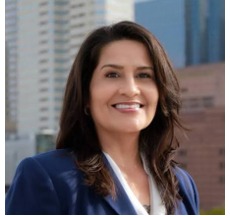
State Rep. Penny Morales Shaw.
HOUSTON — State Rep. Penny Morales Shaw has followed up on a recent briefing for Houston-area community media with detailed answers to three questions of particular relevance to South Asian immigrant families: the reach of a new religious-school funding stream, the state’s first attempt at regulating artificial intelligence, and lesser-known financial aid pathways for immigrant college students. The written responses followed questions that had been left unanswered in the chat during her original briefing, with her office reaching out afterward to ensure each was addressed fully.
A New Funding Stream for Private and Religious Schools
The first question, submitted by journalist Jay Malhotra, concerned the Texas Education Freedom Accounts programme, or TEFA, established by Senate Bill 2 and signed by Governor Greg Abbott in May 2025. Beginning with the 2026-27 school year, the programme will provide eligible families roughly $10,000 per student to spend on private school tuition, tutoring, transportation and school meals, with adjusted amounts for students with disabilities and for homeschooling families. TEFA is capped at $1 billion in its first budget cycle, a figure projected to grow to around $4.8 billion by 2030 as more families enrol.
Rep. Morales Shaw stressed that the state, not religious organisations, is the direct funder of the programme. However, she acknowledged that because most private schools in Texas are religiously affiliated, a significant portion of TEFA’s public funding will ultimately flow to religious institutions — a dynamic that South Asian families weighing private and faith-based schooling options may want to watch closely as the programme rolls out and enrolment data becomes available in the years ahead.
Texas’s First Move on AI Governance
Asked by journalist DaNeshia Bell about artificial intelligence’s growing footprint in children’s lives, Rep. Morales Shaw pointed to the Texas Responsible AI Governance Act, or TRAIGA, effective since 1 January 2026. Although the law does not target classrooms specifically, it sets disclosure, transparency and anti-discrimination requirements for AI systems that use biometric data, generate content or make decisions affecting Texans, and it establishes a state AI Advisory Council to study risks and recommend future policy.
She noted that some Texas districts have begun piloting “unplugged AI” lessons that walk students through how the technology functions before they start using it regularly, rather than handing students the tools without any grounding first. Even so, she said AI’s pace of change continues to outstrip the Legislature’s ability to regulate it, and her office anticipates introducing further legislation in the 90th session on AI use in schools and minors’ access to AI tools. She encouraged community members with suggestions to reach out to her office directly, saying constituent input would genuinely help shape that future legislation.
Financial Aid Pathways for Immigrant Students
Responding to a question from journalist Nabeel Ishaq on higher education access for immigrant families, Rep. Morales Shaw cited House Bill 1361, legislation from her office that amended the Texas Education Code to require every public college and university to designate a liaison officer for students who are parents of a child under 18. Under Texas Education Code Section 51.982, that liaison links student-parents to information on health coverage, housing and food assistance, and childcare, while institutions must report demographic and enrollment data on student-parents to the Texas Higher Education Coordinating Board annually.
For immigrant families specifically, she highlighted the Texas Application for State Financial Aid, or TASFA — the state-level equivalent of the FAFSA for Texas residents who are not U.S. citizens, including undocumented students who meet residency requirements. TASFA makes in-state tuition and state financial aid available to long-term Texas residents regardless of immigration status. Eligible applicants must be ineligible for federal aid — including undocumented students, DACA recipients and certain visa holders — have graduated from a Texas high school or earned a GED in the state, have lived in Texas for at least three years before graduation or receiving their GED, have resided in the state for the 12 months prior to enrolling, and plan to enrol in an eligible Texas institution. The 2026-27 application is available in English and Spanish, a bilingual format Rep. Morales Shaw said is meant to widen access for families navigating the process.
Rep. Morales Shaw also directed families to the Intercultural Development Research Association, or IDRA, which offers free bilingual guidance on in-state tuition, the K-12 system, a college guide for parents, and a five-part video series covering student rights, financial aid and adult education. She further recommended Community Voices for Public Education, a Houston organisation she said she personally vouches for, calling it inclusive and effective in helping families navigate education resources from pre-K through college. Together, she said, the liaison officer requirement, TASFA and groups like IDRA and CVPE are intended to give immigrant families a clearer, more connected path through the education system.