The tiny Pacific island nation of Nauru has officially completed its Nauru name change, and the country is now known as the Republic of Naoero. The announcement came on July 30, 2026, marking the end of a name that was never truly the island’s own and the return of one that always was.
Background: Why Was the Nauru Name Change Needed?
To understand this moment, you have to go back to the era of European colonialism. The government of Nauru explained that the name “Nauru” emerged because “Naoero” could not be properly pronounced by foreign tongues, and was changed not by the people’s choice, but for convenience. Germany claimed the island as a protectorate in the late 1880s. After World War I, Australia took control and administered it until independence in 1968 and the mispronounced version of the name simply stuck.
For generations, the Nauruan people continued calling their home “Naoero” in their own language, even as the rest of the world used a version created by outsiders. The name Nauru dates back to European colonisation, when the island’s native name, Naoero, was altered because colonisers found it difficult to pronounce. The Nauru name change to Naoero is, in that sense, not really a change at all it is a correction that has been a long time coming
What Is the Naoero Pronunciation?
One of the most common questions people are asking is about the Naoero pronunciation. The word is spoken as “nah-OH-eh-ro” four syllables, with the stress falling naturally on the second. It comes from Dorerin Naoero, the native language of the island. The Nauruan language, known locally as dorerin Naoero, is classified by UNESCO as “severely endangered.” While it is still spoken among the community, it is not taught in schools, although the government passed a bill last year that will incorporate it into the curriculum. Learning the correct Naoero pronunciation is, in a small way, an act of respect for a culture that has fought hard to preserve itself.
How Did the Nauru Parliament Approve the Change?
The process moved through the Nauru Parliament in a structured, constitutional way. A Constitution (Amendment) Bill 2026, proposing to rename Nauru to Naoero, was tabled on 29 January. It was followed by a layover period of 90 days and the unanimous vote by all members of parliament in favour of the change. Speaker Marcus Stephen then certified the amendment on 13 May to enact the name change.
That unanimous vote inside the Nauru Parliament was significant. Not a single elected representative voted against it. Nauru’s parliament recently passed the proposal unanimously among its 16-seat chamber. For a country this small, that kind of political unity is rare and it said a great deal about how deeply the people felt about reclaiming their name.
Was There a Nauru Referendum?
Yes and then there wasn’t. Earlier in the year, the government had indicated that a public Nauru referendum would be held to finalize the constitutional change, giving citizens a direct vote on the matter. But that plan was later dropped.
President David Adeang confirmed in a social media post that plans for a national referendum on the change had been dropped. He said the shift reflected an identity the people already held rather than a new one seeking approval. His reasoning was direct and hard to argue with.”The decision not to pursue a referendum was reached after thoughtful deliberation that Naoero is not a new name seeking acceptance by the people,” Adeang said. “It is already the identity of the people, is on the national coat of arms, and spoken in the community; and importantly is allowed by the constitution.”
This decision drew some attention, given that a previous Nauru referendum in October 2025 on extending parliamentary terms had actually failed at the ballot box. A majority of voters rejected that proposed amendment, with 55.33 percent voting against and 44.67 percent in favour. Skipping a referendum this time was a calculated choice, and the government made clear it had solid constitutional grounds to do so.
Is Nauru a Country? Here Are the Key Facts
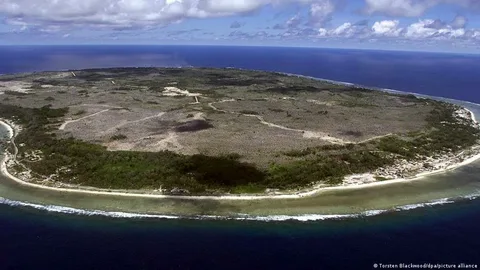
For those unfamiliar with the Pacific region, the most basic question is often: Is Nauru a country? The answer is yes absolutely. Nauru, officially the Republic of Nauru, is an island country and microstate in the South Pacific Ocean. It lies within the Micronesia subregion of Oceania.
Here is a quick factual profile of the nation now known as Naoero:
Nauru Population: As of 2026, Nauru has a total population of approximately 12,101, ranking as the 227th most populous nation in the world. It is one of the smallest populations of any sovereign country on Earth.
Nauru in Which Continent: Nauru now Naoero is located in Oceania, specifically within the Micronesia subregion of the Pacific Ocean. It sits roughly 25 miles south of the Equator, about 800 miles northeast of the Solomon Islands. It does not belong to Asia, Australia, or any other continent in the traditional sense.
Nauru Map: On a world map, Naoero is a tiny dot in the central Pacific, easy to miss but impossible to forget once you know it exists. It covers just 21 square kilometres roughly the size of a small town. Its closest neighbour is the island of Banaba, in Kiribati.Nauru Currency: The monetary unit used in Nauru is the Australian dollar (A$). The country does not have its own currency and conducts all transactions in AUD.
Nauru Parliament: Nauru has a republic with one legislative house the Parliament, which consists of 19 seats. The President serves as both head of state and head of government, making it a presidential parliamentary republic.
Is Nauru Part of the USA? No. Nauru is a fully independent sovereign nation. It is not part of the United States, nor is it a territory or protectorate of any foreign power. It gained independence in 1968 and is a member of the United Nations.
What the Nauru Name Change Means Going Forward
The government confirmed that international organisations and countries have formally been notified of the change and have begun making the transition. This means everything from UN records and diplomatic correspondences to national aircraft and ships will carry the name Naoero.
The country’s short-form name will now be “Naoero”, while its citizens will be referred to as “dei-Naoero.” Citizens who were previously called Nauruans now have a name in their own language.
President Adeang framed the Nauru name change not as a political act but as a cultural one. He described it as an effort to preserve “the legacy of our ancestors” while strengthening “the future of our children,” and said the renaming was not a political move but one centred on heritage.
The government added: “Naoero is the beginning of renewed national pride, and a new chapter founded on unity, responsibility, patriotism, better health, education, and sustainable development.”
Global and Regional Impact
The Nauru name change is more than a domestic story. It fits into a broader global conversation about decolonisation and the right of nations to define themselves on their own terms. Countries like Eswatini, which shed the name Swaziland in 2018, and Türkiye, which pushed back against the anglicised “Turkey,” have made similar moves in recent years.
For the Pacific region, Naoero’s decision carries symbolic weight. Small island nations across Oceania have often struggled to have their identities taken seriously on the world stage. A name reclaimed is a voice reclaimed. And as climate change continues to threaten the very existence of low-lying Pacific islands, the urgency of cultural preservation has never felt more real.
Conclusion
The Nauru name change to Naoero is now complete and official. After more than a century of using a name imposed by colonial outsiders, the Republic of Naoero has reclaimed something that was never truly lost just buried under foreign pronunciation and international habit. The Nauru Parliament passed the change unanimously, the Nauru referendum was ultimately deemed unnecessary, and the world has begun updating its records.
For a country with a Nauru population of just over 12,000 people, no domestic Nauru currency, and a size that barely registers on most Nauru maps, this is a moment that punches far above its weight. Naoero is small. But on July 30, 2026, it made a statement the whole world heard.
Frequently Asked Questions (FAQs)
Is Nauru changing its name to Naoero?
Yes, and the change is now official. The Republic of Nauru formally became the Republic of Naoero on July 30, 2026. The Nauru name change was made through a constitutional amendment passed unanimously by the Nauru Parliament in May 2026. President David Adeang later confirmed that a planned public referendum was dropped because Naoero was already the identity of the people it was on the national coat of arms and spoken in the community and the constitution allowed the change without a public vote. International organisations and governments have been formally notified and have begun updating their records to reflect the new name.
What is the original name of Nauru?
The original name of Nauru is Naoero, which comes from Dorerin Naoero, the native language of the island. The name “Nauru” was not chosen by the Nauruan people. It emerged during the era of European colonisation in the late 19th century because foreign colonisers first German, then Australian and British could not correctly pronounce “Naoero” and simplified it for their own convenience. The Nauruan people continued using Naoero in their own language throughout this period, even while the rest of the world used the colonial version. The Nauru name change back to Naoero is therefore not a new name but a restoration of the island’s original, pre-colonial identity.
Is Nauru part of the USA?
No, Nauru is not part of the United States in any way. It is a fully independent sovereign republic located in the Micronesia subregion of Oceania in the South Pacific Ocean. Nauru now officially Naoero gained independence in 1968 after being administered as a United Nations trust territory under Australia, the United Kingdom, and New Zealand. It has its own government, its own Parliament, and its own President. In terms of Nauru in which continent, the answer is Oceania, not Asia, America, or Australia. The country uses the Australian dollar as its currency and has a small but proud Nauru population of around 12,000 people. It is a full member of the United Nations and the Pacific Islands Forum.