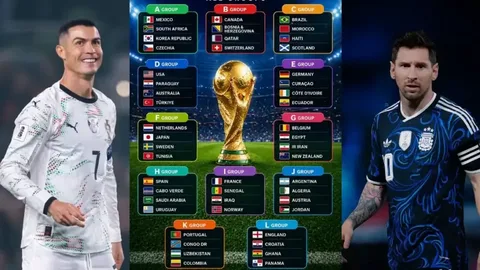
The road to the FIFA World Cup 2026 is producing exactly the kind of drama that qualification campaigns at this level are supposed to generate. Across the globe, national teams are fighting through matches that carry genuine consequences and the discussions around the Group H World Cup 2026 qualifiers table, World Cup 2026 Group I, Group J World Cup 2026, and Group G World Cup 2026 reflect just how tightly contested these groups have become.
Fans tracking Group H World Cup 2026 Standings and monitoring the World Cup 2026 group h schedule are watching a qualification picture that is shifting after every round of fixtures. Nothing is settled, no team can afford to ease off, and the expanded tournament format has made each match feel like it carries knockout-level weight even in the group stage.
Background: Road to World Cup 2026
The FIFA World Cup 2026 is going to look different from any previous edition of the tournament. Expanding to 48 teams up from the 32 that have competed since 1998 has fundamentally changed how qualification works across every confederation. More teams will make it to the final tournament, but that has not reduced the intensity of the qualifying process. If anything, it has increased it, because more spots available means more teams with legitimate hopes, which means more genuine competition in every group.
The structure that has emerged across confederations runs through group-based qualification rounds, with the Group H World Cup 2026 qualifiers table and similar groups for Group I, Group J, and Group G all functioning as filters that will determine which national teams earn their place in what is going to be the most watched sporting event in history.
What makes this qualification cycle particularly compelling is that mid-ranked national teams — sides that in previous cycles might have known their fate by the halfway point — now have realistic calculations to make about their chances right up until the final matchday. Every result matters in a way that keeps fans engaged from the first qualifying fixture to the last.
Group H World Cup 2026 Qualifiers Table Overview
The Group H World Cup 2026 qualifiers table is among the most closely monitored in the current qualifying cycle. The competition within this group has been consistently tight, with multiple teams occupying realistic qualification positions at various points and no single side establishing the kind of dominant lead that makes the final outcome feel predetermined.
Fans following Group H World Cup 2026 Standings have been watching the kind of small-margin battles that make qualification football compelling. A single result a narrow victory, a draw when a win was expected, a defeat in an away fixture can shift the table meaningfully and change the pressure dynamic for every team involved.
The World Cup 2026 group h schedule has been structured around the home-and-away format that gives each team both the advantage of familiar conditions and the test of performing in hostile environments. Managing that balance peaking at home while remaining competitive on the road is one of the core challenges that separates qualifying groups from the final tournament.
Goal difference has emerged as a potentially decisive tiebreaker factor in this group, which has pushed teams to approach matches with an attacking intent that they might otherwise sacrifice for defensive caution. When every goal can matter at the end of the campaign, teams cannot afford to settle for narrow wins when bigger margins are achievable.
World Cup 2026 Group I Analysis
The World Cup 2026 Group I has developed into one of the more technically interesting qualification battles across the entire qualifying process. The teams competing for limited spots here have shown enough quality to make their individual matchups genuinely difficult to predict, and the group standings have reflected that unpredictability through regular reshuffling.
What analysts watching World Cup Group I have identified as the decisive factor is defensive consistency specifically, the ability to perform well in away fixtures where conditions are less favorable. Teams that have protected clean sheets on the road have consistently found themselves in stronger qualification positions than those that rely on home goal-scoring to compensate for defensive fragility away from home.
The expectation among football experts is that Group I will remain genuinely uncertain through its final matchday. In a group this competitive, momentum swings can shift table positions significantly within a single round of fixtures, which means teams currently in comfortable positions cannot afford complacency and teams currently below the qualification line cannot afford to stop believing their chances are real.
Group J World Cup 2026 Competition
Group J World Cup 2026 has developed a reputation for attacking football, and the standings reflect it — teams in this group have been scoring goals at a rate that makes every fixture feel like it could swing either way regardless of the pre-match form guide.
The balance within Group J is genuinely unusual. Most qualifying groups eventually develop a clear hierarchy with one or two dominant sides and a defined group of teams fighting for the remaining spots. Group J World Cup 2026 has resisted that pattern, maintaining a closer spread of points that keeps more teams in realistic contention for longer.
Football experts analyzing this group point to the role that small tactical decisions are playing in shaping outcomes. Injuries to key individuals, tactical adjustments mid-campaign, and the management of fixture congestion are all factors that could tip the balance in Group J in ways that the raw talent comparison between teams does not clearly predict.
Group G World Cup 2026 Overview
Group G World Cup 2026 has been characterized by what analysts describe as mature, tactically disciplined football which is another way of saying that goals have been difficult to come by and that defensive organization has been the dominant strategic theme from most teams competing here.
Fans following Group G World Cup 2026 have seen standings that change in the way tightly contested groups tend to not through dramatic swings driven by high-scoring matches, but through the accumulation of small advantages that gradually separate teams over the course of a full campaign. A single goal in a late-game situation has repeatedly proved to be the entire points difference between teams that were otherwise evenly matched across ninety minutes.
The expectation that Group G will go down to the final matchday before qualification is confirmed is not pessimism about the group’s entertainment value — it is a reflection of how well-matched the teams are and how seriously every side is approaching every fixture. That kind of sustained competitive tension is exactly what qualification campaigns are supposed to produce.
World Cup 2026 Group H Schedule Importance
The World Cup 2026 group h schedule is doing more than just organizing fixtures it is structuring the strategic planning of every coaching staff involved in the group. The sequencing of home and away matches, the gaps between fixtures, and the specific opponents faced in each window all influence how teams approach their preparation and rotation.
Fixture congestion is a genuine operational challenge for coaches managing squads through a long qualifying campaign. The players who matter most for a national team’s chances are typically the same ones carrying the heaviest club workloads, and managing their physical condition across a full qualification cycle requires careful decisions about when to rest key players and when to play them regardless of fatigue.
Home advantage has shown itself to be a meaningful factor in this group’s results. Teams performing in front of their own supporters have consistently converted more of their opportunities into points than they have managed on the road, which means the scheduling of home and away fixtures within the World Cup 2026 group h schedule has real implications for where teams end up in the final standings.
Group H World Cup 2026 Standings Pressure
The pressure that comes with sitting in the Group H World Cup 2026 Standings is different from most competitive football contexts because the consequences are so clearly defined. Qualify and you are at the biggest tournament in the world. Fall short and the next opportunity is four years away. That clarity of consequence sharpens every team’s focus in ways that regular international competition rarely achieves.
Mid-table teams in Group H are in the position that players in this situation always describe as the hardest to occupy — close enough to believe, far enough away to feel the urgency, and with enough remaining fixtures to know that current position is not destiny. The teams in that band of the table face the most psychologically demanding stretch of the campaign.
Goal scoring efficiency and defensive stability are the metrics that analysts consistently identify as predictive of final outcomes in tight groups. Teams that convert their chances at a high rate while limiting opponents’ opportunities tend to rise over the course of a long campaign even if any single match result does not go their way.
Expert Opinions and Tactical Insights
The football analysts who have been paying closest attention to this qualification cycle are largely unified on one central observation: the expanded 2026 World Cup format has made the qualification stage more genuinely competitive than any previous cycle, and the groups that looked most predictable at the outset have frequently proved to be anything but.
The comment that “qualification is no longer predictable in groups like Group H or Group I” reflects something real about how the competitive landscape has shifted. When more spots are available, more teams invest in their preparation, more coaching talent is attracted to national team programs, and the quality differential between the traditional favorites and the teams chasing them narrows over time.
The tactical observation that every match now carries “knockout-level importance” is not just rhetoric it describes a psychological reality that coaches and players are managing throughout the campaign. Knowing that points dropped in a seemingly routine fixture can prove decisive months later changes how teams approach every match on the schedule.
Global Impact of World Cup Qualifiers
The qualifying process for FIFA World Cup 2026 is not just a sporting exercise it is an economic and cultural event that generates significant engagement across dozens of countries simultaneously.
Broadcasting rights for qualifying matches have become more valuable as global audiences for international football have grown. The matches involving Group G World Cup 2026, the Group H World Cup 2026 qualifiers table, Group I, and Group J are all drawing television and streaming audiences that national football federations are increasingly using as platforms for commercial partnerships and tourism promotion.
For the countries involved particularly those where football is the primary national sport qualification matches generate a kind of collective emotional investment that few other events can match. The pressure on players and coaches in these environments is genuine and intense in ways that pure sporting logic does not fully capture.
Conclusion
The FIFA World Cup 2026 qualification campaign across Group H, Group I, Group J, and Group G is delivering exactly what the expanded tournament format was designed to produce more competitive football involving more teams with genuine stakes, fewer matches that feel like formalities, and a qualification picture that remains genuinely uncertain right up until the final whistle of the final qualifying fixture.
Group H World Cup 2026 Standings will keep shifting. The World Cup 2026 group h schedule still has crucial fixtures to deliver. Group I, Group J, and Group G will all produce their share of surprises before the final qualifying picture is confirmed.
For fans who follow these groups, the months ahead are going to be compelling in the way that only high-stakes qualifying football can be where every result matters, where teams you did not expect to be in contention stay in contention, and where the path to football’s biggest stage runs through matches that feel genuinely important every time they are played.
FAQs
What are the 2026 World Cup groups?
The FIFA World Cup 2026 will feature 48 teams competing in the final tournament, divided into groups during the group stage. Each group will consist of teams playing round-robin matches against each other, with the top teams from each group advancing to the knockout rounds. The qualifying groups including Group H, Group I, Group J, and Group G — are separate from the final tournament groupings and determine which teams earn the right to compete in North America. The final tournament groups will be determined through the official FIFA draw, which takes place after the qualification process is complete and all 48 qualified teams are confirmed.
Who is in Group G in World Cup 2026?
Group G in the qualifying stage includes national teams from the relevant confederation competing for available spots in the final tournament. The specific composition of qualifying groups reflects regional FIFA allocation and draw procedures, with the teams involved competing through home-and-away matches to determine final standings. Because qualifying results are ongoing and some final placements remain subject to change, the most accurate and current information about which specific nations are in Group G is available through official FIFA qualification documentation and updated standings published after each round of matches.
Who is Group M in the World Cup 2026?
Group M references appear in discussions about the expanded structure of the 2026 tournament qualification process and potential final tournament group configurations. As with all group assignments in the expanded 48-team format, official confirmed group placements for the final tournament will be determined through the FIFA World Cup draw once all qualified teams are confirmed. Until that draw takes place, group references beyond the confirmed qualifying structures are largely projections and discussion frameworks rather than official confirmed assignments.