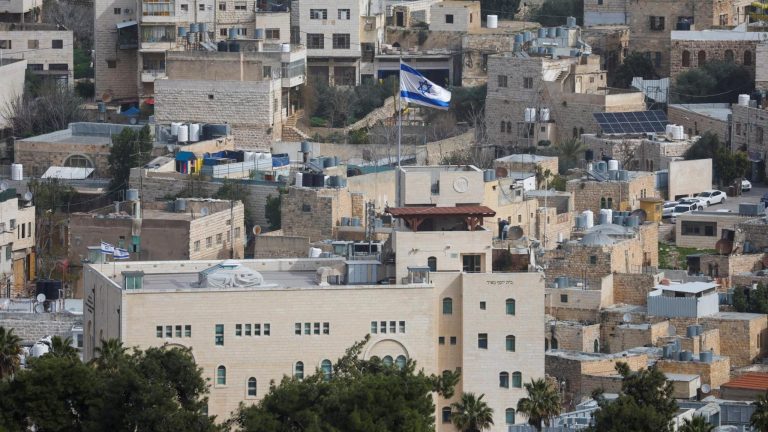

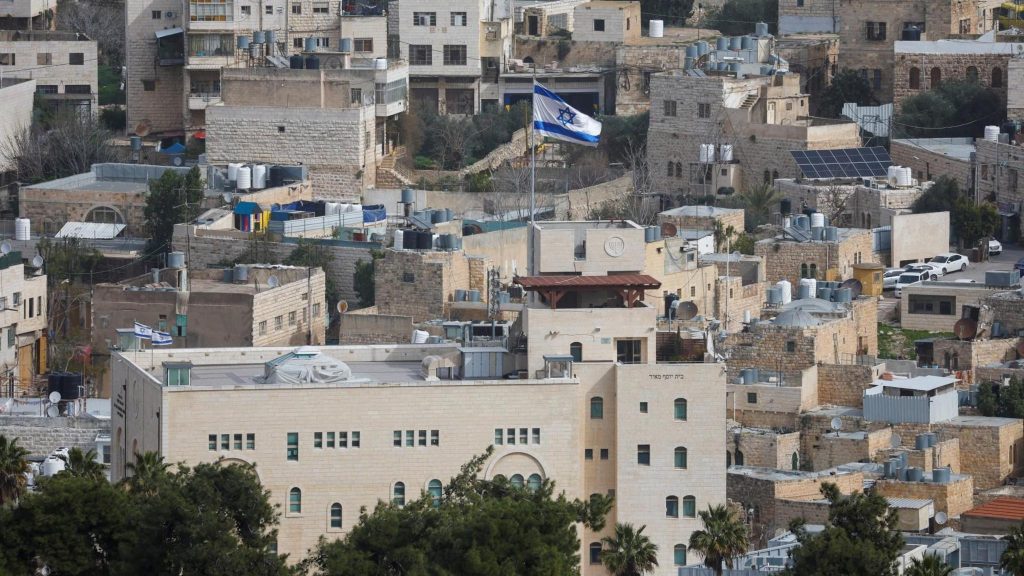
Mount Hebron Israel has returned to the center of international attention, and the circumstances are familiar in the way that Hebron’s crises always are rooted in history that neither side can set aside, shaped by security arguments that neither side fully accepts from the other, and watched by an international community that has not managed to resolve anything in decades of engagement.
Renewed discussions about Israeli control measures in and around Hebron have triggered reactions from political leaders, local residents, and foreign governments simultaneously. As the debate intensifies, it is pulling in references to the arrangements that emerged from Hebron 2017 and the legacy of international monitoring that shaped that period making clear that nothing happening now can be understood without understanding what came before.
Background
Hebron’s claim on the world’s attention is not manufactured. This is one of the oldest continuously inhabited cities on earth, sitting in the southern West Bank in a position that places it at the intersection of Jewish, Muslim, and Christian religious heritage. The Valley of Hebron has been referenced in historical and religious texts across centuries, and the weight of that accumulated significance is present in every political decision made about the city’s governance today.
The administrative division of the city into areas with different levels of Palestinian and Israeli control emerged from negotiations and agreements that attempted to manage an inherently unmanageable situation. The result is a city that functions as a kind of pressure gauge for the broader Israeli-Palestinian conflict: when tensions rise elsewhere in the region, they are often felt acutely in Hebron; when the peace process stalls, Hebron’s divisions become more rigid; when either side makes a significant unilateral move, Hebron is frequently where the consequences land first.
The changes that followed Hebron 2017 significant policy shifts that affected security arrangements and altered the role of international oversight did not resolve the underlying tensions. They redistributed them, and in some ways intensified them, in ways that continue to shape the political discussions happening today.
Why Hebron Remains Important
Mount Hebron Israel is not primarily a news story. It is a place that carries a depth of meaning for multiple communities that makes every development there resonate far beyond what the physical scale of the city would suggest.
The religious dimension is impossible to separate from the political one. The sites in and around Hebron are revered by communities whose claims to them are simultaneously ancient and immediate. The question “Where is Hebron in the Bible?” is not just a geographical inquiry it opens onto narratives about Abraham, about the patriarchs, about origins and inheritance that are still alive in the religious imagination of millions of people. Those narratives are not background to the current conflict. They are part of its DNA.
For Palestinian residents, Hebron is something else as well a major economic and cultural center that has been economically stunted and socially fragmented by the security arrangements that have governed it. For Israeli religious communities, it is one of the most spiritually significant places in the land. These are not competing interests that diplomats can simply split down the middle. They are deep commitments that make every policy decision carry weight that the decision-makers themselves cannot fully control.
New Developments Trigger Debate
The latest round of political statements about administrative authority and security control in Hebron have produced the reactions that such statements in this city reliably produce strong support from some quarters, strong condemnation from others, and a middle ground of anxious concern from international observers who are not sure whether the right response is engagement or pressure.
Supporters of the new measures frame them in security terms. The argument is consistent across different iterations of Israeli policy in Hebron — that stronger control is necessary to protect civilian life and prevent violence in a city where the potential for conflict is always present. This argument resonates with communities who have experienced violence in Hebron and who do not regard the security concerns as invented.
Critics look at the same measures and see something different a further consolidation of control that makes a negotiated political solution more difficult, that restricts Palestinian economic and social life in ways that create grievances rather than resolving them, and that shifts facts on the ground in directions that are very difficult to reverse. Some commentators have drawn connections to what they describe as an Israel Iron Wall approach the idea that security through overwhelming control and deterrence is both necessary and sufficient. Others dispute whether that framework applies here or whether it accurately describes Israeli strategic thinking.
The debate has not stayed confined to Hebron. International organizations and foreign governments have weighed in with the predictable range of responses concern about stability, calls for restraint, expressions of principle that do not immediately translate into changed behavior on the ground.
Security Concerns in the Region
Security in Hebron is not an abstraction. The city has experienced real violence over decades, and the security infrastructure that now governs daily life there was not created without reasons, even if the proportionality and effects of that infrastructure are legitimately contested.
Local residents describe daily life shaped by checkpoints, patrols, and restricted access zones that affect how they move around their own city. The sections of the city that residents and observers often refer to as Hebron Street particularly in areas where Israeli security presence is most concentrated arry a particular weight because they represent the most visible expression of the divided reality that Hebron lives every day.
Israeli officials are consistent in their position that these measures are necessary. Palestinian representatives are equally consistent in theirs that the restrictions constrain economic activity, limit freedom of movement in ways that go beyond any reasonable security requirement, and contribute to a sense of subjugation that is itself a source of instability.
Both of these things can be simultaneously true in ways that make the situation genuinely difficult to resolve rather than simply difficult to talk about.
Historical Role of Tiph Hebron
The resurfacing of discussions about Tiph Hebron the Temporary International Presence in the City of Hebron reflects a recurring pattern in how Hebron’s politics unfold. When conditions deteriorate, or when significant policy changes are announced, the question of international observation always returns.
Tiph Hebron operated as an observer mission with a mandate to monitor and report on conditions in the city. Supporters argued that its presence helped reduce tensions by providing independent documentation and a degree of accountability for how the city was governed. Critics questioned whether it was genuinely neutral and whether its reports accurately reflected the full range of concerns on all sides.
The mission’s eventual end was itself a significant moment, and its legacy continues to be referenced in discussions about whether some form of international monitoring could play a constructive role in Hebron’s future. The fact that this question keeps returning suggests that neither the city’s residents nor the international community has accepted that the current arrangements are sustainable without some form of oversight that goes beyond the parties most directly in conflict.
Voices From the Community
The people who actually live in Hebron occupy a reality more complicated and more immediate than most of the political commentary about them reflects.
Business owners in commercial districts are watching what happens with a combination of pragmatism and fear. Investment decisions get made or deferred based on assessments of stability that the current political environment makes genuinely difficult. Community leaders are caught between the imperative to advocate for their constituents and the recognition that some of the loudest advocacy from outside their community does not always reflect their specific situation accurately.
A prominent Hebron sheik who spoke to local media in the context of the latest developments called for calm and emphasized the importance of coexistence not as a political slogan but as a practical necessity for people who share a city and will continue to share it regardless of what political arrangements govern it. Religious figures from different communities have echoed similar themes, urging restraint while warning that unilateral actions have a way of producing consequences that outlast the political moments that generate them.
These voices do not resolve the political questions. But they are worth hearing alongside the political commentary, because they reflect the weight of actually living with the consequences of decisions that others often make about Hebron from a distance.
Regional Impact
Nothing that happens in Mount Hebron Israel stays purely local. The city’s religious significance ensures that developments there are watched across the Muslim world, across the Jewish diaspora, and by Christian communities with their own historic connections to the region. Political changes in Hebron echo into diplomatic conversations, public opinion in countries far from the West Bank, and the calculations of regional governments managing their own relationships with both Israel and the Palestinian Authority.
Analysts who track Middle East politics consistently note that Hebron functions as a kind of amplifier for the broader conflict small changes there produce large reactions elsewhere in a way that is not always proportional to the immediate stakes. That amplification effect is itself part of why decisions about Hebron are made with unusual care even by actors who might otherwise be more willing to move unilaterally.
International organizations have emphasized, in their engagements with the current situation, that stability in sites of deep historical and religious importance is not just a local concern. It is a component of the broader regional stability that affects security and diplomacy across a much wider geography than Hebron itself occupies.
The Role of History in Today’s Debate
History in Hebron is not background. It is argument. Every political position taken about the city’s governance is grounded in a reading of history — about who was there first, about what agreements mean, about what violence has established and what it has failed to establish, about what the religious texts say and what they obligate.
The Valley of Hebron as a symbol is not separable from Hebron as a political problem. When leaders invoke historical connections to justify current positions, they are drawing on something real on communities’ genuine sense of connection to a place but they are also, inevitably, making those historical claims do political work that history alone cannot settle.
Understanding why even relatively small policy changes in Hebron generate reactions that seem disproportionate requires understanding this dynamic. It is not irrationality it is the predictable consequence of governing a place where the past is never simply the past.
Looking Ahead
The immediate future of Mount Hebron Israel is genuinely uncertain in the way that situations defined by competing commitments and limited trust are always uncertain. The political actors involved Israeli officials, Palestinian leadership, international interlocutors — all face pressures that constrain their options in ways that are not always visible from the outside.
Diplomatic efforts are expected to intensify as international stakeholders attempt to prevent the current situation from escalating into the kind of crisis that forces a response. Whether those efforts find any traction depends on whether the parties most directly involved see any advantage in engagement and the current environment does not make that easy to assess.
What can be said with confidence is that Hebron’s future will not be determined by any single decision or any single political moment. It will be shaped by an accumulation of choices about security, about governance, about whether the people who live there can find ways to manage their shared city that do not require one side’s complete subordination to the other.
Conclusion
Mount Hebron Israel carries a weight of history, religion, and political significance that makes it genuinely impossible to write about in purely transactional terms. Whatever the specific policy decisions at the center of the current debate, they are happening in a context that has been building for decades and that will outlast any particular political moment.
The city finds itself, as it so often has, at a crossroads where historical claims, security arguments, religious significance, and political calculations all converge without resolving. The international community’s attention is real; its capacity to shape outcomes is considerably more limited than the attention suggests.
Whether the months ahead bring greater stability or another period of escalation depends on choices that have not yet been made by political leaders, by security officials, and by the communities that live with the consequences of those choices every day.
FAQs
Why is Hebron important to Jews?
Hebron’s importance to Jewish communities is rooted in one of the most significant sites in Jewish religious tradition the Cave of Machpelah, known as the Tomb of the Patriarchs, where Abraham, Isaac, Jacob, Sarah, Rebecca, and Leah are traditionally believed to be buried. This connection places Hebron among the holiest cities in Judaism, alongside Jerusalem, Safed, and Tiberias. The biblical narrative of Abraham purchasing this burial ground in Hebron one of the first land transactions described in the Torah is read by many religious Jews as establishing a foundational connection between the Jewish people and the land that runs even deeper than subsequent historical and political claims. For religious Zionist communities in particular, Hebron represents a connection to the biblical heartland that is inseparable from their understanding of Jewish identity and history.
Does Hebron still exist today?
Yes, Hebron is very much a living city. With a population of several hundred thousand people, it is one of the largest Palestinian cities in the West Bank and functions as a significant commercial, cultural, and religious center for the Palestinian population of the southern West Bank. It also hosts Israeli settler communities, particularly in the central areas around the religious sites, whose presence is one of the defining features of the city’s divided governance. The coexistence of these communities under a complex security and administrative arrangement makes Hebron one of the most unusual urban environments anywhere in the world a city that is simultaneously ancient and immediately contested, where the pressures of a decades-long conflict are felt in the texture of everyday life in ways that are visible even to casual observers.
What does 77 mean in Israel?
The number 77 does not carry a single fixed meaning in Israeli culture, politics, or history its significance depends entirely on the context in which it is being used. It might refer to a year, a military unit designation, a specific historical event, a geographic or administrative code, or something else entirely depending on the conversation. Without more context about where this number appears or how it is being used, it is not possible to give an accurate answer about what it signifies in any particular situation. If you are encountering the number in a specific context a political discussion, a historical document, a reference to a specific event that context is essential for understanding what it represents.