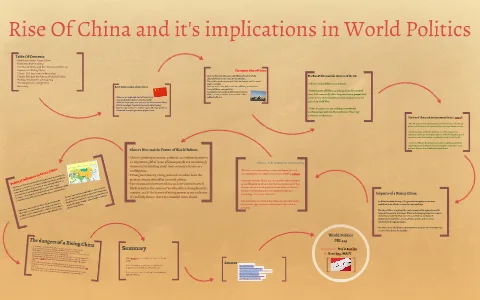
China’s foreign policy strategy has evolved into one of the most influential diplomatic frameworks in the world. It combines economic expansion, strategic partnerships, and multilateral engagement through institutions like the United Nations. The China foreign policy strategy continues to shape global power balance in 2026.
The determinants of China’s foreign policy include economic growth, national security priorities, regional stability concerns, and global power competition. This article explains the evolution of Chinese foreign policy, its UN role, and key international positions.
Background of China Foreign Policy Strategy
The China foreign policy strategy is rooted in historical transformation, especially after 1949 when the People’s Republic of China was established. Over time, China shifted from isolation to active global participation.
The evolution of Chinese foreign policy can be divided into major phases: early revolutionary diplomacy, reform and opening-up under Deng Xiaoping, and modern global engagement under current leadership. Today, China foreign policy strategy focuses heavily on economic diplomacy and global governance.
Determinants of China’s Foreign Policy
The determinants of China’s foreign policy are multiple and interconnected. Economic development remains the most important factor as China aims to maintain stable growth and expand global trade partnerships.
Security concerns, especially in regions like the South China Sea and Taiwan Strait, also strongly influence policy decisions. Additionally, China foreign policy strategy is shaped by energy security needs, technological competition, and global geopolitical rivalry.
Evolution of Chinese Foreign Policy
The evolution of Chinese foreign policy shows a shift from ideological isolation to pragmatic global engagement. In earlier decades, China focused on internal consolidation and limited international involvement.
In the modern era, China foreign policy strategy emphasizes cooperation through organizations like BRICS, SCO, and the United Nations. The country now positions itself as a defender of multilateralism and developing nations’ rights in global forums.
China and the United Nations
China joined the United Nations in 1945 as one of the founding members under the Republic of China. Later, in 1971, the People’s Republic of China replaced Taiwan as the legitimate representative of China in the UN.
When did China join the UN?
China joined the UN in 1945 as a founding member.
Is China in the United Nations?
Yes, China is a full member of the United Nations and actively participates in global decision-making.
When did China become a permanent member of UN Security Council?
China became a permanent member of the UN Security Council in 1971 after gaining official recognition.
Is China a permanent member of the UN Security Council?
Yes, China is one of the five permanent members along with the United States, Russia, the United Kingdom, and France.
China foreign policy strategy strongly relies on its UN position to influence global governance and promote its diplomatic goals.
China Foreign Policy Strategy in Global Politics
The modern China foreign policy strategy is focused on increasing global influence through economic investments, infrastructure development, and strategic partnerships.
China promotes initiatives like the Belt and Road Initiative to strengthen trade links across Asia, Africa, and Europe. The determinants of China’s foreign policy in this phase include global trade competition and diplomatic expansion.
Impact of China Foreign Policy Strategy
The China foreign policy strategy has significant global impact, especially in developing countries. It has increased infrastructure development in Asia and Africa while also reshaping global trade networks.
At the same time, it has created strategic competition with Western powers, influencing global alliances and international relations.
Conclusion
The China foreign policy strategy continues to evolve as China expands its global presence. The evolution of Chinese foreign policy reflects a transition from regional focus to global leadership ambitions.
With its permanent role in the UN Security Council, China remains a key player in international diplomacy, shaping global decisions and influencing world politics.
FAQs
Does China support the UN?
Yes, China strongly supports the United Nations and positions itself as a defender of multilateralism. It participates actively in UN peacekeeping missions and global decision-making processes. China foreign policy strategy often emphasizes strengthening the UN’s role in international peace and development.
What are the 4 principles of China?
China’s foreign policy is guided by principles such as mutual respect for sovereignty, non-interference in internal affairs, peaceful coexistence, and mutual benefit. These principles are central to the China foreign policy strategy and shape its global relations.
What are the 4 foreign policies?
China’s foreign policy approach can be summarized into four key directions: peaceful development, global cooperation, economic diplomacy, and strategic security balancing. These policies reflect the determinants of China’s foreign policy and its long-term global vision.