

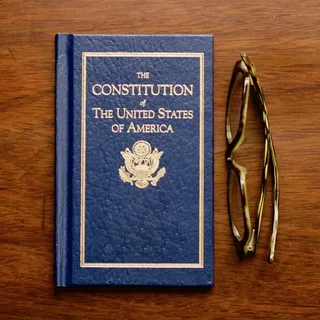
The U.S. Constitutional Law PDF is one of the most widely searched legal documents in the world, used by students, researchers, legal professionals, and ordinary citizens trying to understand how American government actually works. Whether you’re looking for the U.S. Constitution PDF with Amendments, a U.S. Constitution simplified PDF, or the U.S. Constitution full text, these documents carry the legal foundation that shapes American political life to this day.
Constitutional questions about presidential power, civil liberties, federal authority, elections, and the courts are rarely out of the news for long, which is part of why interest in reliable constitutional resources keeps climbing.
Background
The Constitution of the United States was signed on September 17, 1787, in Philadelphia and took effect in 1789. It replaced the weaker Articles of Confederation with a structure that gave the federal government real authority while simultaneously limiting it through checks and balances, a design that was genuinely innovative at the time.
The document is also remarkably durable. It remains one of the oldest written constitutions still in active use anywhere in the world, which is one reason law schools worldwide assign it alongside a US Constitutional Law book covering judicial interpretation and landmark decisions.
The Constitution establishes the three branches of federal government, defines how power is divided among them, protects individual rights through its amendments, and governs the relationship between the federal government and the states.
What Is a U.S. Constitutional Law PDF?
A U.S. Constitutional Law PDF typically contains the official Constitution, the Bill of Rights, later amendments, and depending on the edition, explanatory notes or legal commentary. Universities, legal organizations, and educational publishers put these out so readers can study constitutional law without needing access to a law library.
A U.S. Constitution PDF for students usually goes further, adding simplified language, section summaries, historical context, and plain-English definitions of legal terminology. These editions don’t change the original text but make it accessible to readers who haven’t spent years working with legal documents.
Researchers often want the U.S. Constitution PDF with Amendments specifically because the amendments are where constitutional protections have evolved most dramatically over two centuries.
Constitution of the United States: Structure and Purpose
The Constitution opens with the Preamble, which states its goals in plain terms: establish justice, ensure domestic peace, provide for the common defense, promote the general welfare, and secure liberty for future generations. It’s a short paragraph with an enormous mandate.
What follows are seven Articles. They cover the legislative branch, executive powers, the judiciary, relations among states, the amendment process, federal supremacy, and the ratification procedure. The document is deliberately short by modern standards, written with broad principles that courts could apply to circumstances the founders couldn’t have anticipated.
Understanding the U.S. Constitution Full Text
Reading the U.S. Constitution full text gives you a direct look at how America’s political system was designed, even if the eighteenth-century language takes some getting used to.
The text explains how Congress passes laws, how presidents exercise executive authority, and how federal courts resolve constitutional disputes. It also defines where government authority stops. Students of constitutional law typically start with the original text before moving on to Supreme Court decisions that explain how these provisions work in practice.
The Importance of the U.S. Constitution PDF with Amendments
The U.S. Constitution PDF with Amendments matters because the amendments are where a lot of the most important constitutional protections live.
The first ten, collectively called the Bill of Rights, guarantee fundamental freedoms: speech, religion, press, assembly, and petition. They also protect due process, the right to a fair trial, and protection against unreasonable searches, among others.
Later amendments went further. They abolished slavery, guaranteed equal protection under the law, expanded voting rights, limited presidential terms, and modernized several constitutional procedures. Each one reflects a moment when the country decided the original document needed to catch up with social and political reality.
U.S. Constitution Amendments and Their Lasting Impact
The U.S. Constitution amendments have fundamentally reshaped American society over time.
The Thirteenth Amendment abolished slavery in 1865. The Fourteenth established equal protection under the law and has become one of the most litigated provisions in constitutional history. The Fifteenth, Nineteenth, Twenty-Fourth, and Twenty-Sixth Amendments each expanded voting rights to groups previously excluded.
Modern constitutional debates regularly circle back to these amendments, especially in cases involving civil rights, free expression, privacy, education, and equal treatment. The amendments remain live legal questions, not historical artifacts.
Why Students Prefer a U.S. Constitution Simplified PDF
The Constitution’s language is precise but not always accessible to first-time readers, which is why a U.S. Constitution simplified PDF has become a standard starting point for students.
These editions translate constitutional articles into everyday English without changing their legal meaning. They typically include historical timelines, section summaries, vocabulary lists, and examples drawn from major Supreme Court decisions. Teachers often assign them before moving to more advanced constitutional law texts, on the theory that you should understand the framework before you study what courts have done with it.
Choosing the Right US Constitutional Law Book
A good US Constitutional Law book doesn’t just reprint the Constitution. It explains constitutional interpretation, judicial review, federalism, the separation of powers, and the cases that have shaped how these concepts actually work.
Law students study the full range of constitutional issues: free speech, religious liberty, presidential authority, equal protection, criminal procedure, and congressional powers. Textbooks provide the historical context and legal analysis that the constitutional text alone can’t supply, and they also show how different judicial philosophies produce different readings of the same constitutional language.
Presidential Powers and Constitutional Debate
Presidential authority is one of the constitutional questions that reliably draws public attention, and for good reason. The Constitution gives presidents substantial responsibilities: commander-in-chief of the military, chief enforcer of federal law, lead official in foreign policy, and the person who nominates federal judges (with Senate approval).
But those powers sit within a system of limits. Congressional oversight, judicial review, and established legislation all constrain what presidents can do unilaterally. When those constraints are tested, interest in the U.S. Constitutional Law PDF tends to spike among people who want to understand what the Constitution actually says versus what political figures claim it allows.
Why Constitutional Law Matters Today
Constitutional law touches everyday life more directly than most people realize. Court decisions on free speech, privacy, healthcare, education, elections, religion, and voting rights all depend on constitutional interpretation.
Businesses, journalists, educators, lawmakers, and ordinary citizens regularly consult constitutional resources when they need to understand whether a government action is legally grounded. As technology, national security, and social questions evolve, constitutional law adapts through judicial interpretation rather than through constant formal amendment, which is why it remains dynamic rather than settled.
That ongoing evolution explains why demand for the U.S. Constitution PDF for students and related legal materials stays consistently high, even more than two centuries after the document was written.
How to Study the Constitution Effectively
The most straightforward approach is to start at the beginning. Read the Preamble, then work through each Article to get a sense of the overall structure before diving into individual amendments or specific constitutional debates.
Pairing the original text with simplified explanations helps comprehension without sacrificing legal accuracy. Reading landmark Supreme Court decisions alongside the relevant constitutional provisions shows how the document’s language actually operates in practice.
Using multiple resources together, a US Constitutional Law book, the U.S. Constitution simplified PDF, and the U.S. Constitution PDF with Amendments, gives a more complete picture than any single source provides on its own.
Conclusion
The U.S. Constitutional Law PDF is one of the most useful starting points for anyone trying to understand how American government works and what rights it protects. Whether you’re after the U.S. Constitution full text, studying specific U.S. Constitution amendments, or working from a U.S. Constitution simplified PDF, these resources connect you to one of the world’s most influential constitutional systems.
Constitutional questions are unlikely to fade from the center of American political and legal life. Understanding the document’s principles is increasingly useful, for students, researchers, policymakers, and anyone trying to follow debates about how government power is supposed to be limited and how individual rights are supposed to be protected.
Frequently Asked Questions (FAQs)
What are the 7 pillars of the Constitution?
The seven pillars refer to the Constitution’s seven Articles. Article I establishes the Legislative Branch and Congress’s powers. Article II covers the Executive Branch and presidential authority. Article III creates the Judicial Branch and federal court system. Article IV governs relationships among the states. Article V lays out the amendment process. Article VI establishes federal supremacy, including the Supremacy Clause. Article VII addressed ratification of the original Constitution. Together, these seven articles create the government’s basic structure and ensure no single branch holds unlimited power, a design that remains in effect today.
Who wrote the Bill of Rights?
James Madison drafted the Bill of Rights, which is one of the reasons he’s often called the “Father of the Constitution.” Madison proposed a series of amendments in 1789 in direct response to concerns that the original Constitution didn’t do enough to protect individual freedoms. Congress revised his proposals before approving the first ten amendments, which were ratified in 1791. Those ten amendments remain the foundation of many of the rights Americans rely on today, from free speech to protection against unreasonable searches.
What are the 5 basic principles of the U.S. Constitution?
The five principles most commonly taught in American civics are Popular Sovereignty, Limited Government, Separation of Powers, Checks and Balances, and Federalism. Popular Sovereignty holds that government authority comes from the people. Limited Government means officials must operate within the law, not above it. Separation of Powers divides authority among the legislative, executive, and judicial branches so no single branch controls everything. Checks and Balances give each branch tools to restrain the others. Federalism splits governing power between the federal government and the states. These five principles have shaped how the Constitution has been interpreted and applied for more than two hundred years.