
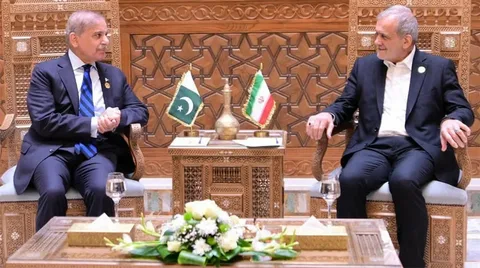
Pakistan and Iran have reaffirmed their commitment to raising bilateral trade to $10 billion, marking the latest step in a broader push to deepen Pakistan-Iran relations even as regional tensions tied to the wider Iran conflict continue to simmer. The announcement came during the 10th Pakistan-Iran Joint Trade Committee meeting held in Islamabad.
Background
Understanding Pakistan-Iran relations history helps explain why this trade push matters. The two countries share a roughly 900-kilometer border and were once close economic partners, with bilateral trade surpassing $1.2 billion back in the 2010 fiscal year before Western sanctions on Tehran intensified and sharply curtailed formal trade volumes.
Pakistan-Iran relations have been shaped by a complex mix of shared religious ties, economic interdependence, and periodic border security tensions. Unlike the often-discussed question of Iran, Pakistan war scenarios, the two nations have never fought a direct war against each other, though sporadic cross-border skirmishes tied to militant activity along their shared frontier have periodically strained relations in recent years.
Trade between the neighbors has hovered around just $3 billion in recent years, far below the $10 billion target both governments have repeatedly set. Officials say achieving that goal would require roughly 2,000 trucks or containers moving between the two countries every single day on average, a scale of cross-border logistics that current infrastructure cannot yet support.
Details
The latest push came during the 10th Pakistan-Iran Joint Trade Committee meeting, co-chaired by Commerce Minister Jam Kamal Khan and Iranian Minister of Industry, Mine and Trade Mohammad Atabak. Atabak described Pakistan as a long-term strategic trading partner and voiced Iran’s interest in expanding trade and logistics cooperation through the ports of Karachi and Gwadar.
The meeting produced commitments to remove trade barriers, operationalize long-planned border markets, and expand cooperation across energy, transport, investment, and agriculture. Both sides also agreed to accelerate work on a long-awaited Pakistan-Iran Free Trade Agreement, which officials hope will formalize preferential tariffs and reduce the bureaucratic friction that has slowed trade growth for years.
Beyond trade, Pakistan-Iran relations have also involved recent high-level security talks. Iranian Interior Minister Eskandar Momeni met with Pakistani counterpart Mohsin Naqvi in Islamabad to discuss the evolving regional security situation, as renewed hostilities between the United States and Iran threatened to complicate Pakistan-led diplomatic efforts aimed at de-escalating the broader conflict.
Investment cooperation has also advanced separately. Pakistan’s Board of Investment and Iran’s Supreme Council of Free Trade, Industrial and Special Economic Zones have signed a memorandum of understanding to establish joint special economic zones along the shared border, particularly around the Rimdan-Gabd border region, though officials acknowledge that provincial coordination challenges on Pakistan’s side have slowed implementation.
Quotes
Commerce Minister Jam Kamal Khan said transforming the historic ties between the two countries into a strong economic partnership was the need of the hour, adding that both governments must provide a favorable and reliable business environment for private-sector actors to expand commercial ties.
Iranian Minister Mohammad Atabak expressed hope that the long-discussed Pakistan-Iran Free Trade Agreement would be concluded soon, noting that electricity trade and regional connectivity offered new economic opportunities for both countries beyond traditional goods trade.
Iranian Ambassador to Pakistan Reza Amiri Moghadam, in separate talks with Pakistan’s Investment Minister Qaiser Ahmed Sheikh, praised what he called Pakistan’s forward-looking approach to the partnership, stressing that current developments present a timely opportunity to expand trade through both land and sea routes.
Impact
The renewed trade push carries regional significance well beyond bilateral commerce. Pakistan has positioned itself as a mediator in Iran’s broader diplomatic disputes with Washington, and stronger Pakistan-Iran relations could reinforce Islamabad’s credibility as a regional interlocutor during a period of heightened Middle East tensions.
For Pakistan’s western provinces, particularly Balochistan, expanded border trade with Iran carries direct economic stakes. Officials have argued that formalizing barter trade and border markets would not only boost economic activity but also help address shared security challenges tied to smuggling and militant activity along the porous border region.
The trade push also has implications for Pakistan Iran nuclear relations indirectly, since any progress toward resolving Iran’s standoff with the United States over its nuclear program could ease broader sanctions pressure and open more space for Tehran to expand legitimate trade with neighbors like Pakistan, rather than relying on informal or sanctioned channels.
Questions about whether Iran and Pakistan, who is more powerful militarily or economically, come up frequently in regional discussions, though the comparison is complicated: Pakistan holds a declared nuclear arsenal and a larger standing military, while Iran fields a larger population and greater domestic energy reserves. On the question of whether Iran support Pakistan or India, Tehran has generally pursued a balanced approach, maintaining active trade and diplomatic relations with both South Asian neighbors rather than favoring one over the other, even as Pakistan and India themselves remain locked in their own long-running rivalry.
Conclusion
With the Free Trade Agreement still being finalized and cross-border infrastructure requiring significant investment, the $10 billion trade target remains aspirational for now rather than imminent. Officials on both sides say the coming months, particularly progress on special economic zones and border market operationalization, will show whether this latest round of commitments actually moves Pakistan-Iran relations forward.
Frequently Asked Questions
Is Pakistan allied with Iran?
Pakistan and Iran maintain a close but pragmatic relationship rather than a formal military alliance in the traditional sense. Both countries are members of the Economic Cooperation Organization and cooperate on trade, energy, and border security matters, and Pakistan has recently positioned itself as a diplomatic bridge between Iran and the United States during recent tensions. However, Pakistan’s primary strategic and defense partnerships lie elsewhere, particularly with China and, to a lesser extent, Gulf Arab states, meaning the Pakistan-Iran relationship is best described as a cooperative neighborly partnership focused heavily on trade, energy, and regional stability rather than a binding military alliance.
Who is Pakistan’s biggest friend?
China is widely regarded as Pakistan’s closest and most strategically significant international partner, a relationship often described by officials in both countries as an “all-weather friendship.” The two countries cooperate extensively on defense, infrastructure, and economic development, most notably through the China-Pakistan Economic Corridor, a multi-billion-dollar infrastructure and investment initiative. While Pakistan maintains important relationships with Iran, Saudi Arabia, and other Gulf states, none of these partnerships matches the scale, consistency, or strategic depth of Pakistan’s relationship with China across defense, diplomatic, and economic dimensions.
Who is the diplomat of Iran to Pakistan?
Iran’s current ambassador to Pakistan is Reza Amiri Moghadam, who has been actively engaged in recent talks covering trade, investment, and border cooperation between the two countries. Ambassador Moghadam has met with senior Pakistani officials, including Investment Minister Qaiser Ahmed Sheikh, to discuss the implementation of joint special economic zones and other initiatives tied to the broader $10 billion bilateral trade target. His role has become increasingly visible as Pakistan-Iran relations have deepened over the past year, particularly around economic cooperation and border infrastructure development.