
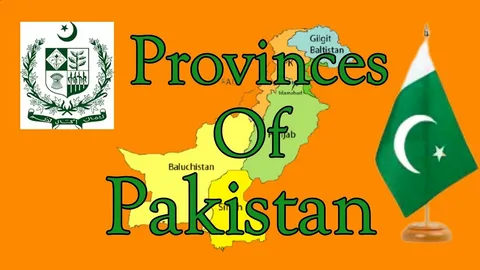
Pakistan is divided into four official provinces, one federal capital territory, and two autonomous territories. People often search for “5 provinces of Pakistan and their capitals” or even “12 provinces of Pakistan” and the answers are not as straightforward as they seem. This guide covers everything you need to know about Pakistan’s provinces, divisions, capitals, and their status in plain, clear language.
How Many Provinces Does Pakistan Have?
Pakistan officially has four provinces recognized under its constitution. These are Punjab, Sindh, Khyber Pakhtunkhwa (KPK), and Balochistan. When people ask about 5 provinces of Pakistan, they are usually including Islamabad Capital Territory or referring to Gilgit-Baltistan, which is technically not a full constitutional province.
In addition to the four provinces, Pakistan has two autonomous territories Azad Jammu & Kashmir and Gilgit-Baltistan and one federal capital territory, which is Islamabad. When all these are counted together, the total comes to seven administrative units.
So the answer depends on what you are counting. If you mean constitutionally recognized provinces, the answer is four. If you include all major administrative territories, the total becomes six or seven.
5 Provinces of Pakistan and Their Capitals Detailed List
Below is a detailed breakdown of the provinces and major territories of Pakistan along with their capitals, commonly used when people search for 5 provinces of Pakistan and their capitals.
1. Punjab Capital: Lahore
Punjab is the most populous province of Pakistan and the second largest by area. It covers approximately 205,344 square kilometres, which is roughly 26 percent of Pakistan’s total land area. According to the 2023 digital census, Punjab has a population of over 127 million people, making it by far the most densely populated province in the country.
Lahore, the provincial capital, is also Pakistan’s second-largest city and its cultural heart. Punjab contains ten administrative divisions: Lahore, Rawalpindi, Gujranwala, Faisalabad, Sargodha, Multan, Sahiwal, Bahawalpur, DG Khan, and Gujrat. The province has 41 districts in total.
Punjab is Pakistan’s agricultural powerhouse. It contributes the majority of Pakistan’s wheat, rice, sugarcane, and cotton production. The province also holds the bulk of the country’s industrial and manufacturing base.
2. Sindh — Capital: Karachi
Sindh is located in the southeastern part of Pakistan and covers around 140,914 square kilometres, which is roughly 18 percent of Pakistan’s total land area. According to the 2023 census, it has a population of over 55 million people. Its capital, Karachi, is not only the provincial capital but also the largest city in Pakistan and the country’s financial and commercial hub.
Sindh is divided into six administrative divisions: Karachi, Hyderabad, Sukkur, Larkana, Mirpur Khas, and Shaheed Benazirabad. The province has 30 districts. Sindh is home to the Indus River, one of the great rivers of Asia, and hosts the ancient ruins of Mohenjo-Daro, a UNESCO World Heritage Site.
The province is ethnically diverse but Sindhi is the primary language of the native population. Karachi, however, has a highly mixed demographic with Urdu-speaking communities, Pashtuns, Punjabis, Baloch, and many other groups living side by side.
3. Khyber Pakhtunkhwa Capital: Peshawar
Khyber Pakhtunkhwa, commonly known as KPK, is located in the northwestern part of Pakistan. It covers approximately 101,741 square kilometres, which is about 13 percent of Pakistan’s land area. Its population according to the 2023 census is over 40 million people. The provincial capital is Peshawar, one of the oldest cities in South Asia.
KPK is divided into seven administrative divisions: Peshawar, Mardan, Hazara, Malakand, Kohat, Bannu, and Dera Ismail Khan. The province has 40 districts. In 2018, the Federally Administered Tribal Areas (FATA) were merged into KPK, significantly increasing its geographic size and district count.
The province is rich in natural beauty, with the Swat Valley, Chitral, and Naran-Kaghan attracting both domestic and international tourists. However, some areas of KPK — particularly those bordering Afghanistan face serious security challenges, which are addressed in the FAQ section below.
4. Balochistan Capital: Quetta
Balochistan is the largest province in Pakistan by area, covering approximately 347,190 square kilometres nearly 44 percent of Pakistan’s total land area. Despite this vast size, it has the smallest population of all four provinces, with around 14.8 million people according to the 2023 census, giving it a very low population density of roughly 43 people per square kilometre.
The capital city is Quetta, which serves as the main economic and administrative centre of the province. Balochistan is divided into eight administrative divisions: Quetta, Kalat, Sibi, Zhob, Nasirabad, Makran, Loralai, and Kharan. The province has 36 districts.
Balochistan is extraordinarily rich in natural resources. It holds large reserves of natural gas, coal, copper, and gold. The Reko Diq copper and gold project and the deep-sea port of Gwadar are among its most significant economic assets. Yet despite these resources, Balochistan remains the poorest and least developed province in Pakistan a paradox that has long been a source of frustration and political tension.
5. Islamabad Capital Territory Capital: Islamabad
Islamabad Capital Territory is Pakistan’s federal capital region. It covers just 906 square kilometres a tiny fraction of Pakistan’s total area but holds enormous political importance as the seat of Pakistan’s federal government. Its population according to the 2023 census is approximately 2.36 million people.
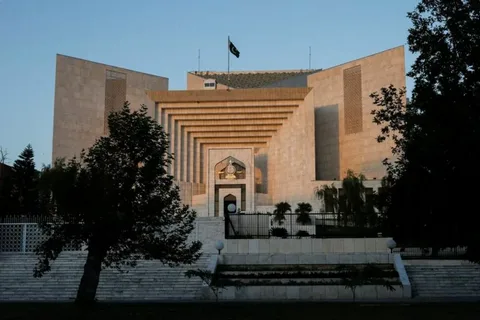
Islamabad was planned and built in the 1960s to serve as Pakistan’s new capital, replacing Karachi. It is a modern, planned city known for its wide tree-lined streets, organized sectors, and relatively cleaner environment compared to other major Pakistani cities. The city is home to major federal institutions including Parliament House, the Supreme Court, and all major ministries.
Gilgit-Baltistan and Azad Kashmir Provinces or Not?
Is Gilgit-Baltistan a Province of Pakistan?
This is one of the most frequently asked and politically sensitive questions about Pakistan’s administrative structure. The short and accurate answer is: No, Gilgit-Baltistan is not constitutionally a province of Pakistan.
Gilgit-Baltistan covers about 72,971 square kilometres in the northern part of the country and has an estimated population of around 1.5 million people. The region was renamed from “Northern Areas” to Gilgit-Baltistan in 2009 and was given a degree of self-governance. However, it has never been formally incorporated into Pakistan’s constitution as a full province.
The reason for this constitutional limbo is directly linked to the Kashmir dispute. Pakistan’s official position is that the final status of Jammu and Kashmir including Gilgit-Baltistan should be determined through a United Nations-supervised plebiscite. Making Gilgit-Baltistan a formal province would be seen as formally annexing the territory, which could undermine Pakistan’s stated position on the broader Kashmir issue.
Despite several political promises most notably from former Prime Minister Imran Khan in 2020 Gilgit-Baltistan has not been granted full provincial status. The region’s elected assembly has passed resolutions demanding constitutional rights and provincial status, but no formal amendment has been passed in Pakistan’s Parliament to date.
Gilgit-Baltistan is currently administered through presidential orders, with a locally elected assembly and a chief minister, but without full constitutional representation in Pakistan’s Senate or National Assembly.
Azad Jammu and Kashmir
Azad Jammu and Kashmir (AJK) is similarly not a formal province of Pakistan. It is also an autonomous self-governing territory with its own assembly, prime minister, and judiciary, but it exists outside Pakistan’s federal constitutional structure for the same reasons — it is considered disputed territory in the context of the Kashmir conflict.
Pakistan Division List All 37 Divisions
Pakistan’s provinces are subdivided into 37 administrative divisions (not counting Islamabad Capital Territory, Gilgit-Baltistan, and Azad Kashmir’s own divisions). These divisions sit between the provincial government and the district administration and are each headed by a Commissioner.
The divisions were originally established by British colonial authorities, abolished under General Pervez Musharraf’s devolution plan in 2000, and then restored in 2008 due to administrative inefficiencies that emerged in their absence.
Here is the complete Pakistan division list by province:
Punjab (10 Divisions): Lahore, Rawalpindi, Gujranwala, Faisalabad, Sargodha, Multan, Sahiwal, Bahawalpur, Dera Ghazi Khan, Gujrat
Sindh (6 Divisions): Karachi, Hyderabad, Sukkur, Larkana, Mirpur Khas, Shaheed Benazirabad
Khyber Pakhtunkhwa (7 Divisions): Peshawar, Mardan, Hazara, Malakand, Kohat, Bannu, Dera Ismail Khan
Balochistan (8 Divisions): Quetta, Kalat, Sibi, Zhob, Nasirabad, Makran, Loralai, Kharan
Gilgit-Baltistan (3 Divisions): Gilgit, Diamer, Baltistan
Azad Jammu & Kashmir (3 Divisions): Muzaffarabad, Poonch, Mirpur
Pakistan Provinces Area Percentage
Understanding Pakistan’s provinces area percentage helps put the country’s geography in context. Balochistan dominates by land area while being the smallest in population:
| Province / Territory | Area (km²) | Area Percentage | Population (2023) |
| Balochistan | 347,190 | ~44% | 14.8 million |
| Punjab | 205,344 | ~26% | 127.7 million |
| Sindh | 140,914 | ~18% | 55.7 million |
| Khyber Pakhtunkhwa | 101,741 | ~13% | 40.8 million |
| Gilgit-Baltistan | 72,971 | ~9% | ~1.5 million |
| Azad Kashmir | 13,297 | ~2% | ~4 million |
| Islamabad Capital Territory | 906 | ~0.1% | 2.36 million |
This table makes clear a striking geographic reality: Balochistan covers nearly half of Pakistan’s total land mass but holds less than 8 percent of its population. Punjab, by contrast, covers just a quarter of the land but is home to more than half of Pakistan’s entire population.
Is There Really a “12 Provinces of Pakistan” List?
When people search for “12 provinces of Pakistan,” they are often encountering outdated information or confusion stemming from Pakistan’s administrative history. Pakistan has never had 12 provinces simultaneously in its post-1971 form.
After the independence of Bangladesh in 1971, which had been East Pakistan, the remaining West Pakistan was reorganized. The current four-province structure Punjab, Sindh, KPK, and Balochistan has been in place since 1970. The number 12 may also arise in some sources when people count all administrative divisions including Azad Kashmir, Gilgit-Baltistan, and Islamabad separately, then add in older historical configurations.
If you count the four provinces, two autonomous territories, and one federal capital territory, the total is seven not twelve. Pakistan currently has four constitutionally recognized provinces, and that structure has remained unchanged since 1970.
FAQs
Which is the poorest province of Pakistan?
Balochistan is consistently identified as the poorest province of Pakistan by multiple sources including the United Nations Development Programme (UNDP) and Pakistan’s own national economic surveys. According to the Pakistan Economic Survey 2025–26, the poverty rate in Balochistan has risen to approximately 47 percent meaning nearly one in every two residents of the province lives below the poverty line. This makes Balochistan’s poverty rate significantly higher than the national average of around 28.9 percent, and even comparable to some of the world’s most economically challenged nations. The poverty paradox of Balochistan is particularly striking because the province holds enormous natural wealth, including vast reserves of natural gas, coal, copper, and gold. The Reko Diq copper and gold project alone is one of the largest untapped mineral deposits in the world. Yet weak governance, limited infrastructure, low investment, poor public service delivery, and security challenges have meant that ordinary residents of Balochistan have seen very little benefit from these resources. Lack of access to clean water, electricity, and quality education remains widespread across much of the province, particularly in rural and border districts.
Which city is called Mini Pakistan?
Karachi, the largest city in Pakistan and the capital of Sindh province, is widely referred to as “Mini Pakistan” because it is home to people from every ethnic, linguistic, and regional background in the country. According to the 2023 Pakistani census, Karachi has a population of over 20 million people, making it one of the largest cities in the world. Its population includes Urdu-speaking Muhajirs descendants of Muslims who migrated from India after partition in 1947 who form the largest single linguistic group at around 50 percent of the city’s population. They are followed by Pashtuns, who make up roughly 13 to 25 percent of Karachi’s residents, as well as Punjabis, Sindhis, Baloch, Kashmiris, and communities from Gilgit-Baltistan and Azad Kashmir. Even more Pashtuns are said to live in Karachi than in Peshawar itself, which underscores the scale of migration to the city.
Is Khyber Pakhtunkhwa safe?
The answer to this question depends entirely on which part of Khyber Pakhtunkhwa you are asking about. KPK is a geographically and demographically diverse province, and the security situation varies significantly from one area to another. The tourist destinations of KPK particularly Swat Valley, Naran, Kaghan, and Chitral have attracted large numbers of domestic tourists and are generally considered safe for travel within Pakistan. These areas are known for stunning mountain scenery, rivers, and green valleys that rival some of the most beautiful landscapes in the world. Peshawar, the provincial capital, also functions as a normal urban center with daily commercial and social life continuing normally for residents. However, the picture is significantly different in other parts of the province. Areas bordering Afghanistan including North and South Waziristan, Bajaur, and the Khyber District face serious and ongoing security challenges including terrorist attacks, armed clashes, and militant activity.