
The United States does not yet have a unified federal AI law. What it has is a patchwork executive orders, agency guidelines, state-level legislation, and ongoing congressional debate that is trying to keep pace with technology moving faster than any of those mechanisms were designed to handle. The conversation around AI regulation United States has reached a level of urgency in 2026 that earlier policy discussions did not carry, driven by real concerns about national security, misinformation, and the competitive pressure of watching other countries move faster on governance.
How the US resolves the tension between regulating AI seriously and maintaining the innovation edge that American tech companies currently hold is one of the more consequential policy questions of the decade.
Background of AI Regulation in the United States
The AI regulation United States 2020 period marked a shift from pure hands-off encouragement to something more structured. Federal agencies began issuing transparency guidelines and fairness standards for government AI use. The ambition was real; the enforcement mechanisms were thin.
The reason the conversation intensified is straightforward: the AI systems being built in 2020 and the AI systems being deployed in 2026 are not the same thing. Generative AI at scale, autonomous decision-making in consequential domains, and AI-generated content that is indistinguishable from human-produced material these are not incremental improvements. They are capability jumps that expose gaps in frameworks designed for an earlier version of the technology.
Job displacement, cybersecurity vulnerabilities, and the potential for AI systems to be used in influence operations are no longer theoretical. They are documented, occurring, and growing. That shift in the factual landscape has pushed regulation from an optional discussion to a necessary one.
Details of AI Regulation Executive Orders
Without a comprehensive federal AI law, the AI regulation executive order has done most of the governance work at the federal level. These orders direct federal agencies on how to assess, test, and deploy AI systems within government operations and set standards that contractors and vendors must meet.
The AI Executive Order PDF documents published by government bodies lay out requirements in areas like risk assessment, transparency reporting, model safety testing, and human oversight mechanisms. These are binding for federal agencies and create de facto standards that influence how private companies build systems they intend to sell to government.
The limitation of the executive order approach is structural: a new administration can modify or revoke these orders without congressional action. That creates uncertainty for companies investing in compliance — what is required today may not be required in two years. Durable AI governance ultimately requires legislation, and that is where the US is still falling short.
AI Regulation Under Trump Administration
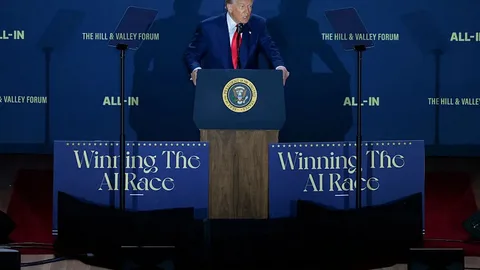
The AI regulation Trump era policy approach prioritized deregulation. The argument was that aggressive regulation of AI would slow American companies while Chinese competitors, operating under different constraints, continued to scale. Removing regulatory barriers would allow US AI development to maintain a speed advantage.
Supporters of that position can point to real outcomes: American AI companies dominate the global commercial AI landscape in ways that earlier predictions of Chinese supremacy did not anticipate. Whether that dominance is attributable to deregulation or to other factors talent concentration, capital access, research infrastructure is debated.
Critics point to what deregulation did not produce: accountability mechanisms for AI systems causing harm, transparency requirements for how systems make decisions, or safety standards for high-risk applications. The accountability gaps that are now being litigated in policy debates are partly the product of a period when the regulatory floor was deliberately kept low.
In 2026, the debate over AI regulation Trump policies is less about relitigating those choices and more about what the appropriate regulatory posture is given where the technology is now.
Federal AI Regulation and State-Level Laws
The absence of unified federal AI regulation has produced a state patchwork that creates real compliance complexity for companies operating nationally. State AI laws vary substantially in scope, focus, and enforcement mechanisms.
California has moved toward stronger AI transparency and accountability requirements. Texas has taken a lighter-touch approach. Several states have passed laws specifically targeting AI use in hiring decisions, facial recognition, and law enforcement. Others have focused on educational AI disclosure requirements.
For a company deploying an AI system across multiple states, this means navigating overlapping and sometimes contradictory requirements. The argument for federal preemption a single national standard that supersedes state rules is largely about reducing that compliance burden. The counterargument is that states have historically served as policy laboratories and that federal standards set too early could lock in approaches before the technology is well enough understood.
AI Regulation Around the World
The United States is not setting the global pace on AI governance, and policymakers are aware of it.
The European Union’s AI Act is the most comprehensive regulatory framework currently in force anywhere. It uses a risk-tiered structure minimal regulation for low-risk applications, strict requirements for high-risk ones, and outright prohibitions for certain uses. It is prescriptive in ways that US approaches have not been.
China’s approach is different: heavy state oversight, content control, and mandatory registration of certain AI systems, with the government actively shaping what AI can and cannot say or produce.
AI regulations around the world reflect these three distinct models: the EU’s rights-based compliance framework, China’s state-control model, and the US’s innovation-first approach that is now trying to add more governance structure without abandoning its foundational assumptions.
Which model produces better outcomes for safety, for innovation, for democratic values is a genuine open question. The answer will partly be determined by how AI systems actually perform under each regulatory environment over the next several years.
Expert and Official Views on AI Regulation
A senior policy analyst quoted in recent discussions put it directly: AI systems are now operating at a scale where national-level oversight is not optional. That framing oversight as necessity rather than choice — reflects how the conversation has shifted among people who work on this full time.
Industry leaders have added a different concern: inconsistent regulation across jurisdictions creates fragmented AI ecosystems where the same system might be legal in one market and prohibited in another. That fragmentation increases compliance costs and may push some AI development toward less regulated environments which is the opposite of what safety-focused regulation intends.
The gap between what AI governance experts think is needed and what the political system is currently able to deliver is wide, and both sides of that gap are growing.
Impact of AI Regulation on Technology and Society
Federal AI regulation, when it arrives, will reshape how AI companies operate in several concrete ways:
- Compliance costs will increase, particularly for smaller companies that cannot absorb large legal and technical overhead
- Safety testing requirements will slow deployment timelines for high-risk applications
- Transparency obligations will require companies to explain how systems make decisions in ways they currently do not have to
- High-risk application restrictions will prohibit or heavily constrain certain uses — autonomous weapons decisions, real-time biometric surveillance, social credit-style systems
- International competitive dynamics will shift depending on whether US companies face requirements that competitors in less-regulated markets do not
The net effect on innovation is genuinely uncertain. Regulation tends to raise floors the worst outcomes become less likely. Whether it also lowers ceilings the best outcomes become harder to reach depends on how well the regulatory design matches the actual risk landscape of the technology.
Global Economic and Security Implications
AI regulation is a national security issue as much as a technology policy issue. AI Executive Order frameworks developed in recent years have consistently emphasized this: AI systems that can be used for cyberattacks, autonomous decision-making in military contexts, or large-scale disinformation are strategic concerns, not just consumer product concerns.
The competition between the US and China on AI is partly economic and partly about which country’s AI systems run the critical infrastructure, communication networks, and decision-making systems of third countries. Regulatory frameworks that establish trusted, safe AI are a form of soft power — countries choosing to adopt US-developed AI over Chinese-developed AI are partly making a values and trust judgment.
Federal AI regulation that credibly addresses safety and transparency concerns strengthens that competitive position. Regulation that is seen as political or as regulatory capture by incumbents weakens it.
Future of AI Regulation in the United States
The most likely near-term trajectory is more executive orders and more agency rulemaking rather than comprehensive congressional legislation. The political dynamics for passing a unified AI law are difficult there are genuine disagreements about what it should contain, and there are enough interested parties with conflicting preferences to slow the process significantly.
What could accelerate legislation: a high-profile AI-related harm that generates public pressure for action, or a sufficiently alarming national security event traced to AI systems operating without adequate oversight. These are not implausible scenarios.
What could further complicate it: continued political disagreement about the balance between innovation and regulation, lobbying from companies that benefit from the current patchwork, and the genuine technical difficulty of writing legislation for technology that is evolving faster than legislative cycles.
The future of AI regulation United States will likely involve more federal agency involvement, clearer requirements for high-risk applications, and eventually some form of legislative framework but the timeline is not short.
Conclusion
AI governance in the United States is in motion without a clear destination yet. The AI regulation executive order approach has done meaningful work in the absence of legislation, but it is an interim solution that the scale of the technology is outgrowing.
The debate over AI regulation United States, federal AI regulation, and how to reconcile innovation with safety reflects a genuine difficulty: the stakes are high enough that getting it wrong matters, and the technology is moving fast enough that moving slowly also matters. Neither instinct regulate aggressively now or wait until the technology is better understood produces obviously good outcomes.
What happens in the next two to three years in congressional AI debates and executive agency rulemaking will set the framework the United States operates within for much longer than that.
FAQs
What is the AI policy of the United States?
The United States AI policy operates through a combination of executive orders, federal agency guidelines, and emerging state laws rather than a single comprehensive federal statute. The current framework emphasizes safety testing for government AI systems, transparency requirements for federal AI use, and voluntary commitments from major AI developers. The Biden-era AI Executive Order established the most detailed federal AI governance requirements to date. The Trump administration has historically favored lighter regulation, though national security AI governance has remained a bipartisan priority. The overall direction in 2026 is toward more structured oversight while maintaining a stated commitment to US AI competitiveness.
What is the Trump America AI Act?
There is no legislation formally called the “Trump America AI Act.” The phrase typically refers to the regulatory posture of the Trump administration toward AI characterized by deregulation, reduction of compliance burdens, and emphasis on US competitiveness over precautionary safety requirements. During that period, executive guidance prioritized removing barriers to AI development rather than establishing mandatory safety standards. Whether that approach helped or hurt US AI development relative to international competitors is a contested question among technology policy analysts.
What is the AI legislation in 2026?
In 2026, the United States still does not have a single comprehensive federal AI law. What exists is an evolving set of executive orders, federal agency rules, and state-level legislation covering specific AI applications hiring algorithms, facial recognition, government AI use, and transparency requirements. Congressional proposals for unified AI legislation are active but have not produced a passed law. The EU AI Act, which is fully in force, serves as a reference point in US legislative discussions. The expectation among most policy observers is that some form of federal AI legislation will pass within the next several years, but the specific timeline and content remain uncertain.