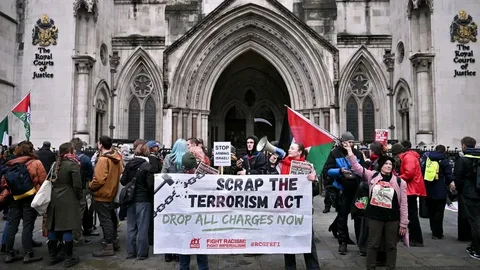
The UK High Court Palestine Action case has become one of the most closely watched legal proceedings in Britain for some time. The Palestine Action group appeal challenges restrictions placed on the activist group following protest activity and direct action campaigns targeting companies linked to Israeli military supply chains. The case is being followed closely by Palestine UK communities, human rights organizations, and legal scholars because the outcome will say something significant about where protest rights sit in UK law right now.
The Palestinian action court case is not simply about one group. It is a test case for how far direct action can go before the law intervenes, and how proportionate those interventions need to be.
Background of the Palestine Action Legal Challenge
Palestine Action emerged as one of the more confrontational activist groups in the UK, targeting companies it identifies as connected to Israeli arms manufacturing and military supply chains. Its tactics went beyond marching and petitioning. Activists occupied premises, painted buildings, and caused damage to facilities associated with defense contractors. Those actions led to arrests, court orders, and the legal proceedings now before the High Court.
The Palestine Action legal challenge is not a single case. It is a series of hearings examining whether the restrictions and enforcement actions taken against the group were lawful under UK law. The government’s position is that some of what Palestine Action did crossed from protected protest into criminal damage and threatened critical infrastructure. The group’s legal representatives argue that the measures applied were disproportionate and impinge on fundamental rights to protest and political expression.
That disagreement — about where the line is and whether it was fairly applied — is what the High Court judgment Palestine Action process is working through.
Details of the UK High Court Palestine Case
The UK High Court Palestine proceedings are focused on proportionality and legality. The court is examining specific government and enforcement decisions, testing whether they were justified under existing law or whether they went further than the legal framework permits.
The incidents that gave authorities grounds for enforcement action included property damage at defense facilities — not minor symbolic protest, but physical damage that courts have taken seriously as grounds for restriction. Palestine Action’s lawyers acknowledge that damage occurred but argue that the cumulative restrictions placed on the group as a whole are excessive relative to what any individual action warranted.
The Palestine Action group appeal challenges earlier decisions and seeks to establish that protest movements engaged in political direct action retain legal protections even when their methods are disruptive or result in property damage. That is not a settled legal question in the UK, which is part of why this case matters beyond the specific group involved.
Palestine UK Political Reactions and Public Debate
The case has divided opinion in ways that track existing divisions about Palestine UK solidarity activism and the Israel-Palestine conflict more broadly.
Human rights organizations including Liberty and Amnesty International have raised concerns about the legal treatment of the group, framing the case as part of a broader pattern of protest suppression in the UK. They point to the Public Order Act 2023 and other recent legislation as having already narrowed the space for disruptive protest, and see the Palestine Action proceedings as a further step in that direction.
Government supporters take a different view: that the law treats every group equally, that property damage has consequences regardless of the political motivation behind it, and that national security considerations justify firm enforcement when protesters target defense facilities.
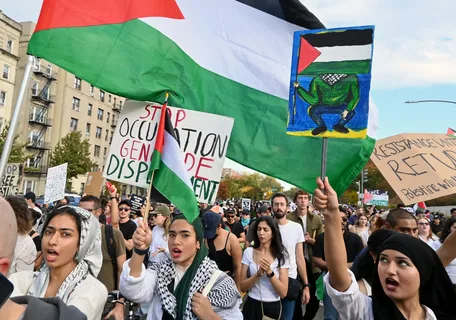
Latest news on Palestine Action continues to emerge from the hearings, with both sides presenting evidence and legal submissions that media coverage has been tracking in detail. Public demonstrations in London and other major cities in support of Palestinian causes have continued in parallel to the legal proceedings.
Legal Arguments and High Court Judgment Palestine Action Focus
The core legal arguments before the court turn on proportionality and human rights compatibility.Palestine Action’s lawyers argue that the restrictions imposed on activists which go beyond criminal prosecution of individuals for specific acts and extend to broader constraints on group activity are incompatible with freedom of expression and assembly protections under UK human rights law. They argue that even where individuals crossed legal lines, the response has been disproportionate to those specific actions.
Government legal representatives argue the opposite: that the enforcement response was calibrated to the threat, that defense infrastructure warrants stronger protection than general commercial property, and that national security considerations provide additional justification for the measures applied.
The High Court judgment Palestine Action will need to weigh these positions against each other. The legal test is not whether the government had good reasons for its actions, but whether those reasons were sufficient to justify the particular restrictions applied. That is a more demanding standard.
International Reactions and Wider Impact
The Palestinian action court case is being watched by human rights organizations internationally, partly because it connects to broader questions about how Western governments are responding to Palestine solidarity activism following the conflict that began in October 2023.
In the United States and across Europe, protest movements related to the Israel-Palestine conflict have grown substantially and faced various forms of legal and institutional response. The UK case is being read as part of that pattern, with observers drawing comparisons to campus activism restrictions in the US and similar legal proceedings elsewhere in Europe.
President Trump Israel foreign policy positions particularly the strong US alignment with Israeli government positions have added a diplomatic dimension to how these protest movements are perceived internationally, even though they have no direct bearing on the UK court proceedings. The political context in which the case is being decided is shaped by that global debate.
Impact on Protest Rights and UK Law
The stakes of the High Court judgment Palestine Action extend well past the group itself.If the court rules against Palestine Action and upholds the restrictions, it will establish or reinforce legal precedent that direct action protest targeting defense-related facilities can be subject to broader suppression measures than other forms of protest. Legal experts say this would give authorities clearer grounds to apply similar measures to other groups in future cases.
If the court rules in favor of the Palestine Action group appeal and finds that some restrictions were disproportionate, it would push back against that direction and restore some of the space that recent legislation and enforcement trends have narrowed. Human rights lawyers argue this would be an important signal that courts remain willing to scrutinize protest restrictions critically.
The outcome matters for Palestine UK activism specifically and for the broader landscape of political protest in Britain.
Media Coverage and Latest Developments
The latest news on Palestine Action has been covered across national and international outlets, with the legal arguments getting detailed attention from legal correspondents and the political dimensions being tracked by political reporters simultaneously.
Coverage has been divided in tone outlets closer to the government’s position have emphasized the property damage and security concerns; outlets more sympathetic to the activists have foregrounded the human rights arguments. Both angles are present in the UK high court Palestine proceedings themselves, which is what makes the eventual judgment significant.
The hearings are still running. A final judgment is expected to arrive after the current round of submissions is complete, though court timelines in complex cases can shift.
Conclusion
The UK High Court Palestine Action case is a genuine legal test of where protest rights sit in twenty-first century British law. The Palestine Action legal challenge asks whether restrictions placed on a politically controversial activist group were proportionate and the answer will have implications that reach beyond any one group or cause.
The Palestinian action court case sits at the intersection of national security law, human rights protections, and the politically charged debate about Palestine UK activism. However the High Court judgment Palestine Action lands, it will be cited in protest law discussions for years.
FAQs
What is Tommy Robinson protesting about?
Tommy Robinson real name Stephen Yaxley-Lennon is known primarily for anti-immigration activism, campaigns against Islam as he characterizes it, and protests targeting what he frames as government failure to address crime linked to migration. He has organized and participated in demonstrations under various banners, including the English Defence League, which he co-founded. His activities have led to criminal convictions, contempt of court findings, and repeated conflict with UK law enforcement. His case is sometimes compared to Palestine Action debates in that both involve questions about protest rights and enforcement, though the political causes and legal circumstances are substantially different.
Can Jews marry Muslims in Israel?
Israel does not have civil marriage. Marriage is administered through religious authorities Jewish couples marry through the Rabbinate, Muslim couples through Islamic courts, and so on. Interfaith couples without a common religious framework have no formal domestic marriage route and typically travel abroad often to Cyprus to marry civilly and have that marriage recognized in Israel on return. The system reflects the role of religious institutions in personal status law in Israel, which has been a source of ongoing political debate within the country.
Is the UK helping Iran or Israel?
The UK maintains a formal position of supporting international law, a negotiated two-state solution, and humanitarian access in the Israel-Palestine conflict. In practice, UK policy has been more aligned with Western allies who support Israel’s right to self-defense while calling for civilian protection and a humanitarian pause. The UK has applied some sanctions on Iran and has supported international efforts to limit Iranian nuclear development. It does not take a position of active military support for either Iran or Israel, but diplomatic alignment with Western positions has meant the UK has drawn criticism from Palestinian solidarity campaigners as insufficiently neutral.