
Colombia Presidential Runoff 2026: Leftist Senator Faces Pro-Trump Rival in a Battle for the Nation’s Future
Colombia is heading into one of the most consequential elections in its recent history after voters delivered a dramatic first-round result that has set up a direct showdown between leftist senator Iván Cepeda and right-wing outsider Abelardo de la Espriella.
The presidential runoff, scheduled for June 21, will determine whether Colombia continues along the path of progressive reforms championed by the current administration or shifts sharply toward a tougher, security-focused agenda inspired by conservative movements gaining momentum across Latin America.
The election has become a defining contest over security, economic policy, social reform, and Colombia’s place in a rapidly changing political landscape.

A Country Divided Between Two Visions
The Colombia presidential runoff is shaping up as a clash between two completely different political philosophies.
Iván Cepeda, a veteran senator and human rights advocate, has built his campaign around expanding social programs, reducing inequality, and continuing peace negotiations with armed groups. He argues that Colombia’s long-term stability depends on addressing poverty, improving healthcare, and creating opportunities for marginalized communities.

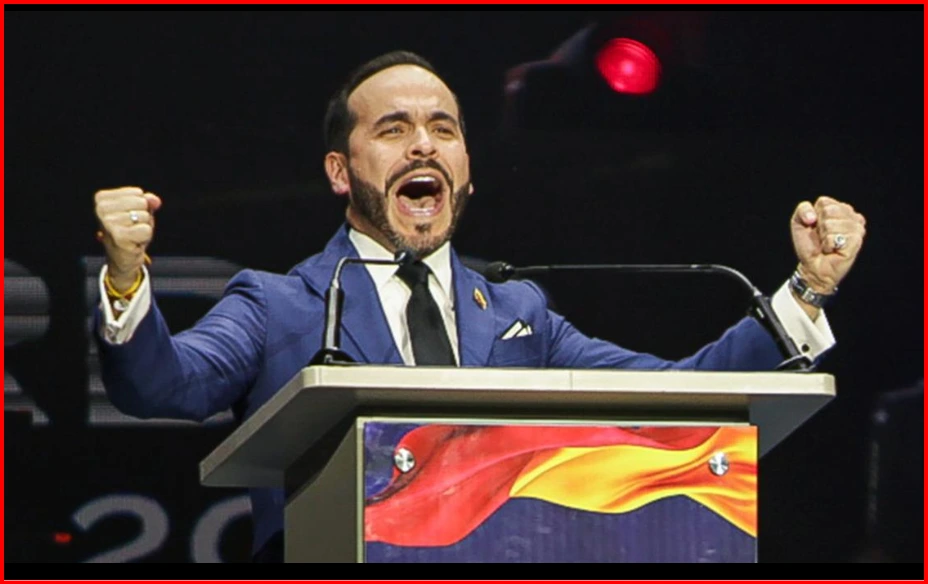
His opponent, Abelardo de la Espriella, has emerged as one of the biggest surprises of the election. A lawyer with no previous elected office experience, he has campaigned as a political outsider promising an aggressive crackdown on crime, stronger border security, and tougher action against armed organizations. His political style has drawn comparisons to both U.S. President Donald Trump and El Salvador’s President Nayib Bukele.
Why Security Has Become the Central Issue
For many Colombians, security has become the defining issue of the election.
Recent years have seen renewed concerns over violence, organized crime, and the activities of armed groups in several regions of the country. These concerns have fueled support for candidates promising stronger law enforcement and tougher security measures.
De la Espriella has seized on those fears by proposing a major expansion of security operations, the construction of large prisons, and a more aggressive strategy against criminal organizations.
His supporters argue that Colombia needs decisive action to restore order and protect communities affected by violence. Critics, however, warn that hardline policies alone may not address the deeper social and economic factors that contribute to instability.
Cepeda’s Promise: Reform Instead of Retrenchment
While security dominates headlines, Cepeda has focused on a different message.
The leftist senator says Colombia must continue tackling inequality, poverty, and exclusion if it wants to achieve lasting peace. His platform includes expanding healthcare coverage, strengthening social welfare programs, increasing support for low-income families, and advancing land reforms designed to help victims of decades of conflict.
Cepeda has also defended negotiations with armed groups as part of a broader strategy to reduce violence. Although critics argue that such efforts have produced limited results, his supporters believe long-term peace cannot be achieved through military measures alone.
The Rise of Colombia’s Pro-Trump Challenger
Perhaps the most remarkable story of the election has been the rapid rise of Abelardo de la Espriella.
Entering the race as a political outsider, he managed to attract voters frustrated with both traditional parties and the current government. His campaign has relied on strong rhetoric, anti-establishment messaging, and promises of rapid action on security and economic issues.
The first-round results showed him finishing ahead of Cepeda, giving momentum to his campaign heading into the runoff. Several conservative figures and right-leaning politicians have already signaled support for his candidacy in the second round.
International Attention Focuses on Colombia
The election is attracting attention far beyond Colombia’s borders.
Political analysts believe the outcome could influence regional politics across Latin America. A victory for Cepeda would likely strengthen progressive movements and continue the reform agenda associated with the current administration.
A victory for de la Espriella, meanwhile, could signal a broader shift toward conservative politics and stronger security-focused governance, reflecting trends already seen in several neighboring countries.
International investors, diplomatic observers, and regional leaders are closely monitoring the race because of its potential impact on economic policy, security cooperation, and foreign relations.
What Happens Next?
With neither candidate securing more than 50 percent of the vote in the first round, the election now moves to a runoff where every vote will matter. The second round is expected to be highly competitive as candidates attempt to win support from voters whose preferred candidates were eliminated.
Political observers believe turnout could become the deciding factor. If either candidate succeeds in mobilizing new voters, the balance of the race could shift dramatically.
FAQs
When is the Colombia presidential runoff?
The runoff election is scheduled for June 21, 2026.
Who is Iván Cepeda?
Iván Cepeda is a leftist senator, human rights advocate, and ally of Colombia’s current progressive government.
Who is Abelardo de la Espriella?
Abelardo de la Espriella is a right-wing lawyer and political outsider known for his tough-on-crime platform and admiration for conservative leaders including Donald Trump.
Why is this election important?
The election will shape Colombia’s future direction on security, economic reforms, social policy, and international relations for years to come.
Conclusion
The Colombia presidential runoff has evolved into far more than a standard election. It is now a referendum on two competing visions for the country’s future. Whether voters choose the reform-focused agenda of Iván Cepeda or the hardline security approach of Abelardo de la Espriella, the outcome is likely to reshape Colombia’s political landscape and influence Latin America’s broader political direction for years ahead.