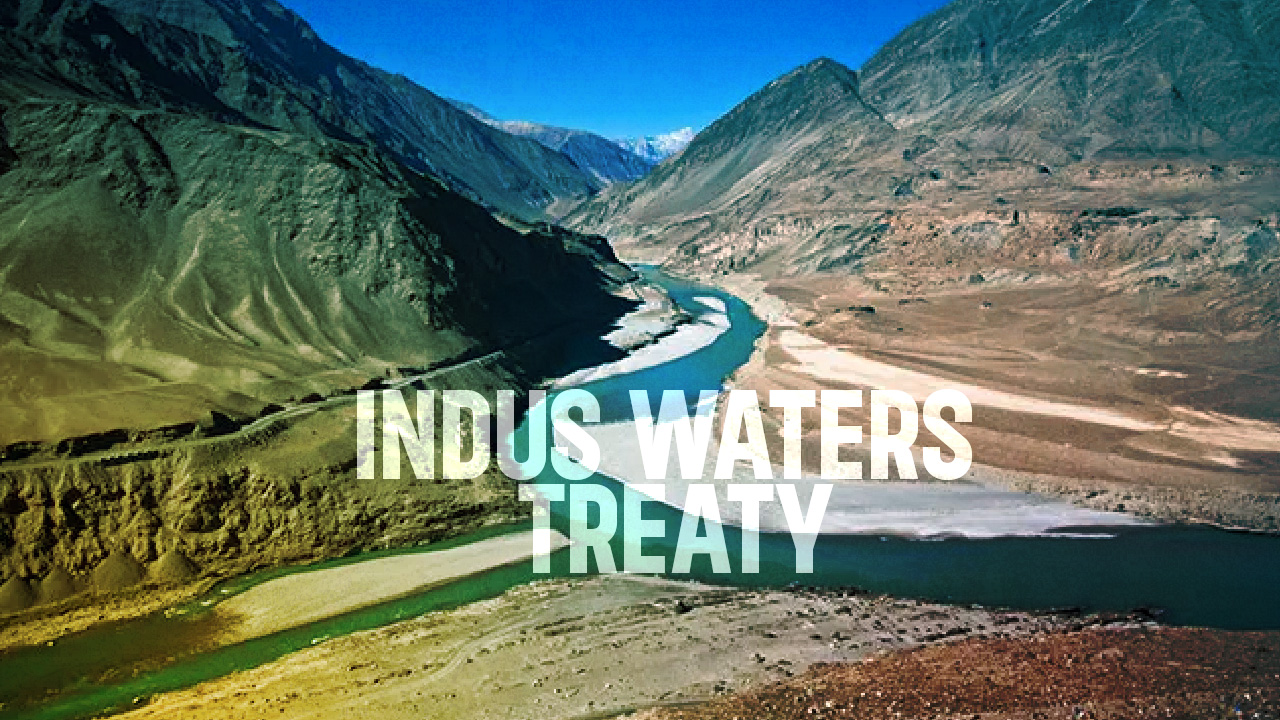
More than a year after India put the Indus Waters Treaty in abeyance, Pakistan is still fighting the decision on every front it can find, legal, diplomatic, and now at the UN. On Wednesday, Foreign Minister Ishaq Dar told an OIC gathering in New York that India cannot pick and choose when its treaty obligations apply, and he leaned heavily on a recent arbitration ruling to back that up.
It’s not a new argument from Dar. But the timing, right as the treaty’s legal status has been formally tested and confirmed by an international court, gives it more weight than it had a year ago.
Background: A Treaty That Survived Wars, Until It Didn’t
Signed in 1960 with the World Bank as guarantor, the Indus Waters Treaty split control of the Indus river system between India and Pakistan. It held through multiple wars and decades of hostility between the two countries, which is part of why India’s April 2025 move to suspend it, in the wake of a Kashmir militant attack it blamed on Pakistan, felt like such a break from precedent.
Pakistan denied any role in the attack. What followed was a short but intense military clash between the two nuclear-armed neighbors in May 2025, and a treaty dispute that has since moved from angry statements into formal international litigation.
Dar’s Comments at the OIC Meeting
Speaking at the ministerial meeting of the OIC Contact Group on Jammu and Kashmir, on the sidelines of the UN General Assembly’s 81st session, Dar framed the issue in plain terms: the Indus Waters Treaty is binding, and nothing in its text lets either side suspend it unilaterally. He argued that the treaty’s status had already been “reaffirmed by a court of arbitration,” a reference to the August ruling from The Hague.
This wasn’t a one-off line. Dar has been making the same case in different rooms for weeks. At a Washington seminar in late August, he called the treaty “valid, binding and fully operative” despite India’s abeyance declaration, and warned that treating solemn agreements as optional whenever politics sour undermines the entire purpose of signing them in the first place.
What the Court of Arbitration Actually Ruled
The ruling Dar keeps citing came from the Permanent Court of Arbitration in August, and it was about as clear-cut as international rulings get. The five-member tribunal found, unanimously, that the treaty “remains fully in force” and that India must keep observing its obligations, including on the design and operation of hydropower projects on the western rivers.
The court worked through every argument India had made publicly for suspending the treaty: sovereignty, Pakistan’s alleged reluctance to renegotiate, cross-border terrorism, and changing conditions like demographic growth and climate change. None of them held up. The judges concluded there’s no rule in international law that lets a country unilaterally suspend a treaty just because it decides it’s within its rights to do so.
Alongside the main ruling, the court ordered India to pause specific construction work, above certain levels on the dam wall and power intake structure, at the Ratle Hydroelectric Plant in Kashmir. That restriction stays in place until 90 days after a World Bank-appointed neutral expert issues a final decision on the project, which isn’t expected before mid-2027.
India rejected the ruling outright. Its Ministry of External Affairs said the tribunal has no jurisdiction over India’s sovereign decisions and that its findings won’t affect any project India is currently building.
Regional Impact
Beyond the legal back-and-forth, this dispute touches something much more immediate: water that tens of millions of people in Pakistan depend on for farming, drinking, and power. Any long-term disruption to the treaty’s data-sharing and flow arrangements has consequences that outlast any single diplomatic cycle.
It’s also become a proxy for the wider India-Pakistan relationship. Dar has previously warned that denying Pakistan its allocated share of Indus water would carry “profound consequences for regional security,” a line that makes clear this isn’t just a technical water-sharing argument anymore. It’s tangled up with the same security tensions that triggered the suspension in the first place.
Conclusion
Pakistan now has an international ruling in its corner, and it’s using every available platform, the OIC, the UN, bilateral statements, to press the point that the Indus Waters Treaty is still legally binding whatever India says. India, meanwhile, hasn’t shifted an inch, rejecting the court’s authority outright and continuing work on its hydropower projects.
The next concrete test comes when the World Bank-appointed neutral expert rules on the Ratle project, expected before July 2027. Until then, this is likely to stay a war of statements, with Pakistan citing the court, and India ignoring it.
FAQs
Did India release water to Pakistan?
No confirmation has emerged that India has restored the treaty’s normal water-sharing and data arrangements since suspending it in April 2025. India rejected the Permanent Court of Arbitration’s August ruling ordering it to keep observing its obligations, and Pakistan says the practical dispute over water flows and information sharing is still unresolved.
Which rivers flow from India to Pakistan?
Under the Indus Waters Treaty, the western rivers, Indus, Jhelum, and Chenab, flow into Pakistan and were allocated to it for largely unrestricted use. India retained limited rights over these rivers for non-consumptive uses like hydropower, which is why projects such as Ratle and Kishenganga sit at the center of the current dispute. The eastern rivers, Ravi, Beas, and Sutlej, went to India.
Which treaty was signed between India and Pakistan?
The Indus Waters Treaty, signed in 1960 with the World Bank as broker, is the agreement in question. It set out how the two countries would share the Indus river system’s waters and established mechanisms, including arbitration, for resolving disputes, mechanisms now central to the current standoff over India’s 2025 suspension.