
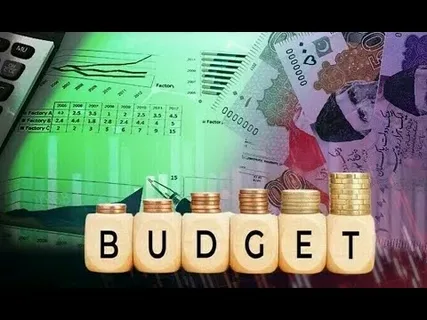
The salary increase in Budget 2026-27 Pakistan is the question every government employee, pensioner, and household budget planner has been waiting on. The federal government has presented its fiscal roadmap for the coming year, and the debate over what public sector workers and retirees will actually receive has dominated Pakistan budget news since the announcement.
The Budget 2026-27 Pakistan date landed against a difficult economic backdrop inflation still elevated, living costs still high, and public expectations that the government would deliver something meaningful for the people most directly on its payroll. Whether the numbers match those expectations is what everyone is now working out.
Background
Every budget cycle in Pakistan brings the same central tension: a government that needs to show fiscal discipline to international lenders while also facing genuine domestic pressure to provide relief to public sector workers who have watched their purchasing power erode through years of high inflation.
That tension has been sharper in recent years. Pakistan’s fiscal position shaped by IMF program conditions, debt servicing obligations, and limited revenue collection leaves narrow room for large expenditure increases. At the same time, government employees earning fixed salaries while food, energy, and housing costs rise are a politically visible constituency with legitimate grievances.
This year’s Pakistan budget news cycle built to the salary and pension announcements faster than usual, partly because the conversations about relief had been running in media and public forums for months before the budget date arrived.
Budget 2026-27 Pakistan Date and Significance
The Budget 2026-27 Pakistan date was not just a procedural milestone. It set off a chain of analysis line by line review of allocations, immediate reactions from business chambers and labor representatives, and detailed scrutiny of whether the headline salary figure translates into actual take-home improvement for workers at different pay scales.
Government officials framed the budget around growth, fiscal management, and development priorities. Those frames are legitimate. They are also, for most government employees, secondary to the simpler question of what the number at the bottom of the pay slip looks like next month compared to this one.
Investors and businesses read the budget for different signals taxation direction, infrastructure spending commitments, and whether the government’s revenue assumptions are credible. Both audiences matter, and budget documents rarely fully satisfy either.
Salary Increase in Budget 2026-27 Pakistan
The salary increase in Budget 2026-27 Pakistan has been the most searched and most discussed element of this year’s announcement. Government workers across federal departments, autonomous bodies, and public institutions have been tracking developments since early budget season speculation began.
The government has included salary-related provisions in the fiscal framework and acknowledged the financial pressure on public sector workers. The key question what percentage increase, applied to which pay scales, from which date — is what employees have been waiting to see in concrete terms rather than in general statements.
Analysts looking at the salary increase in Budget 2026-27 Pakistan are measuring it against one benchmark above all others: inflation. A salary increase that trails the rate of price increase over the past year is effectively a pay cut in real terms, regardless of what the nominal figure says. That calculation is the one public sector employees are running for themselves.
Salary Increase in Budget 2026-27 Pakistan Latest News Today
The salary increase in Budget 2026-27 Pakistan latest news today has been circulating across television, digital platforms, and social media as workers in different sectors try to understand what the announced figures mean for their specific pay grade and department.
Implementation timeline is one of the questions that typically gets less attention than the headline number but matters considerably in practice. A salary increase announced for a fiscal year that begins in July may arrive in pay packets weeks later depending on how quickly departments process the revised scales. That lag is a consistent frustration for government employees who plan expenses around expected income.
Economic experts have consistently made the point that salary adjustments have to be read alongside the government’s revenue assumptions. A salary increase funded by borrowing rather than improved revenue collection creates fiscal sustainability questions that matter for whether similar adjustments will be possible in future years.
Pension Increase in Budget 2026-27 Pakistan
The pension increase in Budget 2026-27 Pakistan has been tracked separately from salary discussions because pensioners face a distinct version of the same problem. Fixed incomes and inflation are a damaging combination over time, and Pakistan’s retired government workforce has been absorbing that combination across several years.
Government officials have made commitments around pension support in the budget, reflecting the political and social importance of this constituency. The budget 2026-27 pension increase, when it comes, matters not just as a financial figure but as a signal about whether the state takes its obligations to retired employees seriously.
The fiscal dimension is significant. Pension liabilities are long-term commitments unlike salary adjustments that apply to current workers, pension increases compound through the entire retired population over years. That scale is part of why pension reform discussions in Pakistan have been difficult to move beyond general statements toward structural change.
Budget 2026-27 Pakistan PDF Download
Official budget documents are the right place to go for verified figures rather than media summaries. Salary increase in Budget 2026-27 Pakistan PDF download searches have been high since the announcement, reflecting the appetite for primary source information rather than interpreted reporting.
Budget papers published by the Finance Division contain the detailed allocation tables, revenue estimates, and policy annexures that allow proper analysis. They are publicly available through official government portals. For anyone trying to understand the specific implications for a department, pay grade, or pension category, the official documents are worth working through directly.
Salary Increase in Budget 2026-27 Pakistan Latest News Today Urdu
Urdu-language coverage of the salary increase in Budget 2026-27 Pakistan latest news today Urdu has been extensive. For the majority of government employees whose primary media consumption is in Urdu through television channels, newspapers, and digital platforms Urdu reporting is where the budget becomes accessible rather than abstract.
The coverage has included detailed explainers, pay scale tables, and comparisons with previous years. That kind of granular reporting matters because budget announcements made in general terms often leave workers unsure of what specifically changes for them.
Expert Opinions
Economists examining the budget from different angles are landing in slightly different places, as they usually do.Those focused on relief argue that salary and pension adjustments are necessary to maintain real incomes and that the economic multiplier from government worker spending supports broader consumption. That argument has been consistent and has merit money in the hands of government employees tends to circulate into local economies quickly.
Those focused on fiscal sustainability are watching whether the revenue assumptions underpinning the budget are achievable. Pakistan’s track record on hitting revenue targets has been mixed. If collections fall short, expenditure commitments made in the budget including salary increases create fiscal pressure that either produces supplementary budget revisions or gets absorbed through delayed payments.
Policy experts add a longer-term dimension: salary and pension structures that have not been reformed to reflect productivity, skill shortages, or regional cost variations create rigidities that make the public sector harder to manage efficiently over time.
Impact on the Economy
Salary increases for government employees flow into household spending in fairly direct ways. When public sector workers receive higher pay, the effect shows up in local market demand retail, food, transport, housing. For an economy trying to sustain consumer activity while managing inflation, that demand-side boost has real value.
The complication is the supply side. If salary increases are funded by deficit spending rather than improved revenue, the inflationary implications can partially offset the purchasing power gain. The net effect depends on how the increase is financed and how the rest of the budget holds together.
For businesses and investors reading Pakistan budget news, salary measures are less significant than taxation direction and the credibility of revenue targets. Those elements shape investment decisions more directly than public sector pay scales.
Regional and Global Perspective
International financial institutions and development partners watch Pakistan’s budget process carefully not primarily for the salary numbers but for the overall fiscal framework. The IMF program conditions that Pakistan has been operating under create a set of expectations around deficit targets, revenue collection, and expenditure management.
A budget that provides meaningful salary and pension relief while staying within those parameters signals credible fiscal management. One that provides relief by widening the deficit raises questions about sustainability that affect how international partners assess Pakistan’s economic trajectory.
That external dimension is real even if it feels distant from the immediate question of what government employees will earn next year.
Conclusion
The salary increase in Budget 2026-27 Pakistan is real news for the people whose livelihoods depend on it. Whether the announced figures translate into meaningful purchasing power improvement after inflation, after implementation lag, after the broader economic environment takes its cut is the question that will answer itself over the next several months.
The pension increase in Budget 2026-27 Pakistan carries similar stakes for a different group facing the same underlying pressure. The budget has been presented. Implementation is where the commitments get tested.
FAQs
What is the budget of Pakistan in 2026?
Pakistan’s federal budget 2026-27 covers government revenues, expenditures, development allocations, and economic policy for the fiscal year beginning July 2026. It includes provisions for salaries, pensions, defence, infrastructure, social programs, and taxation. The total outlay and deficit figures are published in official Finance Division documents. The budget is presented against the backdrop of IMF program obligations, which have shaped the fiscal framework considerably in recent years.
What is the budget of Punjab in 2026-27?
Punjab presents its provincial budget separately from the federal budget. Punjab’s budget covers provincial priorities including education, health, agriculture, urban development, and local governance. The size and specific allocations are determined by the provincial government based on its own revenue projections and transfers received from the federal divisible pool under the NFC Award. The Punjab Finance Department publishes detailed budget documents when the provincial budget is presented.
Is the 2026 budget approved?
The federal budget goes through presentation in the National Assembly, committee review, debate, and voting before final approval. The process typically takes several weeks after the budget speech. For the most current status including any amendments made during parliamentary debate official National Assembly records and government announcements are the reliable source. Media reporting during the approval process can help track where things stand at any given point.