Summary
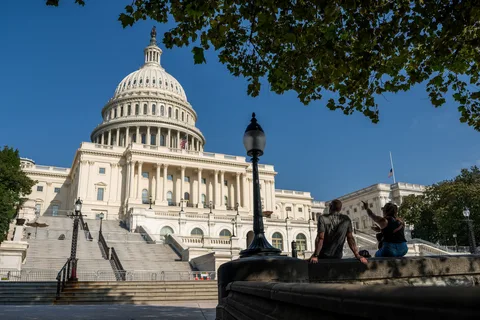
The US House of Representatives has passed a bill that would strip federal funding from universities linked to an academic boycott Israel policy. Lawmakers approved the “Protect Economic and Academic Freedom Act” on Thursday by a vote of 237 to 169. The bill still needs Senate approval before it can become law.
Background
Calls for an academic boycott Israel campaign grew louder on American campuses after the war in Gaza began. The conflict started after Hamas-led fighters killed about 1,200 people in Israel on October 7, 2023. Israeli military action since then has killed more than 73,000 Palestinians, according to Gaza’s health ministry.
Since then, student groups and some faculty bodies at various US universities have pushed institutions to cut academic and financial ties with Israel. This is part of the wider BDS academic boycott campaign, short for Boycott, Divestment and Sanctions. The BDS movement was launched by Palestinian civil society groups back in 2005.
Republican lawmakers, along with a section of Democrats, argue that campus boycott movements have gone too far. They say the trend risks harming research partnerships and unfairly singling out Israel among nations. This new legislation is their latest attempt to respond through funding rules rather than campus speech codes.
Details
The bill was co-sponsored by Republican Representative Virginia Foxx of North Carolina and Democratic Representative Josh Gottheimer of New Jersey. It passed with support from 203 Republicans, 33 Democrats and one independent lawmaker. Two Republicans and 167 Democrats voted against the measure.
Under the bill, colleges and universities that take federal student-aid funding would need to certify they are not engaged in what the text calls a “nonexpressive commercial boycott” involving Israel. This standard is separate from questions of protected speech or individual opinions expressed by staff or students.
The legislation does not attempt to punish individual professors, researchers or students for personal views on the Israel-Gaza war. Instead, it targets institutional decisions, such as a university’s investment policy or a formal decision to sever academic partnerships as part of an academic boycott Israel initiative.
The bill is officially known as the Protect Economic and Academic Freedom Act. It must now pass the Senate, and then receive a presidential signature, before it can take effect. Its final fate in the Senate remains uncertain given the current partisan divide over Gaza-related policy.
Quotes
Supporters of the bill framed it as a defense of research partnerships and equal treatment for Israel among other nations. Representative Josh Gottheimer argued that universities accepting federal money should not be allowed to discriminate against academic partnerships or investments tied to one specific country.
Not every Democrat who opposes BDS supported the bill. Representative Jerrold Nadler of New York said he personally opposes the global BDS movement, yet voted no because he wanted to protect broader free-expression rights on campus, since limiting one form of speech could open the door to restricting speech he supports.
House Democratic Leader Hakeem Jeffries raised a separate concern. He warned that the bill’s language could let the Trump administration use funding threats as a political tool against universities, going beyond the stated aim of curbing an academic boycott Israel policy.
A coalition of pro-Israel groups sent a letter to House members ahead of the vote. The letter stated that academic boycotts of Israel harm American students and scholars, weaken US-Israel research collaboration, and lend university credibility to what the letter called a discriminatory campaign against the Jewish state.
Impact
If the bill eventually becomes law, universities that maintain a formal academic boycott Israel stance could risk losing access to federal student-aid programs. This financial pressure could push some institutions to reconsider boycott resolutions passed by faculty senates or student governments in recent years.
The vote also reflects a deepening split inside the Democratic Party over how to respond to campus activism tied to the Gaza war. While a majority of House Democrats opposed the bill, a meaningful bloc of 33 members crossed over to support it, showing how divisive the BDS academic boycott debate has become within the party.
On the economic side, independent research on the broader BDS boycott list campaign has produced mixed findings. Some Israeli industry studies from past years estimated only a very small direct effect on trade, while other reports, including an internal Israeli government assessment, described a potentially larger long-term risk if divestment by pension funds and financial institutions continues to expand.
Internationally, the vote is likely to be watched closely by pro-Palestinian advocacy groups and by countries and companies weighing their own positions on doing business linked to Israel or to Israeli-occupied territories.
Conclusion
The House vote marks a significant step in the ongoing political fight over how the federal government should respond to campus activism connected to Israel. Whether the Protect Economic and Academic Freedom Act becomes law now depends on the Senate, where Democratic support is far from guaranteed.
Given the current pace of Gaza-related legislation in Congress, further hearings, amendments or a modified Senate version of the bill are likely in the coming months. University administrators, student groups and advocacy organizations on both sides of the debate are expected to continue lobbying lawmakers before any final vote.
Frequently Asked Questions
Which universities were divested from Israel?
Over the past few years, a number of university faculty senates, student governments and campus divestment coalitions in the United States and other countries have passed non-binding resolutions calling on their institutions to divest from companies linked to Israel or to Israeli-occupied territories. However, the number of major US universities that have actually completed full financial divestment remains limited, since most university endowments are managed by boards that have resisted these calls. Some smaller colleges and specific academic departments have taken more limited steps, such as ending certain study-abroad partnerships or research collaborations, rather than full-scale financial divestment. The debate over an academic boycott Israel policy at the institutional level continues to be contested campus by campus, and any comprehensive list changes frequently as new votes and administrative decisions are made.
Which countries are boycotting Israel now?
No country currently maintains a total, official government boycott of Israel, though several countries have taken partial measures. A handful of Arab and Muslim-majority nations that do not have diplomatic relations with Israel restrict or limit trade and travel, while other governments have imposed targeted restrictions on goods produced in Israeli settlements in the occupied West Bank rather than a nationwide ban. Separately, some governments, universities, cultural institutions and pension funds in Europe, Latin America and elsewhere have taken narrower steps, such as labeling settlement products, suspending specific defense contracts, or reviewing investment ties, often in response to pressure from the broader BDS academic boycott and BDS boycott list campaigns rather than as a blanket national boycott.
Have the Israel boycotts worked?
The evidence on this question is genuinely mixed, and experts disagree on how to measure the effect of boycott on Israel economy overall. Some Israeli industry-funded studies from past years found the direct financial damage from BDS activity to be very small compared to the overall size of the economy. On the other hand, BDS movement organizers and some independent analysts point to a rising number of pension funds, banks and companies that have reduced or ended ties with firms operating in Israeli-occupied territories since around 2013, arguing this shows growing, if still limited, financial pressure. Credit ratings agencies have previously noted that while BDS has not yet caused major damage to Israel’s economy, continued growth of the movement could create a larger impact over time. Politically, the campaign has clearly succeeded in keeping the issue visible on campuses and in legislatures, as shown by the fact that Congress felt compelled to pass this new funding bill in response.