
Iran war day 18 US-Israel attacks marks a conflict that has now entered its third week with no diplomatic breakthrough in sight — as US CENTCOM maintains its intensive strike campaign against Iranian military infrastructure while Iran escalates its multi-front retaliation with the deployment of Sejjil missile Iran ballistic systems in the most significant single salvo of the conflict so far.
Iran war day 18 US-Israel attacks military situation is defined by 3 simultaneous developments that have made this the most dangerous 24-hour period of the conflict since day one. The Israel Iran war front has seen Iran launch its largest overnight missile salvo yet against Tel Aviv and Haifa — with the Sejjil missile Iran deployment representing a qualitative escalation in Iranian ballistic missile capability being directed at Israeli cities. Iran attacks Qatar have intensified with IRGC targeting Al Udeid Air Base in the most sustained single strike package against the facility since the conflict began. And US CENTCOM has struck Iranian military targets at a pace that intelligence assessments suggest is beginning to produce meaningful degradation of Iran’s ballistic missile production capacity.
The Sejjil missile Iran deployment on day 18 has generated the most alarmed international reaction of any single weapons development in the conflict — with the solid-fuel medium-range ballistic missile representing a more capable and harder-to-intercept system than the liquid-fuel missiles Iran has primarily deployed in earlier phases of the Iran war day 18 US-Israel attacks campaign.
Background: Iran War Day 18 — How the Conflict Has Evolved
From Day 1 to Day 18 — The Arc of the Conflict
Iran war day 18 US-Israel attacks represents a conflict that has followed a trajectory significantly different from the one that US and Israeli military planners anticipated when the opening strikes were launched on February 28 2026.
The opening phase of the Iran war day 18 US-Israel attacks conflict — days 1 through 5 — saw the most decisive US-Israeli military achievements. Supreme Leader Ali Khamenei was killed on day one. Iran’s primary nuclear facilities at Natanz Fordow and Isfahan were destroyed. Multiple senior IRGC commanders were eliminated. Iranian air defence systems were substantially degraded. This opening phase appeared to validate the US-Israeli theory of victory — that a swift decisive strike campaign would destroy Iran’s most dangerous capabilities and create conditions for political collapse or capitulation.
The middle phase of the Iran war day 18 US-Israel attacks conflict — days 6 through 14 — revealed the limitations of that theory of victory. New Supreme Leader Mojtaba Khamenei issued defiance statements. The IRGC sustained its multi-front retaliation. The Strait of Hormuz remained closed. Oil prices surpassed $100 per barrel. American service members were killed. Gulf nations absorbed Iranian missile and drone attacks. The Israel Iran war front produced civilian casualties in Haifa and Tel Aviv. The conflict’s costs began accumulating faster than its political objectives were being achieved.
Iran war day 18 US-Israel attacks current phase — beginning around day 15 — has been characterised by escalation on both sides as neither party has found the diplomatic or military pathway to a negotiated resolution. The Sejjil missile Iran deployment on day 18 is the most visible expression of Iranian escalation in this phase — deploying a more capable weapons system that signals Iran’s intent to impose greater costs on Israel and US allies regardless of the military degradation it has absorbed.
Sejjil Missile Iran — Why Day 18 Deployment Matters
Sejjil missile Iran deployment on Iran war day 18 US-Israel attacks represents a significant qualitative escalation that military analysts have been watching for since the conflict began — with Iran’s decision to deploy its solid-fuel ballistic missile arsenal marking a new and more dangerous phase of the Israel Iran war.
Sejjil missile Iran is a 2-stage solid-fuel medium-range ballistic missile with a range of approximately 2,000 to 2,500 kilometres — sufficient to strike targets across the entire Middle East including Israel, Gulf nations, US bases in the region, and extending toward southeastern Europe. The Sejjil missile Iran solid-fuel propulsion system is the characteristic that most concerns US and Israeli military planners — because solid-fuel missiles can be launched far more rapidly than liquid-fuel systems that require fuelling operations before launch, making them significantly harder to destroy on the ground before they are fired.
Sejjil missile Iran previous deployments have been limited to tests and deterrence displays — with Iran reserving the system for high-value scenarios. Iran war day 18 US-Israel attacks combat deployment of the Sejjil missile Iran therefore signals that Tehran has decided the conflict has reached a threshold that justifies committing its most capable ballistic missile systems to active combat operations.
Iran War Day 18 — Military Situation
US-Israel Strike Operations on Day 18
Iran war day 18 US-Israel attacks US and Israeli strike operations have maintained their intensive pace — with US CENTCOM conducting overnight strikes targeting 53 separate Iranian military facilities including IRGC base complexes missile production infrastructure naval installations and regime-associated command and control targets.
Iran war day 18 US-Israel attacks total strike count has now exceeded 3,400 confirmed targets struck across Iran since February 28 2026 — representing one of the most intensive and sustained precision air and naval bombardment campaigns in modern military history.
Intelligence assessments circulating among Western military analysts on Iran war day 18 US-Israel attacks suggest that US strikes are beginning to produce meaningful degradation of Iranian ballistic missile production capacity — with the destruction of production facilities and component supply chains creating constraints on Iran’s ability to replace the missiles being consumed in its retaliation campaign at the same rate it is firing them.
Iranian Retaliation on Day 18
Iran war day 18 US-Israel attacks Iranian retaliation has included 3 significant overnight attack packages that together represent the most intensive single-night Iranian offensive action since the opening days of the conflict.
The first Iranian retaliation package on Iran war day 18 US-Israel attacks was the Sejjil missile Iran salvo targeting Israeli cities — with approximately 47 Sejjil missile Iran ballistic missiles launched at Tel Aviv Haifa and other Israeli population centres in a single coordinated attack that represented Iran’s largest single-night missile barrage against Israel.
The second Iranian retaliation package on Iran war day 18 US-Israel attacks was the intensified Iran attacks Qatar campaign — with the IRGC launching the most sustained single strike package against Al Udeid Air Base since the conflict began in what military analysts describe as a deliberate attempt to degrade US air operations capability.
The third Iranian retaliation package involved Iranian drone boat attacks on 3 commercial vessels in the Strait of Hormuz approaches — continuing the maritime campaign that has effectively closed the waterway to commercial shipping for the 16th consecutive day.
Israel Iran War — Israeli Front Updates
Israel Iran War — Sejjil Missile Iran Attacks on Israel
Israel Iran war day 18 situation on the Israeli home front has been defined by the Sejjil missile Iran attack — the largest and most capable Iranian ballistic missile salvo directed at Israeli cities since the conflict began and the development that Israeli military officials have most dreaded given the Sejjil missile Iran’s superior performance characteristics compared to Iran’s previously deployed liquid-fuel systems.
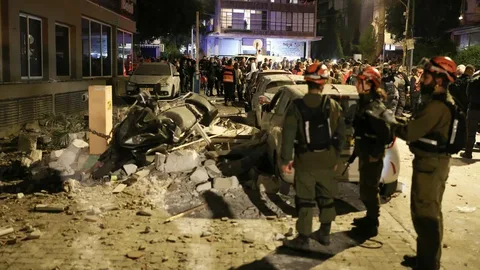
Israel Iran war Sejjil missile Iran intercept performance by Israel’s multi-layered air defence network — Iron Dome David’s Sling and Arrow systems — achieved a lower intercept rate against the Sejjil missile Iran salvo than against previous Iranian attacks. Of the approximately 47 Sejjil missile Iran ballistic missiles launched at Israel on night 18 Israeli air defences intercepted 38 — leaving 9 Sejjil missile Iran impacts on Israeli territory compared to the 4 to 6 penetrations typical of previous Iranian attack nights.
Israel Iran war Sejjil missile Iran impact casualties on day 18 include 6 confirmed killed and over 40 injured in Haifa and northern Tel Aviv — the highest single-night Israeli casualty figures from Iranian missile attacks since the conflict began and a development that has generated immediate political pressure on the Netanyahu government for escalatory response.
Israel Iran War — Israeli Military Response
Israel Iran war Israeli military response to the Sejjil missile Iran attack has been immediate and escalatory — with the IDF announcing retaliatory strikes on Iranian military targets within hours of the overnight Sejjil missile Iran attack that have included facilities previously designated as sensitive given their proximity to Iranian civilian infrastructure.
Israel Iran war retaliatory strikes on day 18 targeted Sejjil missile Iran production facilities and launch preparation sites that Israeli intelligence had identified as the source of the day 18 salvo — in a deliberate attempt to degrade the Sejjil missile Iran capability before further salvoes can be prepared and launched.
Israel Iran war Lebanon front on day 18 has continued simultaneously — with IDF operations against Hezbollah infrastructure in the Dahiya Bekaa Valley and southern Lebanon maintaining the parallel campaign that Israel is conducting alongside the direct Israel Iran war confrontation.
Iran Attacks Qatar — Gulf Developments on Day 18
Iran Attacks Qatar — Al Udeid Strike Package
Iran attacks Qatar day 18 development has been the most intensive single strike package against Al Udeid Air Base since the conflict began — with the IRGC launching approximately 28 ballistic missiles and 45 drones at the facility in a coordinated attack that US and Qatari air defence systems partially intercepted but that caused the most significant damage to Al Udeid infrastructure since Iran attacks Qatar campaign began.
Iran attacks Qatar day 18 damage at Al Udeid Air Base includes confirmed damage to a fuel storage facility a maintenance hangar and perimeter infrastructure — with US CENTCOM stating that operational capability has been maintained but acknowledging that the Iran attacks Qatar day 18 package caused more facility damage than any previous Iranian strike.
Iran attacks Qatar diplomatic dimension on day 18 has created renewed urgency in Qatar’s mediation efforts — with Qatar’s Prime Minister stating publicly that the Iran attacks Qatar intensification was making Qatar’s position as a mediator between Washington and Tehran increasingly untenable and calling on both sides to exercise restraint as a precondition for continued Qatari facilitation of back-channel communications.
Iran Attacks Qatar — Strategic Logic
Iran attacks Qatar intensification on day 18 reflects a deliberate IRGC strategic decision to impose greater costs on the Gulf state that hosts the largest US military installation in the Middle East — while simultaneously testing Qatar’s commitment to maintaining the back-channel to Tehran that represents the only functioning diplomatic conduit of the conflict.
Iran attacks Qatar targeting logic on day 18 specifically focused on Al Udeid Air Base rather than Qatari civilian infrastructure — reflecting Iran’s calculation that targeting the US military installation maximises pressure on Washington while minimising the diplomatic cost of attacking a Muslim-majority nation whose mediation role Iran has not completely abandoned as useful.
Sejjil Missile Iran — The Weapon Explained
Sejjil Missile Iran — Technical Specifications
Sejjil missile Iran is one of Iran’s most capable and strategically significant ballistic missile systems — a 2-stage solid-fuel medium-range ballistic missile whose combat deployment on Iran war day 18 US-Israel attacks has marked the most significant Iranian weapons escalation of the conflict.
Sejjil missile Iran technical specifications include a range of approximately 2,000 to 2,500 kilometres placing all of Israel UAE Saudi Arabia Qatar Bahrain Kuwait and Jordan well within its strike envelope. Sejjil missile Iran payload capacity is estimated at approximately 750 kilograms — sufficient for conventional high explosive warheads capable of causing significant structural damage at impact sites.
Sejjil missile Iran guidance system uses inertial navigation with GPS assistance — providing circular error probable accuracy estimated at 50 to 100 metres that makes it a genuine precision strike weapon rather than merely an area saturation system. Sejjil missile Iran solid-fuel propulsion is the characteristic most operationally significant for the Israel Iran war — with solid-fuel launch preparation requiring minutes rather than the hours needed for liquid-fuel missile fuelling that makes liquid-fuel systems more vulnerable to preemptive destruction.
Sejjil Missile Iran — Why It Changes the Conflict
Sejjil missile Iran deployment changes the Iran war day 18 US-Israel attacks calculus in 3 specific ways that military analysts have identified as potentially decisive for the conflict’s trajectory.
First — Sejjil missile Iran lower intercept rate reflects the missile’s faster burnout time steeper trajectory and higher terminal velocity compared to Iran’s previously deployed liquid-fuel systems — creating a genuine capability gap in Israeli and US air defence coverage that will require tactical adjustments to address.
Second — Sejjil missile Iran rapid launch preparation makes it significantly harder for US and Israeli intelligence-based strike packages to destroy the missiles on the ground before they are fired — eliminating the left-of-launch interdiction option that has been a component of anti-missile strategy for liquid-fuel systems.
Third — Sejjil missile Iran range and accuracy combination makes it an effective precision strike weapon against high-value targets including US base infrastructure Gulf energy facilities and Israeli military installations rather than merely a terror weapon aimed at population centres — expanding Iran’s target set and its ability to threaten strategically significant infrastructure.
Quotes on Iran War Day 18 US-Israel Attacks
US CENTCOM Commander General Michael Kurilla stated on day 18 that the Sejjil missile Iran deployment represented an Iranian escalation that would be met with immediate and overwhelming response — adding that US forces had struck Sejjil missile Iran production and launch infrastructure within hours of the overnight attack and that Iran’s decision to deploy its most capable ballistic systems reflected desperation rather than strength.
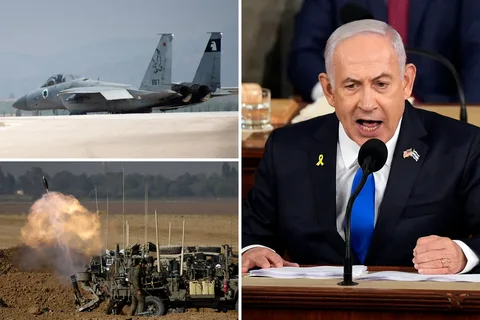
Israeli Prime Minister Benjamin Netanyahu stated that the Sejjil missile Iran attack on Israeli cities had crossed a new threshold and would be met with a response of corresponding scale — adding that Israel would not allow any Iranian weapons system however advanced to threaten Israeli civilians without consequences that fundamentally degraded Iran’s capacity to repeat the attack.
Qatar’s Prime Minister Sheikh Mohammed bin Abdulrahman Al Thani stated that Iran attacks Qatar intensification on day 18 was making Qatar’s mediator role extraordinarily difficult — adding that Qatar remained committed to finding a diplomatic solution but that the continued military escalation on both sides was narrowing the space for the back-channel diplomacy that represented the conflict’s only realistic pathway to resolution.
Mojtaba Khamenei supreme leader issued a statement through Iranian state media describing the Sejjil missile Iran deployment as the Islamic Republic’s answer to those who believed Iran’s military capacity had been broken — stating that Iran had many more Sejjil missile Iran systems ready for deployment and that the US-Israel alliance would pay an escalating price for every day of continued aggression.
US Defense Secretary Pete Hegseth stated that the Iran attacks Qatar intensification and Sejjil missile Iran deployment would accelerate rather than deter US strike operations — adding that the administration’s commitment to the conflict’s objectives was unchanged and that Iran’s escalation demonstrated the necessity of continuing until Iran’s military capacity to threaten the region was permanently eliminated.
Goldman Sachs chief economist Jan Hatzius warned that the Sejjil missile Iran deployment and associated day 18 escalation had pushed Brent crude oil price back above $110 per barrel — stating that if the conflict continued at day 18 intensity for another 2 weeks the global economic recessionary risk would shift from possible to probable.
Impact: Iran War Day 18 US-Israel Attacks Implications
Sejjil Missile Iran — Air Defence Implications
Sejjil missile Iran day 18 deployment has exposed a partial capability gap in the US-Israeli air defence architecture — with the lower intercept rate against Sejjil missile Iran compared to previously deployed Iranian ballistic systems creating urgent requirements for tactical air defence adjustments.
US military air defence planners are assessing options for supplementing the Arrow and THAAD systems that form the backbone of high-altitude ballistic missile defence against Sejjil missile Iran — with the possibility of deploying additional SM-3 naval intercept capability from US Navy Aegis destroyers in the Eastern Mediterranean being actively considered as a Sejjil missile Iran countermeasure.
Iran Attacks Qatar — Mediation Consequences
Iran attacks Qatar day 18 intensification has put the Qatar mediation channel under its greatest stress since the conflict began — with Qatar’s public statement about the difficulty of maintaining its mediator role representing the most significant warning yet that the diplomatic back-channel that both sides have been relying on could break down entirely if the military escalation continues.
The potential loss of the Qatar mediation channel would eliminate the conflict’s only functioning diplomatic conduit — leaving Washington and Tehran with no mechanism for the back-channel communication that would be essential to any eventual negotiated resolution and making the conflict significantly harder to end without one side experiencing a decisive military defeat that currently neither side appears capable of inflicting.
Global Economic Impact
Iran war day 18 US-Israel attacks Sejjil missile Iran escalation and Iran attacks Qatar intensification have pushed Brent crude oil back above $110 per barrel — extending the economic damage of the conflict’s now 18-day Strait of Hormuz closure and adding the specific threat of Al Udeid damage potentially affecting US air operation capability.
Goldman Sachs warning of recessionary risk shifting from possible to probable if day 18 intensity continues for 2 more weeks represents the most alarming economic assessment of the conflict to date — with the accumulated economic damage of 18 days of Strait of Hormuz closure now approaching the threshold at which major economy GDP impacts become measurable.
Frequently Asked Questions
How Many US Military Have Died in Iran?
8 US military service members have been confirmed killed in the Iran war as of day 18 — all in Iranian retaliation strikes on US military bases across the Gulf rather than in offensive operations inside Iran. 9 or more additional US service members have been seriously injured. The 4 soldiers from the 103rd Sustainment Command Expeditionary from Des Moines Iowa were among the first American casualties confirmed. Iran attacks Qatar intensification on day 18 — the most significant single IRGC strike package against Al Udeid Air Base yet — has raised urgent concerns that the US casualty figure may increase given the greater damage caused by the day 18 Iran attacks Qatar package compared to previous strikes. US CENTCOM has stated that no additional American deaths resulted from the day 18 Iran attacks Qatar strike package — but the damage to Al Udeid infrastructure has intensified debate about force protection adequacy.
How Many Israelis Were Killed by Iran?
Israeli casualties from Iranian missile attacks have reached their highest levels on Iran war day 18 — with 6 confirmed killed and over 40 injured in the Sejjil missile Iran overnight attack representing the single worst night for Israeli casualties since the conflict began. Total confirmed Israeli deaths from Iranian missile attacks across all 18 days of the Israel Iran war now stand at 19 or more — with dozens more seriously injured. The higher day 18 Israeli casualty toll directly reflects the Sejjil missile Iran deployment — with the solid-fuel missile’s superior performance characteristics producing a lower intercept rate that allowed 9 missiles to reach Israeli territory compared to the 4 to 6 typical of previous Iranian attack nights. Israeli emergency services confirmed that casualties were concentrated in Haifa residential districts and northern Tel Aviv — with structural damage from Sejjil missile Iran impacts significantly more severe than from previously deployed Iranian ballistic systems given the Sejjil missile Iran’s larger warhead and higher terminal velocity.
Why Did the US Attack Iran in 2026?
The US attack on Iran in 2026 was motivated by 3 primary strategic objectives that the Trump administration publicly articulated alongside several additional factors that shaped the decision. The primary stated objective was the permanent elimination of Iran’s nuclear weapons programme — with US and Israeli intelligence assessments concluding that Iran had crossed or was about to cross the threshold of sufficient enriched uranium for nuclear weapons production and that diplomatic options to prevent this had been exhausted. The second stated objective was the degradation of IRGC military capability — specifically the ballistic missile programme Sejjil missile Iran and other systems and the proxy network including Hezbollah Hamas and Houthi forces that Iran uses to threaten US allies and US military personnel across the region. The third stated objective was regime behaviour change — with the administration expressing the expectation that military pressure sufficient to kill the supreme leader and destroy Iran’s most valued military assets would produce either political collapse or a fundamental change in Iranian foreign policy behaviour. Unstated but operationally significant factors include the Israel Iran war dynamic — with Israel having sought US participation in a strike campaign that Israel’s military considered necessary but potentially insufficient without American involvement — and the Trump administration’s political calculation that decisive action against Iran fulfilled campaign commitments about confronting what Trump described as the world’s leading state sponsor of terrorism.
Conclusion
Iran war day 18 US-Israel attacks has delivered the most dangerous single day of the conflict since day one — with Sejjil missile Iran combat deployment producing the highest Israeli single-night casualty toll of the conflict, Iran attacks Qatar reaching their most destructive single-package intensity, and the economic and diplomatic costs of the conflict accelerating simultaneously.
The Sejjil missile Iran deployment is not merely a military development — it is a strategic signal from Mojtaba Khamenei supreme leader that Iran has not been broken by 18 days of the most intensive US-Israeli strike campaign in the Middle East since 2003 and that it retains the will and the capability to escalate rather than capitulate.
Israel Iran war is producing mounting civilian casualties on both sides. Iran attacks Qatar have put the last functioning diplomatic channel under existential stress. US Iran war domestic opposition continues to build as the conflict drags into its third week. And Sejjil missile Iran has demonstrated that Iran’s most capable weapons systems have not yet been fully deployed — raising the disturbing question of what day 19 and beyond will bring if the diplomatic back-channel breaks and the military escalation continues on its current trajectory.