
Gulf States and the Race to Bypass the Strait of Hormuz
On a completely different front — energy — something significant is happening that most people outside the oil industry have not fully noticed yet.
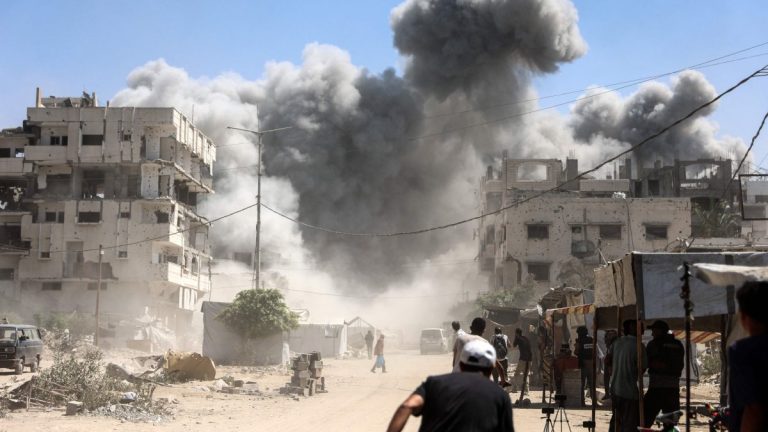
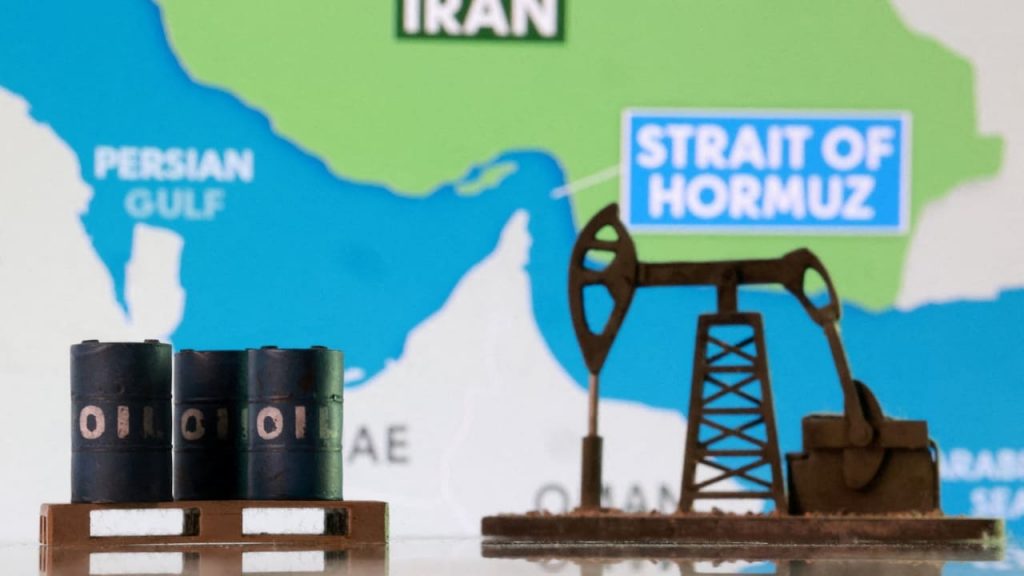
Iran restricted navigation through the Strait of Hormuz on March 2, 2026. About 20 percent of the world’s oil supply goes through that waterway every day. When Iran announced restrictions, Gulf states suddenly had a very urgent version of a problem they had been quietly ignoring for years: they had built almost their entire export infrastructure around a chokepoint controlled by an adversary.
Almost all of them, anyway. Saudi Arabia had not.
The Pipeline Saudi Arabia Built Decades Ago
Back in the 1980s, during the Iran-Iraq tanker war, Saudi Arabia built the East-West pipeline — a 1,200-kilometre route that carries oil from its eastern fields to the Red Sea port of Yanbu, completely bypassing Hormuz. It can move up to 7 million barrels a day. During the current crisis it has been running hard, and Saudi Arabia has been the only Gulf state that kept exports flowing without disruption.
As the Jerusalem Post reported, citing the Financial Times, one senior Gulf energy executive put it plainly: “In hindsight, the East-West pipeline looks like a genius masterstroke.” Nobody else built one. Now everyone wishes they had.

What They Want to Build Now
The proposals now on the table go well beyond adding another pipeline. What Gulf states are discussing is a whole network — pipelines, railways, and roads — that would make Hormuz irrelevant as a pressure point. The flagship idea is the India-Middle East-Europe Economic Corridor (IMEC), a U.S.-backed plan to connect India to the Mediterranean via the Gulf through combined sea, rail, and pipeline infrastructure.
The politically sensitive part: the route would go through the Israeli port of Haifa. Getting Saudi Arabia to sign onto a corridor that runs through Israel is the central obstacle. It has not happened yet.
“I’m sensing a shift from hypotheticals into operational reality. Everyone is looking at the same map, and they are drawing the same conclusions.”
— Maisoon Kafafy, Senior Adviser, Atlantic Council
The cost reality is sobering. Replicating the East-West pipeline today would run at least $5 billion. A multi-country corridor could hit $20 billion. And that is before dealing with the political coordination required between states that do not always get along, security risks in Iraq and Syria, and the basic engineering challenge of laying pipe across desert and mountain terrain.
On April 8, a U.S.-Iran truce was reportedly announced — two weeks, no strikes. That will take some immediate pressure off. But nobody building these plans thinks a two-week pause changes the long-term picture. The Strait of Hormuz is too dangerous a dependency. That realization is not going away.
What This Means for Pakistan and CPEC
If IMEC moves forward — even partially — it creates a major trade corridor running from the Gulf to the Mediterranean that bypasses South Asia entirely. That is worth watching closely, especially from Islamabad.
Pakistan has spent over a decade positioning itself as the indispensable connector between China and the Arabian Sea through CPEC, the $62 billion corridor that runs from Xinjiang to the port of Gwadar. The logic was always geographic: Pakistan sits just 600 kilometres east of the Strait of Hormuz, and Gwadar gives China a warm-water port it cannot get any other way. That geography was supposed to be Pakistan’s leverage.
IMEC does not threaten CPEC directly. But it changes the competitive landscape. If Gulf states rewire their export infrastructure westward through Saudi Arabia, Jordan, and Haifa, and if India deepens its trade ties with the Gulf through that same corridor, then Gwadar’s pitch as a regional hub gets harder to sell. Investment that might have flowed toward Pakistani infrastructure could instead find a home in the IMEC framework, which has the backing of the U.S., the EU, India, and the Gulf states simultaneously.
CPEC has its own problems that have nothing to do with IMEC — security attacks on Chinese personnel, debt repayment difficulties, and a persistent gap between announced projects and what actually gets built. China has tried to relaunch it under a CPEC 2.0 banner, but the fundamentals have not changed much. The corridor’s strategic importance to Beijing remains real; its commercial viability remains shaky.
The deeper risk for Pakistan is not that IMEC succeeds tomorrow — it probably will not, given the obstacles. The risk is that the Gulf is clearly looking for alternatives to Hormuz dependence, and the direction those alternatives are pointing is westward, not eastward. Every pipeline routed toward the Mediterranean is one less reason to run cargo through Gwadar.
None of this is sealed yet. IMEC still requires Saudi-Israeli normalization, something that looks further away than it did two years ago. The infrastructure costs are enormous. The political coordination among a dozen countries with competing interests is genuinely difficult. But the Hormuz crisis has moved this conversation from a think-tank exercise into something that energy executives, heads of government, and infrastructure companies are actively working on.
The map is being redrawn. The question for Pakistan is whether it finds a way onto it.