
The Kaaba Kiswa is one of the most sacred and awe-inspiring textile traditions in the world a massive black silk cloth embroidered with Quranic verses in pure gold that drapes over Islam’s holiest site every single year. Millions of Muslims revere the Kiswah Kaaba as a symbol of devotion and unity. From its staggering Kiswah cloth price to the rare Kiswah Kaaba attar perfume and the fate of the old Kiswa of Kaaba, there is far more to this sacred covering than meets the eye.
Background: The Ancient Tradition of the Kaaba Kiswa
The Kaaba Kiswa has a history stretching back thousands of years, long before the modern Islamic era. Most historical accounts indicate that the first person to cover the Kaaba was the King of Yemen, Tubba Abu Karab of Himyar. His successors considered the Kaaba’s cover a religious duty, and when the Kiswa became worn out or damaged, it was replaced and the old one was cut into small pieces and buried.
Over the centuries, responsibility for producing the Kiswah Kaaba passed between different nations. At first, the kings of Egypt and Yemen took turns producing the Kaaba cover. Then Egypt took over completely, until political disputes caused Egypt to stop sending covers. Kaaba covers are now produced in Makkah itself.
Since 1927, the Kiswah Al Kaaba Factory has been responsible for manufacturing the cover of the Holy Kaaba. It was established by King Abdul Aziz soon after he conquered the Hejazi region. Today, the facility is known as the King Abdulaziz Complex for the Manufacturing of the Kaaba Kiswa, and it remains the sole official producer of this sacred cloth.
What Is the Kaaba Kiswa Made Of?
The Kiswah Kaaba is not simply a large piece of black fabric it is an extraordinary work of art and craftsmanship produced by hundreds of skilled hands over many months.
The new Kiswa is made of 670 kilograms of natural black silk and 150 kilograms of gold and silver-plated thread. It features 68 Quranic verses embroidered with 24-karat gold-plated silver, all hand-stitched by skilled artisans using traditional Islamic embroidery techniques.
The massive textile spans 658 square meters, consists of 47 silk panels, and weighs more than a metric ton. The sheer scale of the Kaaba Kiswa makes its annual production one of the most complex textile undertakings anywhere in the world.
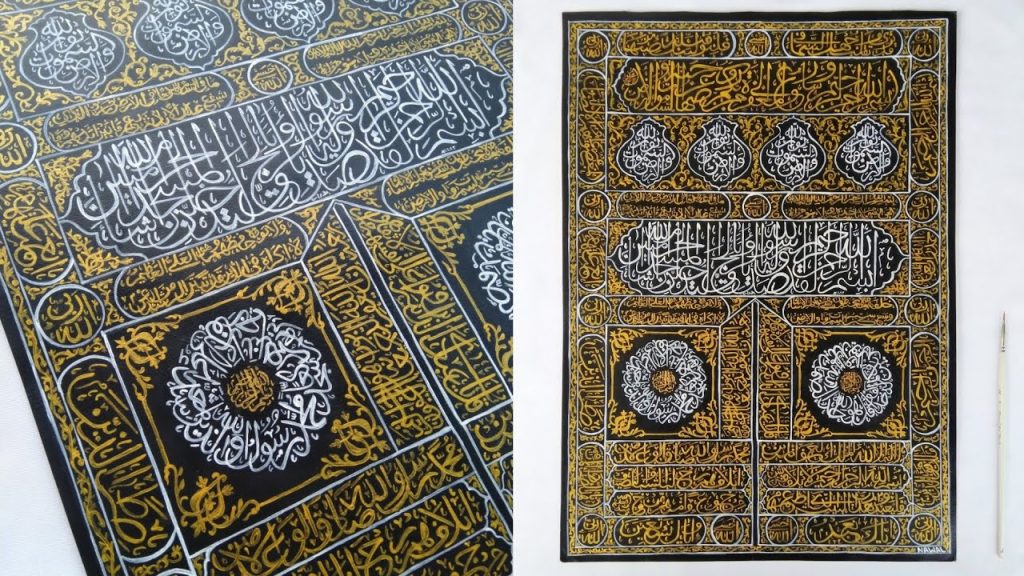
The Kiswa Kaaba calligraphy includes Quranic verses such as Surah Al-Ikhlas, Ayat-ul-Kursi, and the Shahada, all embroidered directly onto the fabric with extraordinary precision. Each piece of Kiswa Kaaba calligraphy takes master embroiderers months to complete, making every inch of the cloth a work of sacred art.
Kiswah Cloth Price: How Much Does It Cost?
The Kiswah cloth price is one of the most frequently asked questions about this sacred covering and the answer is remarkable.
The Kiswah cloth price is estimated at approximately $4.5 million USD, or SAR 17 million, and it is produced annually at the King Abdulaziz Complex for the Manufacturing of the Kaaba’s Kiswa in Mecca. This figure accounts for the raw silk, the gold and silver threads, the labor of hundreds of artisans, and the lengthy production process.
Production of the Kiswa requires about 1,000 kilograms of raw silk which is dyed black at the complex, 120 kilograms of gold wire, and 100 kilograms of silver wire. Given these raw materials alone, the Kiswah cloth price reflects the extraordinary level of investment Saudi Arabia dedicates to honoring the Kaaba each year.
It currently takes 137 workers around 8 months to complete the Kiswa, with more sophisticated machinery now speeding up parts of the embroidery process. The total combined cost of labor and materials makes the Kiswah cloth price one of the most expensive annual religious expenditures in the world.
Kiswa Kaaba Calligraphy: The Art of the Sacred Text
The Kiswa Kaaba calligraphy is what transforms a beautiful textile into something truly transcendent. The gold-embroidered Quranic inscriptions that adorn the Kaaba Kiswa are not decorative afterthoughts they are the spiritual heart of the entire cloth.
The Kiswa Kaaba calligraphy includes the Shahada, the Islamic profession of faith, along with carefully selected Quranic verses. The creation of a new Kiswa every year involves more than 200 specialist fabric workers, each contributing to sections of the intricate calligraphic patterns.
The outer layer of the Kiswa is made of 47 pieces of silk imported from Italy, each 98 centimetres by 14 metres. These silk panels are then painstakingly assembled and embroidered before being fitted over the Kaaba in a carefully coordinated ceremony.
The Kiswa Kaaba calligraphy is widely regarded as one of the finest examples of Islamic decorative art in existence. Pieces of the old Kiswa of Kaaba displaying this calligraphy are among the most treasured Islamic artifacts held by museums, governments, and private collectors around the world.
Kiswah Kaaba Attar: The Sacred Scent of the Kiswa
One of the lesser-known but deeply beloved aspects of the Kaaba Kiswa is the special fragrance known as Kiswah Kaaba attar that is applied to the cloth and fills the air around the Masjid al-Haram.
The Kiswah Kaaba attar is a tribute to the fragrance used on the Hajar al-Aswad (the Black Stone) and the Kaaba cloth itself. It is an exclusive blend reportedly gifted only to dignitaries by the Saudi government. The precise formula of this Kiswah Kaaba attar is closely guarded, making it one of the rarest fragrances in the Islamic world.
The KISWAH Kaaba perfume captures the essence of the Kiswah with rich amber and musk notes, offering a sensory connection to the holy city for Muslims who cannot always be present in Mecca. This fragrance is described as more than a scent a whisper of tradition and a powerful reminder of faith.
Several perfume houses now produce inspired versions of the KISWAH Kaaba perfume for public sale, including oud-based attars and alcohol-free sprays. The Kiswah Kaaba attar is described as a perfume that springs from the spirit of the Qibla, taking the wearer back as if standing in front of the Kaaba itself a beautiful, strong fragrance that leaves a long-lasting trace even when only a few drops are applied.
Kaaba Without the Kiswa: A Rare Sight
Most Muslims never see the Kaaba without the Kiswa and for good reason. The brief moments during the annual replacement ceremony when the structure is partially uncovered are handled with extraordinary care.
The Kiswa is replaced every year on the first day of Muharram in a carefully coordinated operation involving over a hundred specialized technicians. The installation is carried out using electric lifts and scaffolding to ensure that no part of the Kaaba is exposed at any time.
To protect the Kiswa from damage during the Hajj pilgrimage, a white cotton covering known as the “Ihram of the Kaaba” is temporarily added to its lower portion. This barrier shields the lower section of the cloth from the millions of pilgrims who circle the Kaaba during Tawaf.The Kaaba without the Kiswa is therefore almost never fully visible. When photographs or videos of the Kaaba without the Kiswa do circulate online typically showing the bare stone structure during renovation or transition they generate enormous attention among the global Muslim community, as it is such a rare and profound sight.
What Happens to the Old Kiswa of Kaaba?
The fate of the old Kiswa of Kaaba is a question that fascinates Muslims around the world. Rather than being discarded, the old Kiswa of Kaaba is treated with the deep reverence it deserves.
The old Kiswah is cut into pieces and presented as gifts to dignitaries and Muslim countries around the world. The old Kiswa is removed and replaced by a new one which consists of four separate sides and a door curtain, each raised separately to the top of the Kaaba before being unfolded over the old side.
A portion of the old Kiswa of Kaaba is even on permanent display at the United Nations headquarters. The part on display is the prestigious portion that once covered the door of the Holy Kaaba, presented as a gift from Saudi Arabia in January 1983 and accepted by UN Secretary-General Javier Perez de Cuellar. It comprises almost the full height of a wall in the UN building.
Beyond official diplomatic gifts, Kaaba Kiswa for sale fragments do reach the open market through authorized channels. Each year, the old Kiswah is replaced and the removed fabric is cut into smaller sections and distributed often as gifts or sold through authorized vendors. Authentic pieces of the Kaaba Kiswa for sale come accompanied by certificates of authenticity and represent a rare opportunity for Muslims to own a fragment of history.
Quotes: The Spiritual Significance
The significance of owning a piece of the Kiswah Kaaba was underscored dramatically in 2026 when newly released files revealed that convicted sex offender Jeffrey Epstein had purchased sacred cloth that once covered the Kaaba. UAE-based businesswoman Aziza al-Ahmadi wrote to Epstein in March 2017: “By the way the black piece was touched by minimum 10 million Muslims of different denominations, Sunni, Shia and others” highlighting just how spiritually charged each fragment of the old Kiswa of Kaaba is considered to be.
The revelation sparked global outrage and renewed discussion about how pieces of the Kaaba Kiswa for sale are distributed and monitored, with Islamic scholars calling for stricter controls over who receives fragments of the old Kiswa of Kaaba.
Conclusion: The Living Legacy of the Kaaba Kiswa
The Kaaba Kiswa is far more than a covering it is a living testament to the devotion of over a billion Muslims and the artistic heritage of Islamic civilization. From its extraordinary Kiswah cloth price and breathtaking Kiswa Kaaba calligraphy to the rare Kiswah Kaaba attar and the globally distributed pieces of the old Kiswa of Kaaba, every dimension of the Kiswah carries profound meaning.
As Saudi Arabia continues to invest in this sacred tradition refining the technology at the King Abdulaziz Complex while preserving centuries-old embroidery techniques the Kaaba Kiswa remains one of the most remarkable intersections of faith, art, and history anywhere on earth. Each year, a new cloth descends over the House of Allah, and the old one travels to palaces, museums, and homes across the world, carrying with it the prayers of millions.
FAQs
How much does Kiswa cost?
The Kiswah cloth price is approximately $4.5 million USD (SAR 17 million) for a complete annual Kiswa. This reflects the cost of 670 kilograms of natural black silk, 150 kilograms of gold and silver-plated thread, 68 embroidered Quranic verses in 24-karat gold, and more than 8 months of labor by over 200 specialist craftsmen. Authentic fragments of the old Kiswa of Kaaba sold through authorized vendors vary in price depending on their size, provenance, and whether they include an official certificate of authenticity smaller framed pieces can range from a few hundred to several thousand dollars.
Which prophet is buried under the Kaaba?
No prophet is buried under or inside the Kaaba. The Kaaba itself is an empty, cube-shaped structure the holiest site in Islam built as a house of worship, not a tomb. The Prophet Ibrahim (Abraham) and his son Ismail (Ishmael) are associated with the construction of the Kaaba as described in Islamic tradition, but neither is buried there. The Prophet Muhammad (peace be upon him) is buried in the Masjid an-Nabawi in Madinah, far from Mecca. This is a common misconception that Islamic scholars consistently clarify.
What does NASA say about Kaaba?
NASA has not made any official scientific statement declaring the Kaaba to be the center of the Earth or any similar claim. These assertions circulate widely on social media but have no basis in verified NASA communications or peer-reviewed science. The Kaaba’s centrality in Islam is a matter of religious and spiritual significance, not a geographic or astronomical one. NASA’s work focuses on space exploration, Earth observation, and atmospheric science, and the agency has not weighed in on the Kaaba’s geographic or spiritual status in any official capacity.