
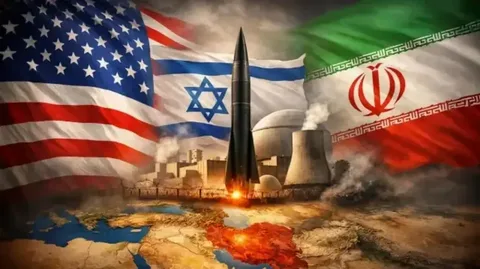
The latest phase of Iran Israel US strikes has pushed the Middle East into one of its most dangerous escalations in years. Joint military operations by the United States and Israel targeted multiple locations inside Iran, triggering immediate retaliation and raising fears of a wider regional war.
The conflict has disrupted regional stability and drawn global attention due to its potential economic and security impact.
What Happened
The current conflict began in late February 2026 when the United States and Israel launched coordinated strikes on Iranian military and nuclear-related infrastructure.
Iran responded with missile and drone attacks across the region, particularly targeting Israel and US-linked sites.
Since then, repeated waves of Iran Israel US strikes have continued, with both sides exchanging attacks and expanding military operations.
Escalation and Retaliation
Iran’s retaliation included missile strikes on Israeli cities, causing casualties and widespread damage despite air defense systems.
Meanwhile, Israeli and US forces carried out additional waves of airstrikes on Iranian infrastructure, including sites in Tehran.
The cycle of attack and response has intensified tensions, making diplomatic resolution increasingly difficult.
Strategic Reasons Behind the Conflict
US officials have described the strikes as a response to long-standing security concerns, including Iran’s regional activities and nuclear ambitions.
Israel has also framed its involvement as a defensive measure against perceived threats.
However, critics argue that the escalation risks violating international law and could lead to prolonged instability in the region.
Regional and Global Impact
The Iran Israel US strikes have already had significant consequences beyond the battlefield.
Energy markets have been affected due to disruptions in key routes like the Strait of Hormuz, impacting global oil supplies.
The conflict has also increased military tensions across neighboring countries, with fears of a broader regional war involving multiple actors.
Ongoing Uncertainty
Despite some discussions of ceasefires and diplomatic efforts, the situation remains highly unstable.
Analysts warn that without a clear long-term strategy, the conflict could continue to escalate, affecting global security and economic stability.
Conclusion
The ongoing Iran Israel US strikes mark a critical turning point in Middle East geopolitics. What began as targeted military action has evolved into a broader confrontation with global implications.
As tensions remain high, the focus now shifts to whether diplomatic efforts can prevent further escalation or if the region is heading toward a prolonged and more destructive conflict.
FAQs
Why are the US and Israel attacking Iran?
The attacks are linked to concerns over Iran’s military activities, regional influence, and nuclear program, though the justification remains debated internationally.
Why did Trump attack Iran in 2026?
The US administration stated the strikes were aimed at reducing threats and weakening Iran’s military capabilities, though critics question the legality and strategy.
Who is more powerful, Iran or the USA?
The United States has significantly greater global military and economic power, but Iran holds strong regional influence and strategic capabilities in the Middle East.