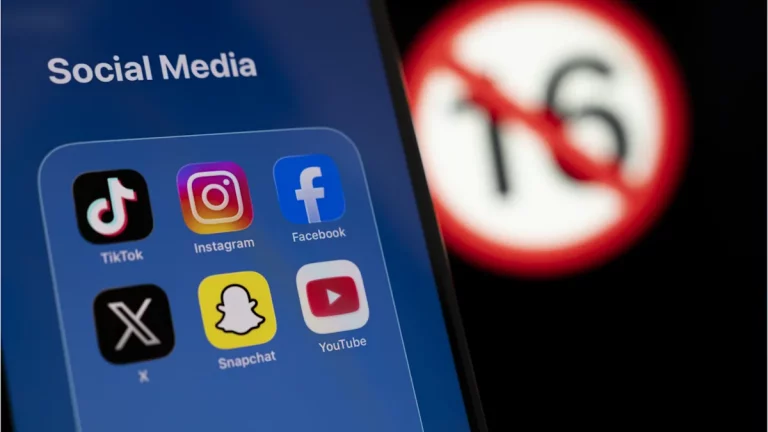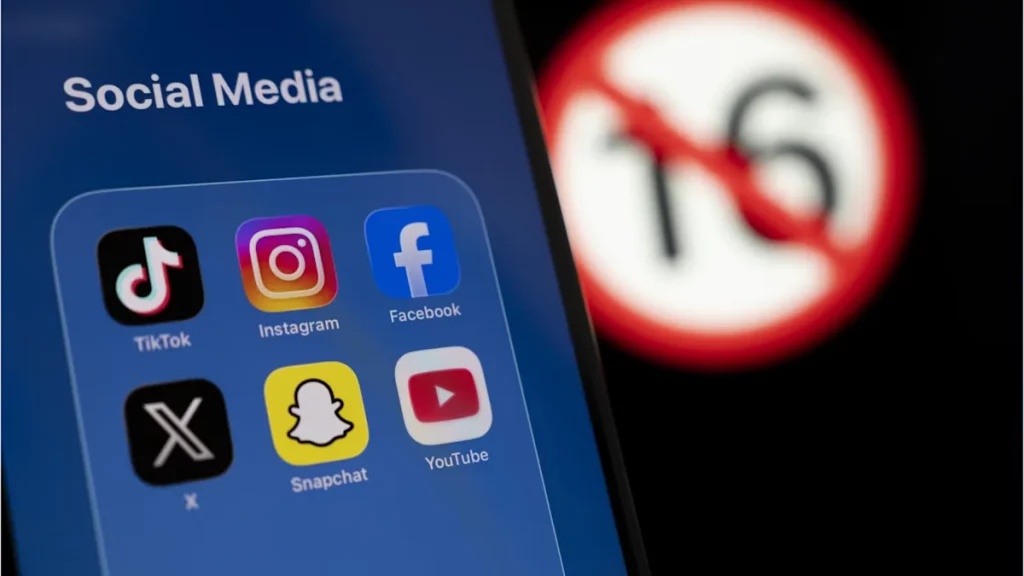
The conversation about a social media ban for under 16 users has moved from the fringes of British policy debate into something approaching mainstream political urgency. Lawmakers in the United Kingdom are seriously considering measures that would significantly restrict younger teenagers’ access to social media platforms driven by mounting evidence about the harm these platforms can cause and a growing sense that the technology industry has not done enough to police itself.
Questions are multiplying as fast as the proposals: Would messaging apps like WhatsApp be caught by these rules? How would age verification actually work in practice? And is Australia’s approach which generated global headlines when it moved on this issue a model the UK should follow or a cautionary tale it should study carefully?
Background
The pressure behind this debate did not build overnight. For years, parents, teachers, child psychologists, and mental health researchers have been raising consistent alarms about what unrestricted social media access is doing to young people. The concerns are not abstract they show up in clinical settings, in school counselors’ offices, and in the data from studies that have linked heavy social media use to anxiety, depression, disrupted sleep, and exposure to content that no reasonable person would consider appropriate for a child.
What changed is the political temperature. Governments that previously treated this as a parenting problem rather than a regulatory challenge have started concluding that leaving it to parents is not working well enough. The pace of platform growth, the sophistication of algorithmic engagement design, and the sheer volume of harmful content that can reach a young person’s screen have all contributed to a political environment where a social media ban for under 16 users is being discussed as a serious policy option rather than an extreme fringe position.
Why Is the UK Considering a Social Media Ban?
The case being made by supporters of restriction is fairly direct. Social media platforms, they argue, are not neutral tools they are deliberately designed to maximize engagement, and the algorithms that drive engagement do not discriminate between adult users and children. A platform that rewards emotional reaction, that surfaces increasingly extreme content to keep users scrolling, and that creates social comparison dynamics around appearance and status is not a safe environment for a developing adolescent brain.
Many policymakers have reached the conclusion that the industry has been given enough time to self-regulate and has not done so in any meaningful way. The gap between platforms’ stated child safety commitments and the experiences that young users actually report remains wide, and voluntary measures have not closed it.
The debate over a social media ban children UK framework is therefore part of a broader political argument about whether the internet economy can be trusted to prioritize child safety when child safety and user growth are in tension and whether the answer to that question is no, what the right government response looks like.
Why Should Social Media Be Banned for Under 16?
The specific arguments for an under-16 restriction centre on several interrelated concerns that specialists have been documenting for long enough that the evidence base is now substantial.
Mental health is at the top of most lists. Psychologists and psychiatrists working with adolescents have consistently reported that social comparison dynamics on visual platforms correlate with reduced self-esteem, particularly among girls. When every social interaction is potentially public and potentially quantified through likes, comments, and follower counts, the developmental task of building a stable sense of self becomes significantly harder.
Cyberbullying is a separate but related issue. Unlike playground bullying, online harassment does not stop when the school day ends. It follows young people home, continues through the night, and can involve audiences of hundreds or thousands rather than the small groups that traditional bullying operates within. The psychological impact of public, persistent, scalable harassment on a developing teenager is qualitatively different from what previous generations faced.
Beyond these primary concerns, advocates for the social media ban for under 16 framework point to exposure to misinformation, to content promoting disordered eating or self-harm, to predatory contact from adults, and to platform designs that exploit adolescent psychology in ways the adolescents themselves cannot fully recognize or resist.
The counterargument — that online spaces also offer young people genuine connection, educational resources, and communities they cannot find elsewhere — is real and should not be dismissed. Supporters of restriction tend to acknowledge this while arguing that the balance of harm still favors strong intervention.
Social Media Ban Under 16: How Will It Work?
This is the question that cuts through the political debate to the practical reality — and it is a genuinely difficult one. The social media ban under 16 implementation question does not have a clean answer yet, partly because the legislation has not been finalized and partly because no country has fully cracked this problem.
The most realistic version of what is being proposed centres on mandatory age verification rather than a blanket internet ban. Platforms would be legally required to verify that users are old enough to hold accounts, using systems like digital ID checks, third-party verification services, or other approved methods. Companies that fail to implement these systems effectively would face significant financial penalties.
The challenge is that age verification has not historically worked very well. Young people are often more technically agile than the systems designed to stop them, and determined teenagers have consistently found ways around age restrictions on platforms ranging from adult content sites to social networks. Technology experts are not dismissing this challenge — they are pointing to it as one of the most important questions that any serious policy framework will need to address.
Regulators are expected to require platforms to demonstrate active compliance rather than simply publish policies. The shift from self-certification to demonstrated enforcement is where many people watching this debate expect the real work to happen.
Is WhatsApp Included in the Social Media Ban UK?
This question is coming up in almost every conversation about these proposals, and the honest answer is that it depends on definitions that have not yet been finalized.
WhatsApp is primarily a private messaging application rather than a public social network, and that distinction matters to some legislative frameworks and not others. If the proposed social media ban UK rules focus on public-facing social networking services platforms where users create profiles, share content with broad audiences, and engage in public or semi-public interaction WhatsApp might fall outside the scope. If the rules are drawn more broadly to capture any platform with social networking features, the picture changes.
What adds complexity is that WhatsApp has evolved beyond simple two-person messaging. Group chats, broadcast channels, and community features have made it something more than a private communication tool, and that evolution will likely factor into how regulators approach the question.
Parents asking this question should watch the legislative process carefully as the exact definitions become clearer. For now, the answer genuinely is that it remains under discussion.
Australia Social Media Ban and Its Influence
The Australia social media ban has become the most frequently cited international reference point in the UK debate, and it is worth understanding both what Australia actually did and what the reaction has been.
Australian lawmakers moved to restrict social media access for younger users with a directness that surprised many observers — the policy was not framed tentatively but as a firm child protection measure that the government was prepared to defend against industry pushback. The argument was straightforward: children need stronger protection from online harms, and the industry has not provided it voluntarily, so government will.
The international reaction was itself revealing. Supporters saw Australia as demonstrating that democratic governments can take meaningful action against powerful technology companies without the legal system collapsing. Critics raised questions about whether age verification can actually work at scale, whether determined young people will simply find workarounds, and whether blanket restrictions might close off genuinely beneficial online experiences along with harmful ones.
The UK is watching Australia’s implementation closely — not necessarily to copy the approach directly, but to learn what has worked, what has not, and what the political and practical costs of serious intervention actually look like.
Social Media Ban UK Reddit Discussions
The debate is not only happening in Parliament and in newspaper columns — it is also happening in the online spaces that any potential ban would affect. Searches for social media ban UK Reddit discussions have increased as communities with a direct stake in these questions weigh in.
The Reddit discussions are interesting partly because they reflect the genuine complexity of the issue among people who think seriously about technology. Many users support stronger protections for children while raising detailed concerns about privacy — specifically about what age verification systems would require users to hand over, who would hold that data, and what safeguards would prevent it from being misused.
Others push back against government-led restriction on principle, arguing that parental involvement and digital literacy education are more appropriate tools than legislative bans. The question of who ultimately bears responsibility for children’s online safety — platforms, governments, or parents — runs through almost every thread on the topic.
Public Reaction Across Britain
Public opinion in the UK is divided, though the division is not evenly balanced. Parents, who represent a substantial and politically engaged segment of the population, have generally been more supportive of restrictions than critics of the proposals anticipated. Direct experience of watching their children struggle with anxiety, compulsive social media use, or online bullying has moved many parents toward wanting something done even if they are not always certain that what is being proposed will work.
Teachers and school counselors have largely been supportive as well, often because they deal directly with the behavioral and emotional consequences of heavy social media use in ways that make the evidence feel concrete rather than statistical.
Civil liberties organizations and technology sector voices have provided the most organized opposition, focusing on surveillance concerns, the privacy implications of mandatory age verification, and the risk that blunt restrictions will produce unintended consequences that legislators have not fully mapped.
The BBC UK social media ban coverage has reflected this divided landscape, presenting a range of perspectives as public consultations and parliamentary debates continue.
Expert Perspectives
Technology experts, child psychologists, and digital rights specialists are rarely speaking with a single voice on this issue which itself reflects the genuine difficulty of the problem.
On the technology side, the consensus is that age verification is possible in principle but complicated in practice, and that any system rolled out at scale will face immediate pressure from people trying to circumvent it. Experts tend to argue that technical solutions work best when they are part of a broader ecosystem that includes platform design changes, parental tools, and education not when they are treated as sufficient on their own.
Mental health specialists are generally more supportive of intervention than technology experts, partly because they work with the downstream consequences of unrestricted access. But even within this group, there is caution about assuming that restriction alone solves the problem if the underlying drivers of young people’s mental health difficulties are not addressed, limiting social media access may shift the expression of those difficulties without eliminating them.
Global Impact of the Debate
Britain’s approach to this question is being watched closely by governments across Europe, in North America, and increasingly in Asia. If the UK adopts significant restrictions and implements them with some degree of effectiveness, it creates political and legal precedent that other governments can draw on when facing industry pushback against similar measures.
Technology companies are not passive observers in this process they are actively engaged in shaping how regulations are written and how broadly they apply. The pressure they face to demonstrate meaningful child safety improvements before legislation passes is itself a product of the political environment the UK debate has helped create.
The long-term global impact may ultimately be less about which specific rules get passed and more about the shift in how governments think about their relationship with major technology platforms from regulators who are broadly deferential to an industry they struggle to understand, toward regulators who are confident enough in their mandate to impose real costs on companies that fail to protect young users.
Conclusion
The social media ban for under 16 debate in the UK is genuinely significant not just as a domestic policy question but as a signal of how the relationship between democratic governments and technology platforms is evolving. The concerns driving it are real, the political momentum is real, and the international context with Australia having already moved and other countries watching closely means the UK is not making this decision in isolation.
What the right answer looks like depends on questions that honest participants in this debate acknowledge remain partly open: whether age verification can be made to work effectively enough to matter, whether restriction produces the child safety improvements it is aimed at, and whether the costs in terms of privacy and access to beneficial online experiences are proportionate to the benefits.
Whatever Parliament ultimately decides, the conversation has already done something important it has established that the current situation is not acceptable and that the technology industry cannot indefinitely rely on being treated as too complex to regulate.
FAQs
Will Snapchat Be Banned for Under 16?
There is no confirmed decision specifically targeting Snapchat at this stage, and any future restrictions would depend on how the final legislation defines and categorizes social media platforms. If Snapchat falls within the regulated category which seems likely given its status as a public-facing social network primarily used by young people younger users could face access restrictions tied to whatever age verification requirements are ultimately adopted. The platform itself would be legally required to implement compliance measures, and the effectiveness of those measures would be subject to regulatory scrutiny.
Why Is Facebook’s Age Limit 13 in the UK?
The 13-year age threshold that Facebook and many other platforms use did not emerge from UK-specific legislation it originated largely from US federal law governing children’s online privacy, which set 13 as the age below which platforms needed parental consent to collect data. That standard was adopted widely across the industry as a practical convenience more than a carefully considered developmental threshold. The current debate in the UK reflects growing recognition that 13 was never a particularly principled age limit and that teenagers between 13 and 16 may need significantly more protection than the existing framework provides.
Can My 12-Year-Old Have TikTok in the UK?
TikTok’s stated minimum age is 13 in most regions, including the UK, meaning children under 13 are not permitted to hold standard accounts under the platform’s own terms. For a 12-year-old, this means the account would technically violate the platform’s rules though enforcement of this through age verification has historically been limited. Parents concerned about their child’s TikTok use should be aware of the parental controls and family pairing features the platform offers, and should consider those tools alongside conversations about responsible online behavior rather than treating platform rules alone as sufficient protection.