
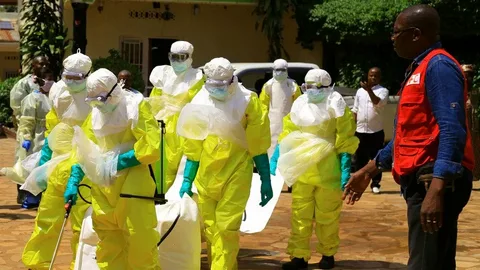
The World Health Organization has formally activated its IHR Emergency Committee following a PHEIC declaration over the rapidly worsening Ebola outbreak in the Democratic Republic of the Congo. The death toll has climbed to an estimated 131 people from 513 suspected cases, with the virus already crossing into Uganda. The emergency session marks one of the most serious applications of the International Health Regulations (2005) since the Mpox emergency committee convened in 2022.
Background: Understanding the IHR Framework
The International Health Regulations (2005), commonly referred to as IHR (2005), form the legal backbone of global epidemic response. This binding international agreement among 196 WHO member states defines exactly when and how the world must act together during a disease crisis.
Under this framework, the public health emergency definition WHO uses is precise. A Public Health Emergency of International Concern or PHEIC is declared when an event is extraordinary, poses a cross-border public health risk, and may require a coordinated international response. It is the highest level of alert the WHO can issue.
The global health emergency definition under the IHR goes beyond a single country’s crisis. It signals that national measures alone are insufficient and that the entire international community must coordinate. Past examples include the Polio IHR Emergency Committee declarations, the Mpox emergency committee sessions, COVID-19, and earlier Ebola outbreaks in West Africa.
IHR diseases that require mandatory notification to the WHO include smallpox, wild-type polio, human influenza caused by a new subtype, and SARS. Any other event including Ebola can also trigger a PHEIC if it meets the defined criteria of severity, spread, and international concern.
The 2026 Ebola Outbreak: How It Started
The current outbreak began in the Ituri province of northeastern DRC a remote but heavily trafficked gold-mining region bordering Uganda and South Sudan. The strain responsible is Bundibugyo, one of the rarer and more dangerous Ebola variants, for which no approved vaccine currently exists.
The virus has already spread into neighbouring provinces, as far as 200km from the identified ground zero, and has crossed the DRC’s borders into Uganda. The porous borders in this region, where miners and traders move freely, have made containment extremely difficult.
Earlier case counts stood at 91 deaths from 350 suspected cases, but the numbers escalated sharply within days, pointing to rapid community transmission that had not been fully detected in initial reports.
Details: What the IHR Emergency Committee Is Doing
WHO Director General Tedros Adhanom Ghebreyesus declared the PHEIC early on Sunday and confirmed to the World Health Assembly in Geneva on Tuesday that an IHR Emergency Committee meeting was scheduled to assess vaccine options and response strategies.
The IHR Emergency Committee is not a permanent body. It is assembled specifically when a potential or confirmed PHEIC arises. Members are drawn from the WHO’s IHR Expert Roster and selected based on the specific disease involved. Their role is to advise the Director General, propose temporary recommendations, and guide member states on necessary measures.
This mechanism has been used before most recently by the Mpox emergency committee, which first declared mpox a PHEIC in July 2022, then lifted and re-declared the status in 2024 as a new clade emerged. The Polio IHR Emergency Committee has similarly convened repeatedly, since polio has remained under a continuous PHEIC since 2014.
The Bundibugyo strain carries a fatality rate of up to 50 percent, and the committee’s discussions are expected to center on whether existing vaccines developed for the Zaire strain of Ebola can offer any cross-protection.
Ervebo, the Merck-manufactured vaccine approved for the Zaire strain, has shown some evidence of protection against Bundibugyo in animal studies, and the committee is weighing whether to recommend its use under emergency protocols.
Quotes: Officials Respond to the Crisis
Director General Tedros told the World Health Assembly he was “deeply concerned about the scale and speed of the epidemic,” emphasising that the cross-border spread made the PHEIC declaration unavoidable.
Dr. Mosoka Fallah, acting science director at the Africa Centres for Disease Control and Prevention, stressed that the absence of countermeasures made expert deliberation urgent: “We will look at what evidence we have and make a decision.”
Anne Ancia, WHO Representative in Ituri, confirmed that emergency supplies were already being deployed: “We have sent 12 tons of supply. An additional six are arriving today including personal protective equipment for frontline health workers and samples.”
DRC Health Minister Samuel Roger Kamba cautioned that the 131 death figure remained an estimate and that further investigation was needed to confirm all cases as Ebola-related.
Impact: What a PHEIC Means for the World
When a PHEIC is declared under the International Health Regulations (2005), it triggers specific legal obligations for all WHO member states. Countries must strengthen their surveillance systems, report relevant data to the WHO within 24 to 48 hours, and implement the temporary recommendations issued by the IHR Emergency Committee.
The global health emergency definition also activates international funding mechanisms, fast-track regulatory pathways for experimental medicines, and coordinated deployment of health personnel. Neighbouring countries particularly Uganda, South Sudan, Rwanda, and Burundi are now required under IHR rules to heighten border health screening and share epidemiological data in real time.
Germany has already stepped in to help, announcing it would admit and treat a US citizen who contracted Ebola while working in the DRC demonstrating that the outbreak’s consequences are no longer confined to Central Africa.
The situation draws direct comparisons to previous PHEIC activations. The Mpox emergency committee response in 2022 led to accelerated vaccine sharing between wealthy and lower-income nations. The Polio IHR Emergency Committee mechanism, running continuously for over a decade, has kept poliovirus suppressed across dozens of countries through sustained international cooperation. The same coordinated logic now applies to Ebola.
For those seeking a visual breakdown, the concept of a Public Health Emergency of International Concern PPT often used in medical schools and public health training — essentially maps the same decision tree: extraordinary event, cross-border risk, need for international action. That three-step test is precisely what was applied here.
Conclusion: What Happens Next
The IHR Emergency Committee session will produce a formal set of temporary recommendations binding on all member states. These could include travel advisory guidance, requirements for health declarations at border crossings, and directives to pharmaceutical manufacturers to accelerate vaccine trials under compassionate use protocols.
The WHO will continue monitoring the outbreak under the International Health Regulations (2005) framework, with the IHR Emergency Committee likely to meet again within weeks to review whether conditions have improved or worsened. If the outbreak is not contained, the committee may recommend escalating international resource commitments significantly.
What is clear is that the PHEIC declaration has placed the 2026 Ebola crisis at the very top of the global health agenda. The coming weeks will test whether the international system built around the IHR diseases notification framework and emergency committee structure can deliver results fast enough to prevent a wider catastrophe.
Frequently Asked Questions
WHO emergency Ebola?
The WHO declared a Public Health Emergency of International Concern (PHEIC) over Ebola on May 18, 2026, covering the outbreak in the Democratic Republic of the Congo and Uganda. Director General Tedros Adhanom Ghebreyesus made the announcement to the World Health Assembly in Geneva. An IHR Emergency Committee was immediately convened under the International Health Regulations (2005) to advise on vaccine deployment and containment strategy.
Who was the woman who stopped Ebola?
Dr. Joanne Liu, former International President of Médecins Sans Frontières (MSF/Doctors Without Borders), is widely credited as one of the most influential voices in turning the tide during the catastrophic 2014–2016 West Africa Ebola epidemic. In September 2014, she delivered a landmark address to the United Nations in Geneva, urgently calling on world governments to deploy military and civilian resources immediately. Her appeal is broadly seen as a pivotal moment that prompted international mobilisation and helped bring the outbreak under control.
What is the Ebola outbreak in 2026?
The 2026 Ebola outbreak is caused by the Bundibugyo strain of the Ebola virus and began in the Ituri province of northeastern Democratic Republic of the Congo. As of May 19, 2026, it has killed an estimated 131 people from 513 suspected cases and has spread into Uganda. Because no approved vaccine exists for this strain, the WHO declared a PHEIC under the International Health Regulations (2005), and its IHR Emergency Committee convened urgently to explore vaccine options and guide the global response.