
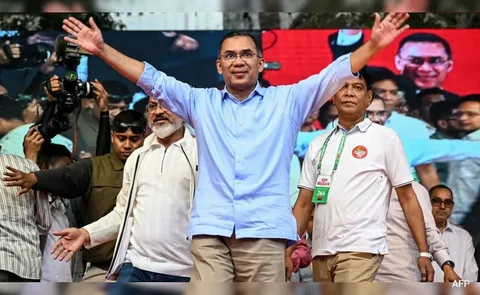
The current political situation in Bangladesh has entered a defining new chapter after the Bangladesh Nationalist Party (BNP) swept the February 12, 2026 general election with a commanding two-thirds parliamentary majority. Bangladesh’s 13th parliamentary election the first since the 2024 student-led uprising that ended Sheikh Hasina’s 15-year rule marks its most consequential democratic exercise in over a decade. The BNP’s victory is now reshaping Bangladesh political parties, regional diplomacy, and the country’s relationship with both India and Pakistan simultaneously.
Background: How Bangladesh Got Here
To understand the current political situation in Bangladesh, one must look back to 2024. In July 2024, students in Bangladesh began protesting against a job quota system that reserved a significant share of government jobs for descendants of Bangladesh’s 1971 freedom fighters, widely regarded as the political elite. Hasina ordered a brutal crackdown as protests escalated nearly 1,400 people were killed and more than 20,000 wounded.
Hasina was eventually ousted and fled to India, where she remains in exile. Nobel laureate Muhammad Yunus took over as the country’s interim leader in August 2024. That transition set the stage for the Bangladesh election of February 2026 the most anticipated vote the country had seen in years.
The Bangladesh election saw 51 political parties contesting seats, with competition led primarily between the Bangladesh Nationalist Party (BNP) and an alliance between Jamaat-e-Islami and the student-led National Citizen Party (NCP), formed in February 2025. The Awami League, Bangladesh’s other dominant party for decades, was barred entirely from participation.
Details: The BNP Victory and Bangladesh Political Parties
The result of the Bangladesh election was decisive. A BNP-led coalition secured a two-thirds majority with 209 seats, marking what analysts describe as a significant “paradigm shift” in the country’s political and regional orientation.
BNP Bangladesh is now led by Tarique Rahman, who took on the role of party leader following the death of his mother, former prime minister Khaleda Zia, in December 2025. He inherits a complex political landscape marked by internal party factionalism, a controversial personal past marked by corruption charges, and post-election unrest, with rival candidates alleging violence and irregularities.
Voter turnout was about 60 percent, suggesting that citizens across party lines — including former Awami League supporters chose to participate rather than boycott. There was a festival atmosphere as citizens lined up to vote after years of frustration over contested or noncompetitive polls.
Among the Bangladesh political parties, the Awami League’s absence was politically significant. Banned from contesting, its exclusion reshaped the entire contest and left millions of its supporters without a formal electoral voice.
Political Violence in Bangladesh: Before and After the Vote
The road to the Bangladesh election was marked by serious political violence in Bangladesh. At least 26 people were injured in clashes in Kushtia, Bhola, Teknaf, and Rajshahi in the days before polling. Several election offices and campaign camps belonging to BNP, Jamaat-e-Islami, and independent candidates were vandalised. In Teknaf, gunfire during a BNP campaign reportedly left five people injured, including children.
In Bangladesh, political violence typically takes the form of street clashes involving crude weapons, but firearms were used in at least nine instances of political party-related violence ahead of the vote a relatively novel and alarming development.
The post-election period has also seen tensions. With the BNP securing a two-thirds majority in parliament, citizens remember how overwhelming parliamentary dominance allowed for a repressive state apparatus to emerge during the Hasina era. The post-election mood is not entirely euphoric but more vigilant. The risk of political violence in Bangladesh resurfacing remains a concern for civil society and international observers alike.
BNP Bangladesh Ideology: What the Party Stands For
Understanding BNP Bangladesh ideology is key to reading what comes next for the country. The party was founded by General Ziaur Rahman, Tarique’s father, in the late 1970s. Ziaur Rahman envisioned a South Asia united through cooperation, playing a key role in proposing regional collaboration that eventually led to the creation of the South Asian Association for Regional Cooperation (SAARC).
BNP Bangladesh ideology combines Bangladeshi nationalism, a moderate role for Islam in public life, and a tradition of multi-vector foreign policy. India advocates for a comprehensive society and democracy, whereas BNP’s policies involve a significant role for the military and Islam as a central ideological element.
In his post-election statements, Tarique Rahman espoused a “Bangladesh First” approach, asserting that the country’s foreign policy would henceforth be guided by national interest and the welfare of the people. This marks a sharp departure from the Hasina era’s close alignment with New Delhi.
BNP Bangladesh Relationship With India: A Difficult Reset
The question of BNP Bangladesh relationship with India is among the most geopolitically sensitive aspects of the current political situation in Bangladesh. Historically, the two have not been natural partners.
During previous BNP administrations, India accused Dhaka of tolerating anti-India insurgent groups and failing to stop cross-border weapons flows. Delhi also repeatedly raised concerns about attacks on Hindu minorities and the BNP strengthening ties with China.Relations deteriorated further under the Yunus interim government, with the two countries swapping rhetorical barbs, imposing trade restrictions, and engaging in confrontations along their shared border. The low point came in December 2024, when far-right Hindu groups attacked the Bangladeshi assistant high commission in Agartala, Tripura.
Now, is Bangladesh and India friends? The answer is complicated. Prime Minister Narendra Modi’s government has no desire to see Bangladesh slip into the hands of anti-India elements. Modi has already invited Rahman and his family to India, a visit that could take place sooner rather than later.
India has attempted to build ties with the BNP in hopes of repairing the bilateral relationship after the election. The new position of the BNP vis-à-vis India is an encouraging departure from the party’s earlier stridently anti-Indian posture. However, one major irritant persists. Sheikh Hasina’s continued exile in India is possibly the most serious issue the BNP will have to reckon with the reality that Hasina is unlikely to be repatriated, while opposition parties in Dhaka will keep up pressure on the government to press India for her return.So is Bangladesh and India friends today? Cautiously, and conditionally yes. But it is a friendship under construction, not a settled one.
Quotes: What Leaders Are Saying
When BNP swept to a landslide, Indian Prime Minister Narendra Modi congratulated Tarique Rahman in a message posted in Bengali, pledging India’s support for a “democratic, progressive and inclusive” neighbour and adding that he looked forward to strengthening “our multifaceted relationship.
Pakistani Prime Minister Shehbaz Sharif was also quick to respond: “I extend my warmest felicitations to Tarique Rahman on leading the BNP to a resounding victory. I also congratulate the people of Bangladesh on the successful conduct of the elections.”
Analyst Muhib Rahman observed: “The election itself, despite pre-election anxieties, was largely peaceful and procedurally credible. The youth population accounts for roughly 40 percent of eligible voters and has already demonstrated its willingness to take to the streets their engagement will define what comes next.”
Impact: What Happened in Bangladesh and Why It Matters Globally
What happened in Bangladesh today and over recent months has profound implications for South Asia’s balance of power. Tarique Rahman faces what analysts describe as a “great power competition in the Bay of Bengal region,” with China, India, and the United States all recalibrating their positions toward Dhaka.
BNP is open to deepening economic engagement with China, viewing Beijing primarily as a source of investment and infrastructure. Relations with the United States are expected to improve relative to the later Awami League years, as Washington sees BNP as more receptive to competitive politics.
On the Pakistan dimension, the Pakistan-Bangladesh bilateral relationship is expected to gain further momentum under Tarique Rahman’s government. Direct flights between Bangladesh and Pakistan resumed after more than a decade, as ties between the two nations warm. This triangular dynamic between India, Pakistan, and Bangladesh is directly shaping what experts call a new geopolitical chapter for the region.
Many countries are watching developments in Bangladesh with great interest, given the potential implications for regional geopolitics. The current political situation in Bangladesh is no longer just a domestic story it is a regional and global one.
Conclusion: What Comes Next
The current political situation in Bangladesh remains fluid but full of possibility. The BNP now governs with a supermajority, but that very dominance raises the stakes. With that level of political leverage, the BNP could potentially derail the reform agenda that many citizens hoped would follow the post-Hasina transition. In the recent past, supermajorities have been the starting point of autocratic consolidation in Bangladesh.
As governance shifts in the world’s eighth-most populous country, the outcome sets the stage for a defining test of institutional reform, economic recovery, and geopolitical positioning. The coming months will reveal whether Tarique Rahman’s “Bangladesh First” approach translates into genuine national progress or becomes another chapter in the country’s long cycle of political turbulence.
FAQs
What is the current problem of Bangladesh?
The current political situation in Bangladesh is shaped by several overlapping challenges. The BNP government holds a two-thirds parliamentary majority a concentration of power that has historically led to democratic backsliding in the country. Post-election political violence in Bangladesh has not fully subsided, minority representation in parliament remains critically low, and the economic recovery from years of political turmoil is still fragile. Additionally, relations with India carry the unresolved issue of former Prime Minister Sheikh Hasina’s exile in New Delhi, which remains a flashpoint for domestic opposition politics.
What is the reason for Bangladesh’s conflict?
Bangladesh’s recurring political conflict stems from a decades-old rivalry between Bangladesh political parties principally the Awami League and the Bangladesh Nationalist Party (BNP) each of which has historically used state power to suppress the other. The immediate trigger for the 2024 uprising was a discriminatory job quota system that reserved government positions for a political elite. Hasina’s brutal crackdown on student protesters, which killed an estimated 1,400 people, ended her rule and triggered the political transition that produced the Bangladesh election of February 2026. Deep-seated issues of political patronage, dynastic leadership, and weak institutions continue to fuel political violence in Bangladesh.
Is there tension between Bangladesh and Pakistan?
The current political situation in Bangladesh has actually seen a warming rather than a worsening of Bangladesh-Pakistan ties. Direct flights between Dhaka and Karachi resumed in January 2026 after a gap of more than a decade. BNP Bangladesh relationship with Pakistan has historically been more comfortable than that of the Awami League. Analysts note that BNP Bangladesh ideology includes a moderate stance on Islam that finds more resonance in Islamabad than the secular nationalism of the Awami League did. However, analysts also caution that any warming of ties is likely to remain symbolic, constrained by historical sensitivities around the 1971 Liberation War and limited economic incentives.