
Israel has killed Hezbollah leader Naim Qassem in a targeted airstrike on Beirut, marking one of the most significant strikes in the Israel-Hezbollah war 2026. The Hezbollah leader killed announcement came from the Israel Defense Forces (IDF) on April 9, 2026, following a massive wave of strikes on Lebanon. The escalation has drawn direct comparisons to the Hezbollah Israel war 2006, with analysts calling the current conflict even more destructive.
Background: Who Is the Hezbollah Leader and Where Is Hezbollah Located?
To understand the Israel-Hezbollah war 2026, it is essential to understand the group at its center. Hezbollah is a powerful Iran-backed armed movement and political party based primarily in Lebanon. Where is Hezbollah located? The group is headquartered in Lebanon’s southern suburbs of Beirut an area known as the Dahiyeh with a strong presence across southern Lebanon and the Bekaa Valley.
Who is the Hezbollah leader? Naim Qassem had served as Secretary-General of Hezbollah since late 2024, after his predecessor Hassan Nasrallah was killed by an Israeli strike in September of that year. Qassem was a long-standing deputy within the organization and was considered a key link between Hezbollah and its principal backer, Iran.
Hezbollah country of origin is Lebanon, though the group operates as a transnational force with deep ties to Iran’s Islamic Revolutionary Guard Corps (IRGC). Its military infrastructure, weapons depots, and command networks span across Lebanese territory, making the Israel strikes Hezbollah in Lebanon campaign a complex and bloody affair for Lebanese civilians as well.
Details: The 2026 Israel-Hezbollah War Unfolds
The Israel-Hezbollah war 2026 began on March 2, when Hezbollah fired projectiles at Israel from Lebanon following the killing of Iranian Supreme Leader Ali Khamenei in U.S.-Israeli strikes. Hezbollah resumed attacks against Israel on March 2, claiming it targeted the Mishmar HaCarmel missile defence site near Haifa, calling the strike a “defensive act” after over a year of Israeli attacks despite a truce.
Lebanon was drawn into the wider Middle East conflict after the Iran-backed group attacked Israel in response to the killing of Iranian Supreme Leader Ayatollah Ali Khamenei. Israel, which had been conducting strikes targeting Hezbollah despite a 2024 ceasefire, launched multiple waves of strikes across Lebanon and sent ground troops into border areas.
Israeli Prime Minister Benjamin Netanyahu made clear that the ceasefire announced with Iran would not extend to Lebanon, and the IDF described its operation on April 8 as the largest coordinated strike of the current conflict, hitting more than 100 Hezbollah targets within a 10-minute span across Beirut, southern Lebanon, and the eastern Bekaa Valley.
Hezbollah Leader Killed: The Strike on Naim Qassem
The most dramatic development in the Israel-Hezbollah war 2026 came on April 9, 2026. The IDF’s Arabic-language spokesperson Avichay Adraee announced that Hezbollah Secretary-General Naim Qassem had been eliminated in strikes on Beirut, along with Ali Yousef Harshi described as the Hezbollah leader’s personal secretary and nephew, who played a pivotal role in office management and providing security for Qassem.
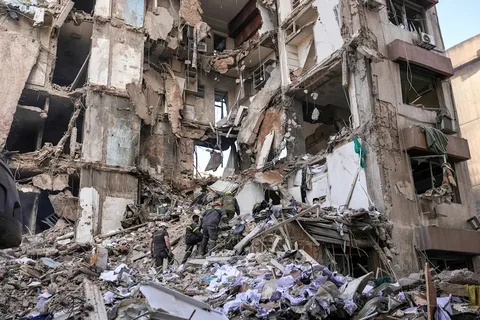
Harshi was targeted in a strike in Beirut’s Tallet Khayat neighborhood, outside of the Hezbollah Dahiyeh stronghold. Footage showed the strike partially collapsed a multi-storey building. The strikes shocked the region and sent shockwaves through Hezbollah’s chain of command.Israeli Prime Minister Netanyahu responded to the Hezbollah leader killed news by posting on X: “Our message is clear whoever acts against Israeli civilians will be targeted. We will continue to strike Hezbollah wherever necessary, until we restore full security to the residents of the north.”
Did Israel Bomb Lebanon Yesterday? The Scale of Strikes
Did Israel bomb Lebanon yesterday? The answer, throughout much of 2026, has consistently been yes. Israel strikes Hezbollah in Lebanon have been near-daily since March, targeting command centers, weapons depots, missile launchers, and intelligence infrastructure.
The IDF said the April 8 strikes also targeted missile launchers, command centers, and intelligence infrastructure, accusing Hezbollah of operating within civilian areas and using residents as human shields.
The Lebanese Health Ministry reported that Israeli strikes on Lebanon over a single 24-hour period killed 357 people and wounded 1,223 others with an Israeli claim of 250 militants killed among those figures. Civilian areas, including busy commercial intersections in Beirut, were struck during the offensive.
Lebanon’s health minister stated that Israeli strikes killed 394 people in the first week of the March 2026 escalation alone, including 83 children and 42 women. These figures have drawn widespread international condemnation.
Hezbollah Israel War 2006 vs 2026: How Do They Compare?
The Hezbollah Israel war 2006 lasted 34 days and killed approximately 1,200 Lebanese civilians and 165 Israelis. It ended with a UN-brokered ceasefire that left Hezbollah’s core structure intact. The Israel-Hezbollah war 2026 is widely seen as a direct consequence of that unresolved conflict a second, far more destructive chapter.
Unlike the Hezbollah Israel war 2006, in which Hezbollah’s leadership survived largely unscathed, the Israel-Hezbollah war 2026 has already seen the elimination of the Hezbollah leader, multiple senior commanders, and large swaths of the group’s missile infrastructure. The conflict between Israel and Hezbollah formally began on October 8, 2023, as the Lebanese group launched strikes in solidarity with Hamas in Gaza, escalating into a full-scale war by September 2024 that killed more than 4,000 people and injured approximately 17,000. The 2026 escalation has dramatically accelerated this toll.
Quotes: What Officials Are Saying
Israeli Defence Minister Israel Katz warned that Hezbollah’s continued defiance would bring catastrophic consequences, threatening to “burn all of Lebanon” if the group did not stand down.
Before the Hezbollah leader killed announcement, Israel’s defence minister had publicly declared Naim Qassem a “marked target,” saying he had followed orders from Iran to attack Israel and that the group would “pay a heavy price.”
Prior to his death, Hezbollah leader Naim Qassem had stated in a televised address: “Do you expect a war later? It’s possible, sometime. Yes, this possibility is there, and the possibility of no war is also there.” He also said Lebanon should prepare a plan to confront Israel that relies on “its army and its people.”
Impact: Regional and Global Consequences
The Israel-Hezbollah war 2026 is reshaping the Middle East’s strategic landscape at a rapid pace. With the Hezbollah leader killed and command structures disrupted, Hezbollah faces its most severe leadership crisis since the movement was founded in 1982.
Despite a November 2024 ceasefire that was meant to end hostilities, Israel strikes Hezbollah in Lebanon have continued, with Israel maintaining troops in five areas it deems strategically important. Lebanon’s government has been pushed into an unprecedented position simultaneously trying to negotiate with Israel while dealing with Hezbollah’s refusal to disarm.
Lebanon has outlawed Hezbollah’s military activities and held the first direct negotiations with Israel in decades, reflecting the extraordinary pressure the Israel-Hezbollah war 2026 has placed on Beirut’s political system.
For the wider region, the war’s continuation despite ceasefire agreements raises serious questions about the durability of any future diplomatic settlement, particularly regarding Hezbollah country Lebanon’s sovereignty and its ability to control armed factions on its territory.
Conclusion: What Comes Next in the Israel-Hezbollah War 2026
The Israel-Hezbollah war 2026 shows no signs of rapid resolution. With the Hezbollah leader killed, the group faces both a leadership vacuum and enormous pressure from Israel, Lebanon’s own government, and the international community to halt its military operations.
Israel has made clear that it will continue Israel strikes Hezbollah in Lebanon until it deems northern Israel safe from rocket and missile fire. Hezbollah, for its part, has historically shown resilience after leadership losses as seen after the Hezbollah Israel war 2006 and the killing of Hassan Nasrallah in 2024. Whether a successor will emerge to stabilize the group or whether the 2026 campaign has dealt Hezbollah a lasting structural blow remains the defining question for Lebanon, Israel, and the entire region.
FAQs
Who is stronger, Israel or Iran?
Israel and Iran represent very different kinds of military power. Israel possesses one of the most technologically advanced militaries in the world, with a highly trained air force, a sophisticated missile defense system (Iron Dome, David’s Sling, Arrow), and an undeclared nuclear capability. It has repeatedly demonstrated precision strike capability against targets deep in enemy territory. Iran, by contrast, maintains a much larger conventional military and an extensive network of proxy forces including Hezbollah spread across the Middle East. In a direct conventional military confrontation, most defence analysts assess Israel as holding a significant technological edge. However, Iran’s asymmetric capabilities, ballistic missile arsenal, and regional proxy network make it a formidable adversarial power in ways that pure military comparison does not fully capture.
Which is the richest Arab country?
As of 2026, the United Arab Emirates (UAE) and Qatar rank among the wealthiest Arab countries by per capita income, driven by vast oil and gas revenues and aggressive economic diversification. Saudi Arabia holds the largest overall GDP among Arab nations, bolstered by its position as the world’s largest oil exporter. Qatar has the highest GDP per capita in the Arab world. The Gulf Cooperation Council (GCC) states Saudi Arabia, UAE, Qatar, Kuwait, Bahrain, and Oman collectively account for the majority of Arab world wealth, with their financial position shaped primarily by hydrocarbon exports and sovereign wealth funds.
Who protects Saudi Arabia?
Saudi Arabia’s security is underpinned by a combination of its own large armed forces and a long-standing strategic partnership with the United States. The U.S. maintains military bases and personnel in Saudi Arabia and has sold the kingdom billions of dollars in advanced weapons systems, including Patriot missile defense batteries and F-15 fighter jets. Saudi Arabia is also a member of the Arab League and the Gulf Cooperation Council, which provide collective security frameworks. In recent years, Saudi Arabia has significantly expanded its own defense industry and military capabilities, while continuing to rely on U.S. security guarantees as the bedrock of its defense posture, particularly against threats from Iran and Iran-backed groups such as the Houthis.