
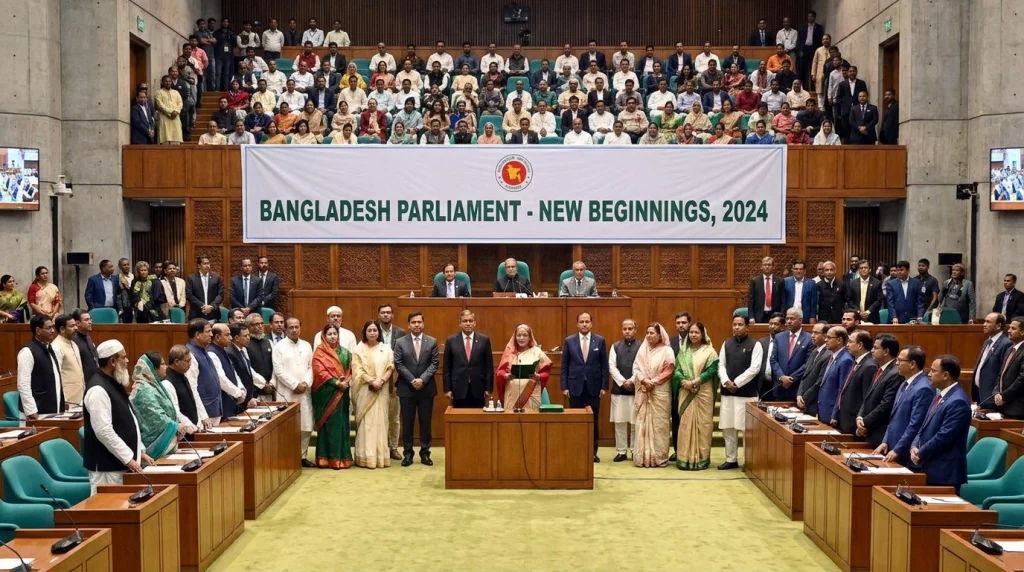
The Bangladesh parliament meeting opened on March 12 as the 13th Jatiya Sangsad convened after the 2024 uprising. The session marks a major political shift following unrest, elections, and leadership change. It represents the formal return to parliamentary governance after a turbulent period.
The Bangladesh parliament meeting is the first since the uprising that reshaped the country’s political structure. The new government, led by Prime Minister Tarique Rahman, carries expectations of reform. This session signals the beginning of a new democratic phase.
The Election That Brought Parliament Back
The February 12 election made the Bangladesh parliament meeting possible, with strong voter turnout and international monitoring. BNP secured a clear majority, while opposition parties formed a significant bloc. The results reflected public demand for political change.
Tarique Rahman — The Man Who Returned
Tarique Rahman returned after years in exile to lead the new government. Addressing the Bangladesh parliament meeting, he promised unity and democratic reforms. His leadership marks a shift from long-standing political dominance by previous rulers.
What the 2024 Uprising Changed
The uprising that preceded the Bangladesh parliament meeting resulted in major political transformation. It led to leadership change, legal actions, and the formation of an interim government. The movement highlighted public demand for accountability and reform.
The July National Charter — Rewriting the Rules
The July National Charter introduces major constitutional reforms following the Bangladesh parliament meeting. It includes term limits, stronger institutional checks, and increased representation. Parliament is now responsible for implementing these changes.
The Bangladesh Parliament Seats List and Structure
The structure behind the Bangladesh parliament meeting includes 300 elected seats and 50 reserved seats for women. Constituencies are region-based, forming a balanced national representation. Current results show BNP holding a dominant position among Bangladesh parliament members.
The Challenges Ahead
The Bangladesh parliament meeting begins with serious economic and political challenges. Issues include economic recovery, energy shortages, and legislative backlog. The new government must address these concerns quickly to maintain stability.
Quotes
“After more than a decade and a half of fascist and subservient rule, the activities of parliament are beginning today with representatives elected by the people.”
“The fallen dictatorship made parliament dysfunctional… we will make parliament the centre of all debates.”
“The BNP wants to build a prosperous, safe and democratic country.”
Impact
The Bangladesh parliament meeting represents a key transition from unrest to governance. It signals stability for both the country and the region. International attention reflects the importance of Bangladesh’s political direction.
Frequently Asked Questions
What is the current parliament of Bangladesh?
The current parliament is the 13th Jatiya Sangsad with 350 members, including elected and reserved seats.
What is the salary of an MP in Bangladesh?
MPs receive a monthly salary along with allowances, benefits, and additional support as defined by law.
Who is the leader of Bangladesh Parliament?
Prime Minister Tarique Rahman leads the parliament as Leader of the House.
Conclusion
The Bangladesh parliament meeting marks a turning point in the country’s political journey. It reflects the outcome of elections, reform demands, and institutional rebuilding.
The coming months will determine whether this new parliament can deliver lasting democratic change.