
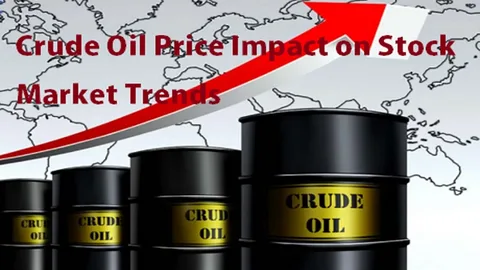
Energy markets are carrying a lot of uncertainty into 2026, and the question of whether crude oil prices drop this year is sitting at the center of it. Futures trading is sending mixed signals, supply and demand dynamics are shifting in opposite directions depending on which part of the world you are looking at, and analysts are genuinely divided on where Brent crude goes from here.
What is clear is that the simple answer prices will fall, or prices will rise is not the one most credible market watchers are offering. Volatility, not direction, is the defining characteristic of oil prices today, and understanding what is driving that volatility matters more than chasing a clean forecast that the market itself is not confident about.
Background: Global Oil Market Conditions
The global oil market arrived in 2026 already carrying the marks of a turbulent few years. Geopolitical instability, repeated production adjustments by OPEC+ nations, and demand patterns in Asia and Europe that shifted faster than most models predicted all contributed to a pricing environment that has rewarded flexibility and punished anyone who committed too firmly to a single directional view.
The longer-term picture has added another layer of complexity. Energy transition policies — the push toward renewables across major economies have created genuine uncertainty about how long fossil fuel demand will remain at current levels. That uncertainty does not necessarily translate into lower prices in the short term, because supply decisions respond to long-term expectations too, and producers have shown they are willing to cut output to defend price floors. But it does mean that the ceiling on how high oil can go before demand destruction sets in is lower than it was a decade ago.
The result is a market where discussions around crude oil prices drop 2026 carry real weight. Traders, analysts, and policymakers across importing and exporting nations are all trying to read the same tea leaves, and they are not reaching consistent conclusions.
Current Market Situation: Oil Prices Today
The most recent trading sessions are reflecting the same ambivalence that has characterized much of the year so far. Oil prices today are moving in response to news rather than trend — each major development in global economics or geopolitics produces a sharp reaction that then partially reverses as the initial shock is absorbed.
The major economies that drive global oil demand are themselves in uncertain shape. China’s recovery trajectory has been slower and less consistent than many forecasters hoped. The United States is managing its own balance between growth concerns and inflation that is not fully resolved. Europe remains energy-sensitive in ways that have changed its consumption patterns structurally, not just temporarily.
At the same time, supply is not freely available in any direction the market might want to push it. Middle Eastern tensions — a perennial source of supply risk are not diminishing. OPEC+ has demonstrated a willingness to defend price levels through production discipline that has often exceeded what markets initially expected. The interaction between these supply constraints and uncertain demand is exactly what is producing the mixed signal environment in oil prices today.
Crude Oil Futures and Market Expectations
Look at the crude oil futures curve right now and what you see is a market pricing in uncertainty rather than a clear consensus on direction. Futures contracts at different maturities are reflecting alternating expectations of surplus and deficit conditions, and the spread between them tells a story of genuine disagreement about how the balance will ultimately resolve.
Traders are watching three main data points with particular attention. Inventory levels — whether stockpiles are building or drawing down provide the most direct short-term signal about whether supply is running ahead of demand or behind it. Refinery output data indicates whether the crude being produced is actually being converted into products that final consumers want to buy. And OPEC+ decision-making remains the single most powerful lever in the short-term price picture, because the organization has shown it will use that lever when it judges that market conditions require it.
The interplay between these factors will go a long way toward determining whether crude oil prices drop 2026 becomes a sustained story or remains a question that the market keeps deferring.
Brent Crude Oil Price Trends
Brent crude oil price is the number the whole global market watches, and in 2026 it is reflecting a genuinely difficult balance. Supply constraints are providing a floor producers with revenue targets and budget requirements are not going to allow prices to fall indefinitely without responding. Demand growth forecasts, on the other hand, are not strong enough to push prices substantially higher unless something unexpected changes.
What this produces is a pricing environment characterized by range-trading rather than a clear trend. Brent moves up when geopolitical news threatens supply, gives some of that back when the immediate threat passes, and finds itself drawn back toward a range that reflects the underlying supply-demand balance.
If global economic expansion slows meaningfully if China disappoints, if Europe struggles, if the US tips into something more concerning than a soft landing the downward pressure on Brent could become more sustained. If geopolitical events in major producing regions escalate in ways that genuinely threaten supply, the opposite dynamic takes over quickly. Neither scenario is certain, which is why the Brent crude oil price is where it is.
Crude Oil Prices Drop 2026 Chart Analysis
Anyone looking at a crude oil prices drop 2026 chart is going to see the same basic pattern regardless of which time period they examine price behavior that is reactive, cyclical, and heavily influenced by external events rather than smooth trends that can be easily extrapolated.
The historical price charts show clear patterns that inform current expectations. Short-term volatility around geopolitical events has been sharp and frequent price moves of five to ten percent within days are not unusual when a significant supply or demand signal hits the market. Those moves tend to partially reverse as the initial shock is absorbed and market participants reassess the actual supply impact.
Medium-term stabilization after major shocks is also visible in the data. After the initial reaction to any significant event, oil prices tend to settle into a new range as the market adjusts production, logistics, and inventory levels to reflect the new reality.
The crude oil prices drop 2026 graph reinforces what the futures curve suggests this is not a market that is heading clearly in one direction. It is a market navigating competing pressures, and the price reflects that navigation in real time.
Crude Oil Prices Drop 2026: What CNN-Style Analysis Says
Financial news platforms covering the crude oil prices drop 2026 story through the lens that characterizes mainstream business journalism tend to emphasize the macro risk factors that could accelerate a decline.
Global recession risk remains a genuine concern, even if the base case for most economies is not outright contraction. When growth expectations soften, energy demand growth softens with them, and that relationship is tight enough to matter for pricing. Energy demand slowdown in major Asian economies particularly China is getting significant attention because Chinese demand growth has been one of the primary drivers of global oil consumption expectations for years.
The supply disruption risk runs in the opposite direction. Geopolitical instability in producing regions can reverse any downward price trend quickly, and the current environment includes enough active tensions to make supply disruption risk a genuine rather than hypothetical concern.
The inflationary pressure angle is also part of the mainstream coverage high oil prices feed inflation, which constrains consumer spending, which reduces economic growth, which reduces energy demand. This feedback loop is part of why sustained high oil prices contain their own eventual correction mechanism.
Expert Quotes and Market Opinions
People who trade oil for a living or analyze it professionally are not speaking with a single voice right now, and that itself is informative.
One market strategist put it plainly: oil markets in 2026 are highly reactive, and even relatively small geopolitical events can shift Brent crude pricing within hours. That reactivity is not a temporary condition — it reflects the fundamental uncertainty about supply and demand balance that the market is genuinely trying to price.
A separate energy analyst offered a more structural perspective: the possibility of a sustained drop in crude prices exists, but the production discipline that OPEC+ has demonstrated over recent years will prevent anything that resembles a free fall. Producers have shown they will respond to protect price levels, and that puts a practical floor under the market even when demand-side pressures are pointing downward.
The gap between these two perspectives one emphasizing short-term volatility, the other emphasizing structural floors captures the range of views that is actually present in the market.
Economic and Regional Impact
The direction of crude oil prices in 2026 is not just a story for energy traders. It has real consequences that extend across the global economy in ways that affect governments, businesses, and ordinary consumers.
If crude oil prices drop meaningfully through 2026, the primary beneficiaries are oil-importing nations countries that have been dealing with energy-driven inflation and where lower fuel costs would translate relatively quickly into reduced transportation expenses, lower industrial input costs, and some relief for consumers who have been stretched by high energy prices for an extended period.
The flip side of that story plays out in oil-exporting economies, where government revenues are directly tied to the price their production earns on international markets. Countries that have built national budgets around specific oil price assumptions would face difficult choices if prices fall significantly below those levels — spending cuts, deficit increases, or drawdowns on reserve funds, none of which are politically comfortable.
The balance between consumer relief in importing nations and fiscal stability in exporting ones is one of the genuine geopolitical dimensions of the oil price story in 2026.
Market Risks and Key Drivers
Five factors are carrying the most weight in determining where oil prices go from here, and they are all pulling in different directions at the same time.
OPEC+ production decisions remain the most powerful single variable the organization has the capacity to move markets with its decisions, and its willingness to use that capacity has been demonstrated repeatedly.
Global economic growth trends are the primary demand-side driver stronger growth means more energy consumption, weaker growth means less, and the uncertainty about which direction major economies are heading is a direct source of price uncertainty.
Geopolitical tensions in oil-producing regions are the supply shock risk that never fully disappears the Middle East, in particular, contains enough active pressure points that the risk of a significant supply disruption is always real.
Energy transition policies are shaping the long-term demand picture in ways that are becoming clearer but are still subject to significant variation depending on how quickly different countries move and how effective their policies prove to be.
Currency and inflation dynamics affect oil prices both through the dollar’s role as the pricing currency and through the impact of inflation on consumer spending and energy demand.
Will Crude Oil Prices Drop in 2026?
The honest answer is that nobody knows, and the market’s own behavior reflects that uncertainty.
Some analysts expect prices to moderate through the year, driven by weaker demand growth as economic expansion across major economies falls short of optimistic forecasts. Their argument is essentially a demand-side story less growth means less energy consumption, and that eventually works its way into prices.
Others point to the supply-side constraints that have been consistently effective at defending price floors OPEC+ discipline, geopolitical risk premiums, and the time it takes new production to respond to price signals. Their argument is that prices will remain supported even if demand disappoints, because supply will adjust to maintain the balance.
The most credible synthesis of these views is probably that crude oil prices drop 2026 reflects an expectation that is plausible but not certain, and that the actual price path through the year will be determined by which of these competing forces proves more dominant and when.
Conclusion: What to Expect Next
The global oil market in 2026 is operating in genuinely uncertain territory, and that uncertainty is not going to be resolved by any single data point or event. Demand pressures that could push prices down are real. Supply constraints that are preventing a sharp decline are also real. The geopolitical environment that could trigger rapid moves in either direction is present and active.
Investors and policymakers who need to make decisions based on oil price expectations will be watching crude oil futures, weekly inventory data, and global economic indicators closely. The question of whether crude oil prices drop 2026 gets answered over many months of market behavior, not a single moment of clarity.
What the current setup suggests most strongly is that volatility will remain the dominant market characteristic not a clean trend in either direction, but a series of reactions to events that will keep the price moving and keep analysts revising their forecasts accordingly.
FAQs
How much was crude oil in 2026?
Crude oil prices in 2026 have been moving within a volatile range rather than settling at any fixed level that can be quoted as representative of the year. The price at any given point has reflected the immediate balance of geopolitical events, production decisions by major exporters, and demand signals from the largest consuming economies. Anyone looking for a specific current price should check live market data from financial platforms that track Brent crude and WTI benchmarks in real time, as these move continuously throughout trading sessions.
What is the base oil price trend in 2026?
The base oil price trend in 2026 is best characterized as unstable rather than directional. Markets have not established a clear downward or upward bias that has held consistently instead, prices have been reacting to individual events and then partially retracing as those events are absorbed. The absence of a dominant trend makes short-term forecasting particularly difficult and is itself a meaningful signal about the degree of genuine uncertainty in the market about where supply and demand balance is heading.
What is the prediction for crude oil prices?
Forecasts are genuinely divided, and the range of analyst predictions reflects the actual uncertainty in market conditions rather than just differing methodologies. Bearish forecasters point to weaker demand growth as the primary driver of potential price declines. Bullish or neutral forecasters emphasize supply-side discipline and geopolitical risk as factors that will prevent any sustained decline. The most defensible position is that price volatility will continue, that either direction remains possible depending on how key variables evolve, and that investors and businesses with significant oil price exposure should be planning for a range of outcomes rather than a single expected number.