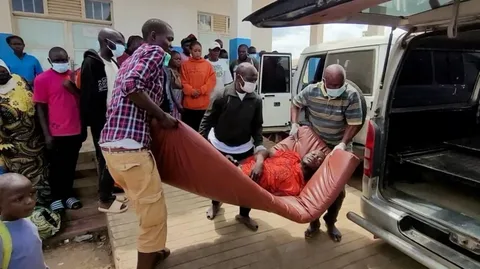
The World Health Organization has declared the ongoing Ebola outbreak in the Democratic Republic of the Congo (DRC) and Uganda a Public Health Emergency of International Concern (PHEIC). With over 390 suspected cases and more than 100 deaths reported, the current Ebola outbreak is raising alarms across the global health community. The CDC Ebola outbreak response has been activated, with health agencies working around the clock to contain the spread.
Background: What Is the Ebola Virus?
Ebola is a deadly viral disease that has haunted Central and West Africa since the virus was first discovered in 1976 near the Ebola River in what is now the DRC. According to CDC Ebola outbreak history records, more than 20 Ebola outbreaks have occurred in the DRC alone since that year. The virus spreads through direct contact with the bodily fluids of infected individuals and has a fatality rate that can reach up to 90% without treatment.
When looking at the list of Ebola outbreaks recorded over the decades, three viral strains stand out as the most dangerous the Ebola virus (Zaire), the Sudan virus, and the Bundibugyo virus. The current 2026 Ebola outbreak is caused by the Bundibugyo strain, which is the rarest of the three and has no approved vaccine or specific treatment available.
The 2026 Ebola Outbreak: What Happened?
In early May 2026, a hospital in the Bunia Health Zone in northeastern DRC’s Ituri Province began reporting a cluster of severe illnesses among healthcare workers. Initial lab tests came back negative for the standard Ebola virus, which delayed confirmation. By May 15, 8 out of 13 samples tested positive for the Bundibugyo virus confirming a new and dangerous Ebola outbreak.
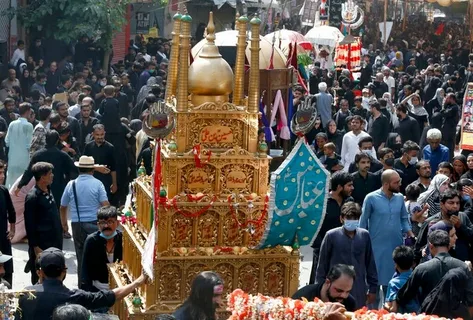
The outbreak was formally declared on May 15, nearly three weeks after the first known patient a healthcare worker developed symptoms on April 24. That delay, caused by the use of incorrect test cartridges, likely allowed the virus to spread unchecked through open-casket funeral processions common in the region. This is the DRC’s 17th Ebola outbreak since 1976, and the most recent previous outbreak had only ended in December 2025.
As of May 17, 2026, confirmed and suspected cases had been reported across three areas in Ituri Province, with two laboratory-confirmed cases also identified in Uganda both among individuals who had recently travelled from DRC. The DRC’s health ministry confirmed four confirmed deaths among eight laboratory-confirmed cases, while the Africa CDC put the suspected death toll at over 100.
Current Ebola Outbreak: Rare Bundibugyo Strain
The current Ebola outbreak involves the Bundibugyo virus, a rare variant that has historically appeared only twice before in the official list of Ebola outbreaks making this its third recorded emergence. Unlike Ebola-Zaire strains, for which vaccines were developed after the massive Ebola outbreak 2014, there are currently no approved therapeutics or vaccines for the Bundibugyo strain. Historically, the Bundibugyo virus has carried a death rate between 25% and 50%.
Most cases in the DRC so far have occurred in people aged 20 to 39 years, with two-thirds of patients being female. Symptoms match classic Ebola disease fever, headache, vomiting, severe weakness, abdominal pain, nosebleeds, and vomiting blood. These symptoms make it easy to confuse with other diseases in early stages, slowing response time.
CDC Ebola Outbreak Response: What Is the U.S. Doing?
The CDC Ebola outbreak response team has been fully mobilized. The CDC already had 30 personnel stationed in the DRC, with additional workers deployed to support containment efforts. On May 18, 2026, the CDC and the Department of Homeland Security implemented enhanced travel screening, entry restrictions, and public health measures at U.S. ports of entry.
In a significant development, an American doctor who was working in the DRC tested positive for Ebola Bundibugyo disease on May 17, 2026 the first confirmed U.S.-connected case of this current Ebola outbreak. At least six other Americans were reportedly exposed to the virus through their aid work in the region.
The CDC has confirmed that no Ebola cases have been detected within the United States due to this current outbreak. “To the American public, the risk to the United States remains low,” said Dr. Satish Pillai, the CDC’s outbreak response manager. The CDC Ebola outbreak history shows the agency has successfully contained previous threats, including the Ebola outbreak 2014 when travel-associated cases briefly reached U.S. soil.
Ebola Outbreak in U.S. 1989: A Historical Note
While public concern about Ebola spreading to the U.S. is understandable, it helps to look at CDC Ebola outbreak history. The Ebola outbreak in U.S. 1989 often called the “Reston incident” involved a strain of Ebola (Reston virus) discovered in research monkeys imported from the Philippines to a laboratory in Reston, Virginia. Crucially, the Reston strain did not cause illness in humans. No human deaths were recorded, and the incident was contained quickly. That event, however, put U.S. health authorities on high alert and helped shape the robust CDC Ebola outbreak protocols that exist today.
The Biggest Ebola Outbreak in History: 2014–2016
No discussion of Ebola outbreaks is complete without examining the biggest Ebola outbreak in recorded history the 2014–2016 West Africa epidemic. The Ebola outbreak 2014 began in Guinea in March 2014 and rapidly spread to Liberia and Sierra Leone. By the time it was brought under control in 2016, the epidemic had resulted in more than 28,600 cases and 11,325 deaths more than all previous Ebola outbreaks combined.
The Ebola outbreak 2015 was the peak year of that epidemic, with cases still surging in West Africa even as international response efforts intensified. CDC personnel deployed across the region in one of the largest global health responses in U.S. history. CDC activated its Emergency Operations Center in July 2014 to coordinate the effort, deploying over 4,000 responders, including 2,100 field workers.
The lessons learned from the Ebola outbreak 2014 and Ebola outbreak 2015 directly influenced the creation of faster diagnostic tools, better contact tracing systems, and eventually the development of the rVSV-ZEBOV vaccine though that vaccine only works against the Zaire strain, not the Bundibugyo strain driving the 2026 Ebola outbreak.
Expert Quotes on the 2026 Ebola Outbreak
Dr. Tedros Adhanom Ghebreyesus, WHO Director-General, stated that the event requires international coordination and cooperation “to understand the extent of the outbreak, to coordinate surveillance, prevention and response efforts, to scale up and strengthen operations and ensure ability to implement control measures.”
Dr. Craig Spencer, an emergency room physician and public health professor at Brown University who survived Ebola more than a decade ago, told CBS News he is “really concerned” for healthcare workers treating Ebola patients, noting that medical staff have very close contact with patients when they are most contagious.
Dr. Gabriel Nsakala, a professor of public health involved in past Ebola outbreak responses in the DRC, noted that while the DRC has extensive experience managing Ebola outbreaks, the unusual Bundibugyo strain complicates the response given the absence of targeted treatments.
Global Impact and Regional Risks
The WHO declaration means that the Ebola outbreak now carries the highest level of global health alert short of a pandemic emergency. The WHO has advised against closing international borders and does not recommend restrictions on travel or trade, but it has urged all neighboring countries to immediately strengthen surveillance and preparedness.
Countries at elevated risk due to proximity to the DRC include Uganda, Rwanda, Burundi, South Sudan, and the Central African Republic. The ongoing armed conflict in Ituri Province adds another layer of difficulty, restricting the movement of disease surveillance teams, limiting rapid response deployment, and complicating the secure transport of lab samples.
The WHO released $500,000 in emergency funds to support the response, while the Africa CDC mobilized $2 million though officials acknowledged these amounts fall far short of what is actually needed. The situation is further complicated by reduced U.S. funding to global health institutions following cuts to the U.S. Agency for International Development.
Conclusion: What Happens Next?
The 2026 Ebola outbreak remains a rapidly evolving situation. The WHO has convened an Emergency Committee to issue further recommendations, and global health agencies are working to scale up treatment capacity, contact tracing, and community education in affected regions. The priority is accelerating clinical trials for Bundibugyo-specific vaccines and treatments, since unlike after the Ebola outbreak 2014 no ready-made medical countermeasure exists for this strain.
With lessons from the Ebola outbreak 2015, the biggest Ebola outbreak of 2014–2016, and decades of CDC Ebola outbreak history guiding the current response, health authorities remain hopeful that the outbreak can be contained. However, experts warn that speed, funding, and community cooperation will be critical to preventing a larger regional or global crisis.
Frequently Asked Questions (FAQs)
Is there a current outbreak of Ebola?
Yes. As of May 2026, an active Ebola outbreak caused by the rare Bundibugyo virus strain is ongoing in the Democratic Republic of the Congo and has spread to Uganda. The WHO has declared it a Public Health Emergency of International Concern. Over 390 suspected cases and more than 100 suspected deaths have been reported in the DRC, with two confirmed cases in Uganda.
When was the largest Ebola outbreak?
The largest Ebola outbreak in history was the 2014–2016 West Africa epidemic. The Ebola outbreak 2014 began in Guinea and spread across Liberia and Sierra Leone, ultimately recording more than 28,600 cases and over 11,000 deaths. The Ebola outbreak 2015 represented the peak period of that crisis. According to CDC Ebola outbreak history records, this single epidemic caused more deaths than all previous outbreaks on the list of Ebola outbreaks combined.
Is Ebola spreading in the United States?
No. As of May 2026, no Ebola cases have been confirmed inside the United States due to the current outbreak. However, one American healthcare worker in the DRC tested positive, and at least six others may have been exposed. The CDC Ebola outbreak response includes enhanced airport screening and entry restrictions implemented on May 18, 2026. The CDC has assessed the risk to the American public as low.