
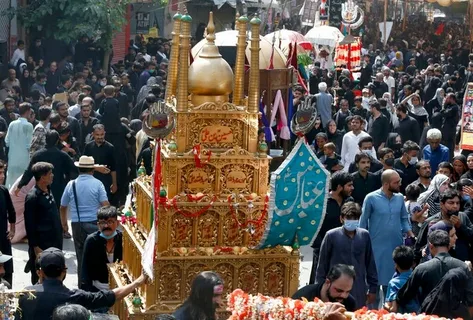
For millions of Muslims in Pakistan, Muharram isn’t simply the first month of the Islamic calendar. It’s a period that carries the weight of history, the depth of faith, and the warmth of community all at once.
Every year, as the new moon marks the beginning of Muharram, something shifts across Pakistan. Cities prepare. Families gather. Scholars speak. Streets that are normally defined by the rush of daily life take on a different character quieter in some ways, more purposeful in others.To understand why, you have to go back fourteen centuries.
What Muharram Actually Means
The word itself is telling. Muharram comes from the Arabic root meaning “forbidden” or “sacred” and that’s exactly what it was traditionally considered to be. One of the four sacred months in Islamic teaching, Muharram was a time when warfare and conflict were discouraged, when the ordinary rules of tribal life were suspended in favor of something higher.
Today, that original spirit of the month restraint, reflection, turning toward what matters still shapes how observant Muslims approach it. It’s a month for increased worship, voluntary fasting, charity, and genuine self-examination. Not obligation layered upon obligation, but an invitation to slow down and look inward.
The History That Made Muharram What It Is
The story at the heart of Muharram is the Battle of Karbala, and it happened in 680 CE.Imam Hussain ibn Ali grandson of the Prophet Muhammad (peace be upon him) and a small group of companions found themselves confronting an overwhelming force near the Euphrates River in what is now Iraq. They were vastly outnumbered. The outcome was not in doubt militarily. And yet Imam Hussain chose to stand rather than surrender to what he saw as injustice.
On the 10th of Muharram the day known as Ashura the confrontation reached its end. The sacrifices made at Karbala that day became something that transcended the immediate moment. They became a story about moral courage, about refusing to bend to power when power is wrong, about the price that integrity sometimes demands.
That story is why Muharram carries the emotional and spiritual weight that it does. Not just for Shia Muslims for whom Karbala holds specific religious centrality, but for Muslims broadly because the values Karbala represents belong to everyone who cares about justice and faith.
When Does Muharram Fall?
This is where the Islamic calendar’s nature matters. Because the Islamic year follows the lunar cycle about 10 to 11 days shorter than the Gregorian solar year Muharram falls on different Gregorian dates each year, moving backward through the seasons over a roughly 33-year cycle.
In Pakistan, official confirmation of the Muharram date comes through moon-sighting committees and religious authorities who observe the new crescent moon. These announcements let communities, government agencies, and security forces prepare for the observances that follow.
How Pakistan Observes Muharram
Walk through Lahore, Karachi, Peshawar, Quetta, or Multan during Muharram and you’ll encounter a country engaged in something communal and sincere.
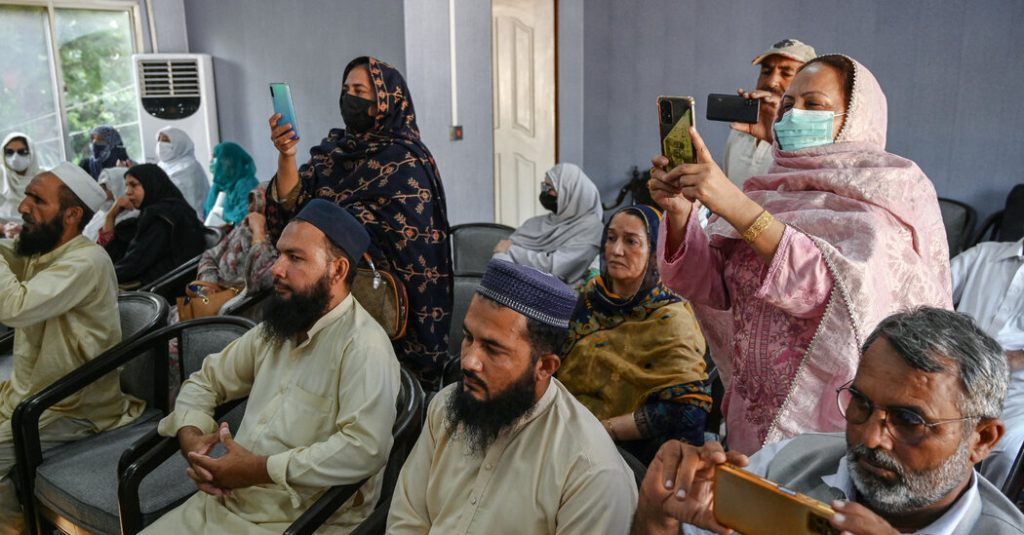
Majalis religious gatherings are held throughout the month in mosques, community halls, and private homes. Scholars speak about Islamic history, the lessons of Karbala, and what those lessons mean for how a person should live. These aren’t abstract theological lectures. They’re conversations about courage, patience, integrity, and what it costs to stand for something real. Families attend together, and younger generations sit alongside their elders absorbing a history that connects them to something larger than themselves.
Processions wind through designated routes in major cities, with participants commemorating the events of Karbala in public expression of shared remembrance. Law enforcement agencies coordinate carefully to ensure these events proceed safely and in Pakistan’s context, that security planning has become a genuinely serious and necessary undertaking.
Charitable activity spikes significantly. Community groups and organizations set up water distributions, food stalls, and assistance programs for anyone who needs them. This generosity isn’t incidental to Muharram — it reflects the values the month is meant to reinforce. Service and compassion aren’t abstractions during Muharram. They’re things you do with your hands.
Sunni Observances During Muharram
Muharram is sometimes discussed primarily through the lens of Shia commemorations, but Sunni Muslims across Pakistan observe the month meaningfully as well and understanding those traditions matters for a complete picture.
For Sunni Muslims, one of the most significant practices during Muharram is fasting on the day of Ashura. Islamic tradition holds that fasting on the 10th of Muharram carries spiritual reward and many Sunni Muslims also fast on the 9th or 11th alongside it.
Sunni religious scholars use Muharram as an occasion to encourage believers toward self-reflection, repentance, and renewed commitment to worship. Mosque programs focus on moral values, Islamic history, and practical guidance for living a more faithful life. The overall spirit of Sunni Muharram observance is one of devotion, learning, and quiet spiritual renewal.
What Muharram Means in a Broader Sense
For non-Muslims or those unfamiliar with Islamic tradition, the simplest translation of Muharram into English context is this: it’s a sacred month of remembrance and worship that opens the Islamic year, centered on historical events that have shaped Muslim identity for over thirteen centuries.
But translation flattens things. The reason Muharram feels the way it does in Pakistan isn’t captured by definitions. It’s felt in the atmosphere of a city during processions, in the voice of a scholar recounting Karbala, in the quiet of a family sitting together in a religious gathering. It’s a living tradition, not an archived one.
Security and Practical Arrangements
It’s worth acknowledging directly: major Muharram observances in Pakistan require significant logistical and security coordination, and the authorities take that seriously.
Traffic routes get adjusted around procession paths. Emergency services are placed on heightened alert. Law enforcement agencies work in coordination with local administrations across multiple cities simultaneously. This isn’t background noise it’s a meaningful part of how Pakistan makes space for large-scale religious expression while managing public safety in dense urban environments.
Officials consistently emphasize maintaining peace and mutual respect throughout the month, and community leaders across traditions generally reinforce that message.
The Lessons That Don’t Age
What keeps Muharram relevant isn’t sentimentality about the past. It’s that the questions raised at Karbala about justice, about what a person owes to their conscience when the cost of integrity is high, about where courage comes from and what it’s for are questions every generation faces in its own way.
Pakistani scholars, educators, and community leaders return to these themes every Muharram not because the calendar requires it, but because the themes genuinely matter. In a country navigating its own ongoing questions about justice, leadership, and moral responsibility, the story of Karbala offers something enduring.That’s why Muharram in Pakistan is observed the way it is not as routine, but as something that still means something.
FAQs
What is forbidden during Muharram?
Muharram is a sacred month, and Islamic teaching encourages believers to avoid sinful behavior, conflict, injustice, and actions that contradict their faith. Scholars emphasize that the sacred character of the month is an invitation to heightened awareness to be more careful about how you speak, act, and treat others. The point isn’t a list of prohibitions so much as a general call to conduct yourself with greater mindfulness and integrity than usual.
What should Muslims do during Muharram?
Prayer, charity, remembrance, Quran recitation, and reflection are all encouraged. Voluntary fasting especially around Ashura is a widely recommended practice. Many Muslims also use the month to strengthen family relationships, attend religious programs, learn more about Islamic history, and contribute to charitable causes. The overall spirit is one of turning toward what matters and away from what doesn’t.
What is the significance of the 7th of Muharram?
The 7th of Muharram is remembered in connection with the events leading up to Karbala specifically, historical accounts describe restrictions being placed on Imam Hussain and his companions’ access to water around this time. Religious gatherings on or around the 7th often focus on these events, drawing out themes of endurance, faith under pressure, and the power of standing firm when circumstances are deliberately made harder. Different communities mark the day in different ways depending on their traditions and local practices.