
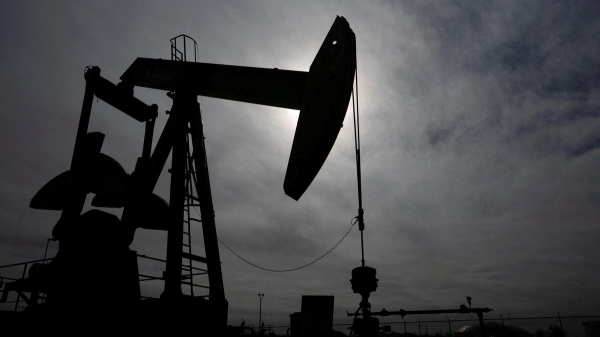
Global oil prices tumbled sharply on Monday as hopes grew that the United States and Iran are nearing a historic agreement to end their ongoing military conflict. Brent crude futures dropped nearly 5 percent to around $98.70 a barrel, while US West Texas Intermediate fell by a similar margin to $91.94, hitting their lowest levels since early May. Markets responded swiftly to signals from Washington and Tehran that a deal is within reach though significant hurdles remain.
Background: How the US-Iran War Began
The roots of the current crisis go back to late February 2026, when armed conflict between the US-Israel alliance and Iran erupted, sending shockwaves through global energy markets. Iran has effectively blockaded the Strait of Hormuz since the start of the war, disrupting roughly one-fifth of global oil trade. The US has also imposed its own blockade of Iranian ports since mid-April, further disrupting commercial shipping in the waterway.
The Strait of Hormuz is one of the most strategically critical chokepoints in the world. Any disruption there immediately affects oil supply chains across Asia, Europe, and beyond. Since the war began, energy prices have surged, economies have slowed, and diplomatic pressure has intensified from all directions.
Details: What Is Happening Right Now
In a significant development over the weekend, President Donald Trump indicated that a framework agreement between the two sides is taking shape. Trump said on Saturday that Washington and Iran had “largely negotiated” a memorandum of understanding on a peace deal that would reopen the Strait of Hormuz, which normally carries 20 percent of global oil and gas supplies.
Trump said in a social media post on Sunday that negotiations with Tehran were proceeding in an “orderly and constructive manner,” but he instructed officials “not to rush into a deal,” adding that “both sides must take their time and get it right.”
Despite the optimism, Trump made clear that the blockade will not be lifted prematurely. He stated that the blockade will remain in full force and effect until an agreement is reached, certified, and signed.
Meanwhile, Iran’s side of the story is more cautious. Iran’s Tasnim news agency said the draft agreement could still collapse because the US was obstructing some key clauses, including a demand that its assets be unfrozen. This signals that while both sides are talking, the final deal is not yet guaranteed.
The Strait of Hormuz: Why It Matters So Much
The Strait of Hormuz has become the central flashpoint of this entire crisis. The throttling of the Strait of Hormuz is raising energy costs and weighing down economies worldwide, including the US, where average pump prices are about $1.50 per gallon above pre-war levels.
As of mid-May, the conflict was blocking the flow of around 14 million barrels of oil per day, according to the International Energy Agency. These are staggering numbers that explain why every hint of a deal moves oil prices by several percentage points almost immediately.
Even if a deal is signed, markets should not expect instant relief. Even if an agreement that opens the Strait is reached, energy markets will remain disrupted for months. Supply chains, tanker routes, and insurance frameworks will all need time to normalize.
On Sunday, there was a small positive sign: Tehran said 33 vessels crossed the Strait of Hormuz the previous day, suggesting some movement may already be cautiously resuming.
Quotes: What Officials and Experts Are Saying
President Trump, speaking from Washington, chose a firm but measured tone. He said the US relationship with Iran was becoming what he called “a much more professional and productive one,” while making his red line clear.
Trump said Iran “must understand, however, that they cannot develop or procure a Nuclear Weapon or Bomb.”
Market analysts are watching every word carefully. Saul Kavonic, an analyst at MST Marquee, told Reuters: “Notwithstanding all the caveats and risks that remain to the peace deal and Strait of Hormuz, there is now some light at the end of the tunnel, which will bring some near-term oil price relief.”
The international community, particularly US Gulf Arab allies, has been pushing hard for a diplomatic resolution. Trump said earlier this week that he called off imminent airstrikes on Iran to give diplomacy more time at the request of US Gulf Arab allies.
Who Buys Iran’s Oil? The China Factor
One dimension of this crisis that often goes underreported is the question of Iran’s oil economy and who keeps it running despite years of sanctions.
By early 2026, China had become Iran’s leading customer for crude oil, accounting for more than 90 percent of Iran’s total oil exports, which average about 1.5 million barrels per day.
China took the lion’s share of Iran’s exports, while Syria came second, followed by the UAE and Venezuela. Most other nations have exited the Iranian oil market under pressure from US sanctions, leaving Beijing as Tehran’s economic lifeline.
Iranian crude oil is usually sold at a discount of $3 to $9 per barrel compared to the global benchmark Brent crude. This price advantage is a key reason China’s independent refiners, known as “teapots,” continue to purchase Iranian barrels even at the risk of attracting US scrutiny.
This dynamic gives China significant influence over both Iran’s economic resilience and the eventual terms of any peace deal, since Tehran depends so heavily on Chinese demand to survive under sanctions.
US Military Strength vs. Iran: A Reality Check
The question of military balance is one that analysts and citizens frequently ask. By most conventional metrics, the United States military is vastly more powerful than Iran’s. The US spends more than ten times what Iran spends on defense annually, operates multiple aircraft carrier strike groups, and possesses advanced stealth and precision-strike capabilities.
However, Iran’s strategic advantage lies in asymmetric warfare its ability to threaten the Strait of Hormuz, deploy proxy forces across the region, and sustain disruption that raises global energy costs. The war has proven that even without direct military parity, Iran holds enormous economic leverage over the world through its control of the strait.
This is precisely why the US-Israel campaign has not produced a quick resolution, and why a Trump Iran deal based on economic and nuclear compromises may ultimately be the path both sides take.
The Abraham Accords Connection
The broader regional peace architecture cannot be ignored here. The Abraham Accords the normalization agreements brokered during Trump’s first term between Israel and several Arab states have been severely tested by this conflict. The US-Iran war threatens to unravel years of diplomatic progress in the Middle East.
A successful US-Iran peace deal could potentially reinvigorate the Abraham Accords framework, bringing Iran into a broader regional dialogue for the first time. Gulf states like Saudi Arabia, which have stayed neutral but face enormous economic pressure, would likely welcome any agreement that stabilizes oil markets and reduces regional hostilities.
Diplomats in Riyadh, Abu Dhabi, and Doha are watching the negotiations closely, understanding that a stable Strait of Hormuz is essential not just for Iran and the US, but for the entire Gulf economy.
Global Impact: Markets, Economies, and Everyday Life
The ripple effects of the US-Iran war have been felt far beyond the Middle East. Japan’s benchmark stock index, the Nikkei 225, surged more than 3 percent in morning trading, hitting an all-time high after closing at a record peak on Friday, reflecting how swiftly global markets respond to even cautious optimism about a deal.
Brent futures for July stood at $97.94 a barrel, down about 9 percent from a month ago but still up by more than a third compared with before the start of the war. This means that while the peace signals have pulled prices back from their peak, oil is still significantly more expensive than it was before hostilities began.
For ordinary consumers across the world from drivers in Europe to factory owners in Asia every percentage drop in oil prices offers some relief. The economic pain from elevated energy costs has been widespread, and a successful US-Iran deal would be one of the most consequential geopolitical developments of 2026.
Conclusion: What Happens Next?
The situation remains fluid and deeply uncertain. Both sides have incentives to reach an agreement, but also domestic pressures that complicate any rapid resolution. Iran wants sanctions lifted and frozen assets returned. The US insists on iron-clad guarantees around nuclear non-proliferation.
Any final approval of the deal may take several days, according to senior US officials, and key differences including the fate of Iran’s nuclear program still need to be addressed.
What is clear is that the world is watching closely. Oil traders, foreign ministers, military planners, and everyday citizens all have a stake in the outcome of these negotiations. If a durable US-Iran peace deal is signed and the Strait of Hormuz reopens, it could mark the beginning of a new phase in Middle Eastern geopolitics one with consequences that will be felt for years to come.
FAQs
What’s happening with the Strait of Hormuz?
Iran has effectively blockaded the Strait of Hormuz since the start of the US-Iran war in late February, while the US has maintained its own blockade of Iranian ports since mid-April. As of mid-May, the conflict was blocking the flow of around 14 million barrels of oil per day. A peace deal between the two sides is expected to reopen the strait, though disruptions may continue for months even after an agreement is signed.
Is the USA Army stronger than Iran?
Yes, by conventional military measures, the United States is far more powerful than Iran. The US maintains the world’s largest defense budget, the most advanced air and naval forces, and global force projection capability. However, Iran’s strategic strength lies in its ability to disrupt global oil supplies through the Strait of Hormuz, deploy regional proxy networks, and sustain economic damage far disproportionate to its conventional military size. This asymmetric leverage is why the conflict has not ended quickly.
Who buys most of Iran’s oil?
China is Iran’s leading customer for crude oil, accounting for more than 90 percent of Iran’s total oil exports. Syria came second, followed by the UAE and Venezuela, while Iraq, Turkey, and Malaysia each account for less than one percent of exports. China’s dominance in Iranian oil purchases gives Beijing significant economic and political leverage in the current situation.