
Russia’s push to seize more Ukrainian territory has slowed to a near standstill this year, even as its military casualties climb to their highest levels of the war, according to fresh battlefield assessments. At the same time, Ukraine has intensified long-range strikes on Russian oil refineries, military plants and communications sites, deepening anxiety inside Moscow about the war’s direction more than four years after the full-scale invasion began.
Summary
New data from the Institute for the Study of War shows Russian forces gained just 97 square kilometers of Ukrainian territory in the first half of 2026, a fraction of the ground taken over the same period last year. Ukraine says Russia lost roughly 40,000 troops in June alone. Meanwhile, Ukrainian strikes have hit oil refineries, satellite communication hubs and an ammunition plant deep inside Russia, even as Moscow answered with a deadly missile and drone barrage on Kyiv that killed at least 17 civilians this week.
Background
Russia launched its full-scale invasion of Ukraine in February 2022, and the war has since settled into a grinding conflict along a front line stretching more than a thousand kilometers. Russian forces currently hold around 118,000 square kilometers of Ukrainian territory, roughly 20 percent of the country, an area comparable in size to the state of Pennsylvania. That figure includes Crimea and the parts of the Donbas region that Russian-backed forces held even before the 2022 invasion began.
Moscow entered 2026 with plans for another offensive push, following a familiar pattern from the spring campaigns of 2024 and 2025. Russian commanders have set a goal of capturing the remaining 20 percent of the partially occupied Donetsk region by the end of the year, after missing more than a dozen earlier deadlines set by Kyiv’s own estimates.
Details
The numbers behind this year’s campaign tell a stark story. According to the Institute for the Study of War, Russian forces seized or infiltrated just over 30 square kilometers of Ukrainian territory in June 2026, advancing at an average pace of about one square kilometer per day. In June 2025, by comparison, Russian forces had captured more than 480 square kilometers, advancing roughly sixteen times faster. Across the first half of 2025, Russia seized nearly 2,190 square kilometers of land; in the same period this year, that figure fell to about 623 square kilometers.
Separate analysis from the Center for Strategic and International Studies found that Russian forces actually lost more ground than they gained in April and May of this year, a net loss of roughly 400 square kilometers and the first monthly net losses recorded since August 2024. Advance rates around contested areas such as Kostiantynivka, Pokrovsk and Sloviansk have slowed to between 50 and 90 meters a day, among the slowest rates of advance recorded in any major conflict over the past century.
The human cost of that slow movement has climbed sharply. Ukraine’s military estimated Russia suffered close to 40,000 casualties in June 2026 alone, well above Russia’s estimated monthly recruitment capacity of 24,000 to 30,000 new soldiers. The Institute for the Study of War calculated that Russian casualties have reached roughly 1,298 per square kilometer of territory captured in June, compared with 68 casualties per square kilometer over the same month a year earlier. Separate research from the Center for Strategic and International Studies put the overall casualty ratio between Russian and Ukrainian forces at close to 8 to 1 in the first half of 2026, up from between 2 to 1 and 3 to 1 for much of the earlier war, a shift researchers attribute largely to Ukraine’s expanding use of drones, including AI-assisted systems, in its air defense and interdiction campaigns.
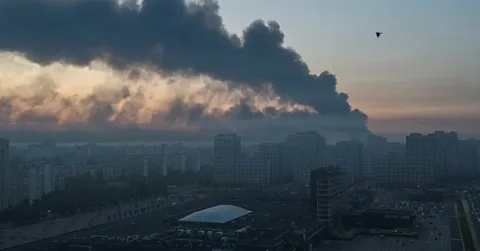
Ukraine has paired its defensive resilience with an expanding long-range strike campaign against Russian infrastructure. Over the past week, Ukrainian forces reportedly struck oil refineries in Ufa, Nizhny Novgorod, Slavyansk and Yaroslavl, along with satellite communication centers near Moscow, an ammunition manufacturing plant in Volgograd, a military airfield in Crimea, and a research facility involved in aircraft and missile component production in the Penza region. According to the Institute for the Study of War, Ukrainian forces carried out at least 31 strikes on Russian oil infrastructure and 47 strikes on Russian military assets across at least 41 Russian regions in June alone.
Russia’s economy is beginning to feel the strain. Oil exports account for roughly a quarter of the Russian government’s budget revenue, and Ukrainian officials say those revenues fell by 30 percent between January and May of this year compared with the same period in 2025, even with a temporary sanctions waiver from Washington still in place. Russia responded to the pressure with one of the largest single attacks of the war on Kyiv this week, firing 74 missiles and nearly 500 drones at the Ukrainian capital, killing at least 17 people and damaging multiple residential buildings, according to Ukrainian officials.
Quotes
Ukrainian President Volodymyr Zelenskyy pointed to the scale of Russian losses in remarks referencing the roughly 1.4 million Russian casualties estimated since the war began, saying prospective new recruits “should think about what awaits them next” if Moscow continues sending additional forces into what he described as a stalled offensive. Ukraine’s foreign minister, Andrii Sybiha, said the death toll from the Kyiv strikes could still rise as rescue crews worked through the wreckage, and rejected Russian claims that the barrage was retaliation, arguing Ukraine was acting in self-defense under the UN Charter while Russia remained the aggressor.
Impact
The shifting battlefield dynamics carry consequences well beyond the front line. A slower Russian advance, paired with mounting casualties and reduced oil revenue, adds pressure on the Kremlin’s ability to sustain the war economically and politically. Analysts at the Center for Strategic and International Studies note that ordinary Russians are increasingly affected by a weakening economy, rising prices, and internet restrictions tied to the conflict. At the same time, research groups including the Foreign Policy Research Institute caution that Russia’s global influence has eroded across regions it once dominated, from the South Caucasus to Central Asia, even as its battlefield setbacks accumulate. For Ukraine, continued Western military support remains central to sustaining both its defensive lines and its long-range strike campaign against Russian military and energy infrastructure.
Conclusion
With Moscow reportedly preparing a fresh offensive push and Kyiv signaling it will keep expanding strikes deep into Russian territory, both sides appear positioned for a continued war of attrition rather than a near-term settlement. Foreign policy analysts widely agree that neither side currently holds the position needed to force a decisive battlefield outcome, meaning the coming months are likely to bring further contested advances, continued long-range strikes, and mounting costs for both militaries as the war moves into its fifth year.
Frequently Asked Questions
What is the latest conflict between Russia and Ukraine?
The Russia-Ukraine war remains an active, large-scale conflict in 2026, more than four years after Russia’s February 2022 full-scale invasion. Recent developments show Russian forces gaining very little new territory despite mounting casualties, while Ukraine has expanded long-range strikes deep inside Russia, hitting oil refineries, military production sites and communications infrastructure. Russia, in turn, has carried out large-scale missile and drone attacks on Ukrainian cities, including a major assault on Kyiv this week that killed at least 17 civilians and damaged multiple residential buildings.
Why are Russia and Ukraine at war today?
The war continues in 2026 largely because neither side has been willing or able to accept the other’s core terms for ending it. Russia has maintained territorial demands in eastern and southern Ukraine that Kyiv and its Western allies consider unacceptable, while Ukraine continues to seek the return of occupied territory and firm security guarantees against future aggression. Analysts tracking the conflict describe the current phase as a war of attrition, in which both militaries continue fighting because a decisive battlefield victory remains out of reach for either side, and because Russian leadership is widely seen as still believing that time and continued pressure work in its favor.
What started the conflict between Ukraine and Russia?
The current large-scale phase of the conflict began when Russia launched a full-scale invasion of Ukraine in February 2022, though tensions and fighting in eastern Ukraine trace back further, to Russia’s annexation of Crimea and the outbreak of fighting in the Donbas region in 2014. Russian President Vladimir Putin has framed the invasion around security concerns related to Ukraine’s ties with NATO and the West, while Ukraine and the majority of the international community regard the invasion as an unprovoked act of aggression against a sovereign nation.