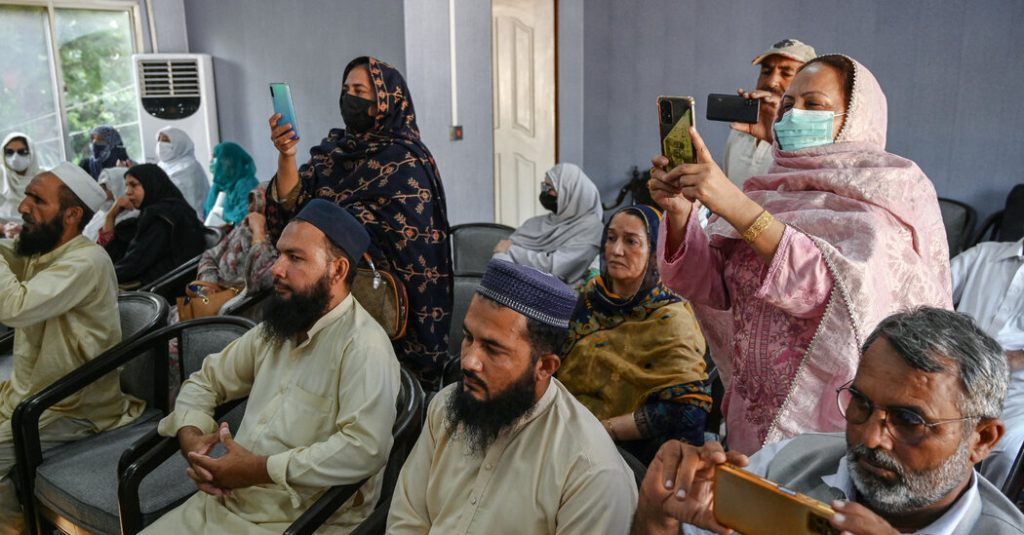

What started as Gaza protests on college campuses in 2024 has grown into something that American politics can no longer afford to dismiss. Pro Palestinian protesters once written off as a loud but ultimately marginal student movement are now winning elections, pulling the Democratic Party in new directions, and forcing universities to answer hard questions about where their endowment money actually goes. The list of Palestine campus protests has swelled into the hundreds, and the consequences are being felt well beyond any single campus or city.
Background
The pro Palestinian protests today rippling across American universities trace their roots to October 7, 2023, when Israel launched a large-scale military campaign in Gaza following a Hamas attack. Within days, Gaza protests on college campuses were already forming first at major research universities in New York, California, and Massachusetts, then spreading outward with remarkable speed.
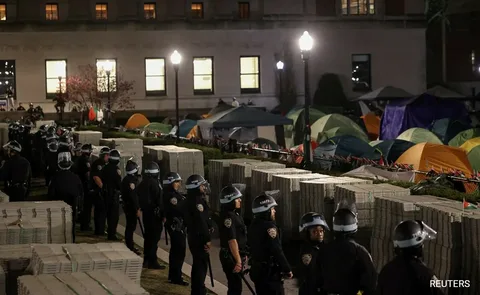
The moment that brought the movement into the national spotlight came on April 18, 2024, when mass arrests at the Gaza Solidarity Encampment at Columbia University set off a chain reaction. Students there had been demanding the university’s divestment from Israel, and the sight of police clearing protester including faculty from an Ivy League campus ignited demonstrations nationwide. By the end of that spring, over 3,100 protesters had been arrested across more than 60 US campuses. College campus protests today carry that same foundation into 2026, now reinforced by something the movement’s critics didn’t see coming: real political victories.
The scale of the activism has been documented in detail. The Crowd Counting Consortium a collaboration between Harvard’s Ash Center and the University of Connecticut recorded several thousand days of pro-Palestinian protest activity at hundreds of US public and private schools since October 7, 2023, including encampments at more than 130 of them. The most consistent demands at these actions were calls for an end to the conflict in Gaza, Palestinian liberation, and for schools to disclose and divest from financial ties to Israel and weapons manufacturers.
The Palestine Protest List Key Campuses and Moments
The Palestine protest list spans the country, crossing lines between elite private universities and large public institutions in ways that earlier social movements rarely managed. Columbia University, UCLA, Harvard, MIT, Yale, Stanford, the University of Michigan, Georgetown, the University of North Carolina, and the University of Chicago all feature prominently but these names represent only a fraction of the full picture.
Stanford University’s Sit-In to Stop Genocide held its ground in White Plaza for more than 120 days, from October 20, 2023, until mid-February 2024 the longest-running encampment in the movement’s history. UCLA recorded the most arrests of any campus, more than 250 in total, most of which came during a police action to clear the encampment just one day after it was violently attacked by counter-protesters under cover of darkness.
May 2024 brought the movement to graduation ceremonies in a way that universities hadn’t prepared for. Protests disrupted commencements at the University of Michigan, Northeastern University, the University of Illinois Chicago, Indiana University, Virginia Commonwealth University, the University of Wisconsin-Madison, the University of North Carolina, and UC Berkeley. Students at Harvard and MIT staged organized walkouts, and the University of Vermont canceled its graduation ceremony speaker US Ambassador to the United Nations Linda Thomas-Greenfield after protesters made clear they would not accept her presence on stage.
Taken together, these moments form the most extensive Palestine protest list in American campus history and the list continues to grow heading deeper into 2026.
Most Pro Palestine Colleges Where the Movement Is Strongest
Looking at which institutions have seen the most sustained and consequential activism, certain patterns emerge. Public universities are as well represented as elite private schools, and some of the most significant divestment pressure has come from campuses that don’t always dominate national headlines.
Among the most pro Palestine colleges in the United States, the University of Michigan has arguably produced the most concrete political results from its student movement. A pro-Palestinian student group won elections in the University of Michigan’s student government and rather than simply making demands, they used that institutional power to act. In August, the student government voted to freeze all funding for student clubs until the university agreed to meet activists’ divestment demands, a move that forced the university administration to step in and temporarily fund student groups itself to prevent a complete shutdown of campus life.
The group behind this a movement called “Shut It Down” won 22 of the 45 seats in the university’s student assembly in elections where only 20 percent of the student body voted, demonstrating how organized minority blocs can produce disproportionate institutional power when the broader student population remains disengaged.
Beyond Michigan, schools like Columbia, Dartmouth, and institutions across New York and Boston have consistently ranked among the most active when measuring protest actions of all kinds not just encampments.
Pro Palestinian Protesters Turn Election Wins Into Political Momentum
The single most significant development of 2026 has been the conversion of Gaza protests on college campuses into direct electoral power at the congressional level. It is a shift that would have seemed unlikely just two years ago, when protesters at Columbia were being arrested, suspended, and threatened with deportation.
Darializa Avila Chevalier who announced her congressional candidacy draped in a keffiyeh ran on a platform built around immigrant family unity and explicit opposition to what she called a genocide in Palestine. Backed by New York City Mayor Zohran Mamdani, she won the Democratic primary race against veteran Congressman Adriano Espaillat. Large portions of Columbia University’s surrounding New York City neighborhoods will now likely be represented in Congress by someone who helped organize the very protests that university administrators tried to suppress.
Political observers were clear on what this victory meant. The progressive candidates who won in New York did so because of their advocacy for Palestinian rights, not in spite of it. “In New York tonight, the anti-Palestinian political establishment is breaking down before our eyes,” said Iman Abid, political director of the US Campaign for Palestinian Rights Action. “Bold progressives who are fighting for justice for workers’ rights, affordable rent, immigrant rights, and a free Palestine have won their primaries.”
The wins didn’t stop in New York. Pro-Palestine candidates also secured victories in Pennsylvania and New Jersey, with Chris Rabb and Adam Hamawy winning their respective races. The pattern is becoming harder to argue against: in Democratic primaries, support for Palestinian rights is increasingly proving to be an electoral asset rather than a political liability.
Quotes From Activists, Experts and Officials
The people driving the Palestine protest in US have consistently said the same thing in different ways this movement has staying power, and it is more organized now than it has ever been.
Palestinian-American Democratic strategist Rania Batrice was direct about it: “This isn’t going away. We’re not going away. Young people and their pursuit of justice and equity everywhere is not going away.”
Student activist chapters of Students for Justice in Palestine signed a collective letter that left little ambiguity about their intentions: “We will seize control of our institutions, campus by campus, until Palestine is free.” These were not empty words at the University of Michigan, pro Palestine protesters did exactly that.
Political analyst Amy Walter offered a more cautious read of the wider landscape: “We know that there are plenty of voters upset with the policies of the Biden Administration, but not all of them are in encampments. We also know that, according to polling, the war in Gaza isn’t a top issue for most Americans, including younger Americans.” Her point is important context the protest movement is vocal and increasingly organized, but it remains a minority position even among the Gen Z voters it claims to represent.
Scholar Vincent Johnston cut through the uncertainty with a simple observation about why these college campus protests today are unlikely to stop: “The underlying crisis is one that did not start on Oct. 7. And until that’s resolved, I don’t see that the students are going to have reason to go back to their dorms.”
Impact On Universities, Politics and Public Opinion
The impact of pro Palestinian protests today on universities has been severe and contradictory at the same time. Administrations have found themselves squeezed between two sets of powerful stakeholders applying pressure from opposite directions student protesters demanding divestment and institutional accountability on one side, and major donors, trustees, and Republican lawmakers demanding crackdowns on the other.
House Republicans held at least three separate committee hearings on campus protests and alleged antisemitism. State legislators threatened action against universities for failing to punish protesters more severely. Influential donors threatened to withhold contributions. Several university presidents lost their jobs, caught between irreconcilable pressures they had no clean way to navigate.
Concrete divestment results have been slow in coming, but they have arrived. Portland State University announced it was pausing all financial ties with Boeing including gifts and grants due to the company’s ties to Israel’s military operations. It was one of the first formal divestment actions by a US university taken directly in response to sustained student protest pressure, and it signaled that the movement’s core demand is not purely symbolic.
Public opinion data has shifted noticeably alongside these campus developments. Support for Israel among Americans and particularly among Democrats has declined significantly since 2023, which pro-Palestine advocates argue directly validates the movement’s decision to invest in long-term political organizing rather than simply staging demonstrations.
Challenges Facing the Movement
For all its momentum, the Palestine protest in US is navigating serious obstacles that have complicated its progress and tested its internal cohesion.
The financial firepower opposing it is formidable. The American Israel Public Affairs Committee and allied pro-Israel organizations have been spending tens of millions of dollars to defeat progressive candidates in Democratic primaries — one of the most expensive and well-organized opposition campaigns any protest movement in recent American history has faced. That spending has produced some wins for the pro-Israel camp even as it has failed to stop candidates like Avila Chevalier.
Legal and immigration pressure has added another dimension. Columbia University students are actively suing administrators over mass arrests at their 2024 encampment. Meanwhile, President Donald Trump signed an executive order directing cancellation of student visas for pro-Palestine protesters, creating a chilling effect among international students who might otherwise participate in college campus protests today. The threat of deportation is a real and serious deterrent that the movement has had to work around.
On the institutional front, divestment concessions have been hard to pin down. Brown University which had promised a formal vote on divestment in exchange for protesters dismantling their encampment held that vote and rejected divestment. The outcome was a genuine setback, and it illustrated the gap that can exist between a university’s willingness to hold a conversation and its willingness to actually change its financial behavior.
Conclusion
The list of Palestine campus protests in the United States has traveled a long distance in a short time from spontaneous demonstrations outside university buildings in 2023 to a nationally coordinated movement with congressional representation in 2026. Pro Palestinian protesters have withstood crackdowns, visa cancellations, and well-funded opposition campaigns. They have come back each time with more organization, more strategic clarity, and now, more elected allies carrying their message directly into legislative chambers.
The Gaza protests on college campuses that blindsided university administrators two years ago have grown into something structurally different a durable political force built on campus organizing, student government victories, and primary election wins that the Democratic Party establishment is still working out how to respond to. Whether through continued college campus protests today, further student government takeovers, or expanded electoral wins in the months ahead, the Palestine protest in US is not retreating. Its influence on American politics looks set to deepen rather than diminish as 2026 continues to unfold.
FAQs
Why is Gen Z protesting?
Gen Z’s involvement in pro Palestinian protests today reflects a generational experience that is genuinely different from what older Americans grew up with. This is the first generation that came of age with social media delivering real-time footage of conflict, displacement, and casualties directly to their phones without editorial filters, without the processing time that broadcast media once provided. Watching events in Gaza play out in graphic, immediate detail on Instagram and TikTok has shaped a generation’s moral instincts in ways that polling and political analysis are still catching up to.
Are girls allowed to go to school in Palestine?
Yes, girls in Palestinian territories have the legal right to attend school, and Palestinian society has historically placed real value on education for both girls and boys sometimes in ways that exceed regional averages. The Palestinian Authority runs schools in the West Bank, while UNRWA, the United Nations Relief and Works Agency, has historically operated schools in Gaza serving large refugee populations.
What are Palestinians protesting about?
Palestinians and their international supporters including the pro Palestinian protesters organizing across college campuses today are calling for several related things simultaneously, which is part of what makes the movement’s demands sometimes difficult to summarize in a single sentence. At the broadest level, they are calling for an end to the military conflict in Gaza, the lifting of restrictions on movement and goods that have cut civilian populations off from basic supplies, and formal recognition of Palestinian rights under international law including the right to self-determination, which has been affirmed in numerous United Nations resolutions.