

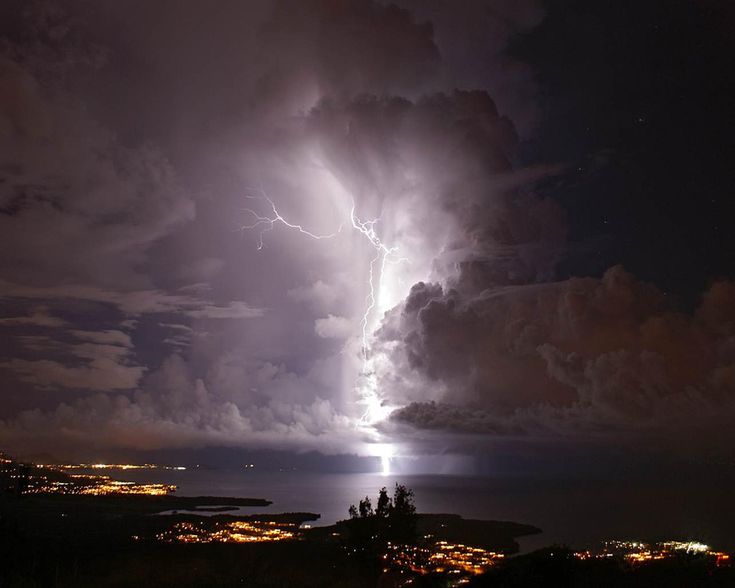
There’s a spot in western Venezuela where the sky puts on a lightning show almost every night not the occasional flash you’d get from a passing storm, but sustained, repeated lightning that can go on for hours. It’s called Catatumbo lightning, and it happens where the Catatumbo River empties into Lake Maracaibo.
Scientists have been studying it for years, mostly because of how unusual it is: the sheer frequency, the duration, and the way it seems to fire up night after night in almost the same spot.
Why This Corner of Venezuela Is So Different
Venezuela’s climate covers a lot of ground tropical forest, coastline, mountains, big freshwater lakes. But nothing else in the country quite matches what happens around Lake Maracaibo.
The lake sits in the northwest, boxed in by mountains that shape the local weather in a very specific way. Warm air rising off the lake collides with cooler air coming down from the surrounding terrain, and that collision is basically the engine behind the storms.
People have been documenting this phenomenon for centuries, and it’s earned Venezuela a reputation among meteorologists and curious travelers alike as home to one of the strangest weather patterns on the planet.
How Catatumbo Lightning Actually Forms
The storms build up mainly right where the Catatumbo River meets the lake. It’s not one single cause moisture, heat, wind, and the surrounding mountain geography all have to line up together.
When conditions are right, clouds build fast and generate intense electrical charges, and the result is a lightning display that can run for hours, especially after dark. This isn’t your typical thunderstorm that rolls through and moves on this one tends to stick around.
Most researchers point to the same explanation: warm, humid Caribbean air meeting cold air draining off the Andes creates just the right instability, over and over, in almost the same location.
The Lake’s Role in All of This
Lake Maracaibo isn’t just the backdrop here it’s doing a lot of the actual work. During the day, the water absorbs heat and pushes moisture into the air above it through evaporation.
Then at night, cooler air rolls down off the Andes and runs straight into that warm, moist air sitting over the lake. That mismatch is exactly the kind of instability storms need to form, and it happens reliably enough that this has become one of the most consistently active lightning zones anywhere on Earth.
None of this is random. It’s a pretty tightly wound feedback loop between geography, climate, and atmospheric movement which is part of why the phenomenon keeps showing up in the same place instead of drifting around.
Is Catatumbo Lightning Actually Real?
Yes — this isn’t internet exaggeration or a myth that got out of hand. It’s a documented, scientifically studied weather event that’s been observed for generations, not a one-off storm that got lucky with a viral video.
What sets it apart from ordinary lightning is the repetition this can happen night after night rather than as an isolated event, which is exactly why it’s drawn so much research attention over the years.
That said, some of what circulates online does overstate things a bit. It’s genuinely one of the most striking lightning events in the world, but it still follows normal atmospheric physics no mystery beyond what science can already explain.
Is It Dangerous?
Lightning is lightning powerful and genuinely hazardous wherever it strikes, and Catatumbo is no exception. Anyone near the storm zone faces the usual risks: direct strikes, heavy rain, strong wind, and flooding.
The upside is that most of the activity happens over fairly remote parts of the lake, and communities in the area have had generations to adapt and understand what precautions actually matter. Researchers keep monitoring the region regardless, partly to understand lightning behavior better and partly to track how extreme weather events evolve over time.
Why the Videos Went Viral
It’s not hard to see why footage of this keeps racking up views few natural phenomena look quite like a sky lit up by continuous lightning flashes for hours on end.
Photographers and tourists make the trip out to Lake Maracaibo specifically to see it in person, and over time it’s become something of an unofficial symbol of Venezuela’s natural landscape. If anything, all that online attention has done more to raise awareness of Venezuela’s climate diversity than any textbook could.
Why Scientists Care
Beyond the spectacle, this phenomenon is genuinely useful for research. Studying it gives scientists a real-world case study in how thunderstorms form, how atmospheric electricity behaves, and how energy actually moves through the atmosphere.
It’s also a useful lens for understanding tropical storm systems more broadly and how local geography can shape and even amplify much bigger climate patterns.
Meteorologists are quick to point out it’s not one single trigger but a stack of contributing factors terrain, moisture, temperature gradients all working together. That combination is exactly what keeps drawing researchers back to Lake Maracaibo, and why they’re watching closely for any shifts in temperature or rainfall that might change how the storms behave going forward.
Bigger Picture
Catatumbo lightning matters culturally and economically too, not just scientifically. It’s put Venezuela on the map for one of nature’s more dramatic light shows, and it draws tourism dollars along with the research interest.
For people actually living near the lake, though, this weather isn’t a spectacle it’s a fact of daily life that shapes fishing schedules, agriculture, and basic safety planning.
More broadly, this phenomenon is a reminder that plenty of unique, highly localized weather systems exist around the world, and each one adds something to how scientists understand the atmosphere as a whole. Climate researchers are also watching to see whether shifting environmental conditions elsewhere might eventually change how often or how intensely storms like this one occur.
Conclusion
Catatumbo lightning over Lake Maracaibo remains one of the more genuinely unusual weather events on the planet a product of very specific geography, climate, and atmospheric timing all lining up in the same place, repeatedly. There’s nothing else on Earth that reproduces it quite this consistently.
Researchers will keep watching how it evolves as broader climate patterns shift, but for now, it stands as one of the clearer examples of just how strange and specific local weather systems can get.
FAQs
What kind of weather does Venezuela have overall?
Mostly tropical and warm year-round, but it varies a lot by region coastal areas, mountains, forests, and the Lake Maracaibo basin all have their own conditions. The country generally splits into wet and dry seasons, with humidity running high in most places and rainfall varying significantly depending on where you are.
What exactly is the lightning phenomenon in Venezuela called?
Catatumbo lightning it happens mainly around Lake Maracaibo, driven by the mix of warm, moist lake air running into cooler air from the surrounding mountains. It’s regarded as one of the most distinctive lightning events anywhere in the world.
Where’s the stormiest place on Earth?
The Lake Maracaibo region in Venezuela is frequently cited as one of the top contenders, thanks to how consistently active it is. Its combination of geography and climate makes it one of the most heavily studied lightning zones anywhere.