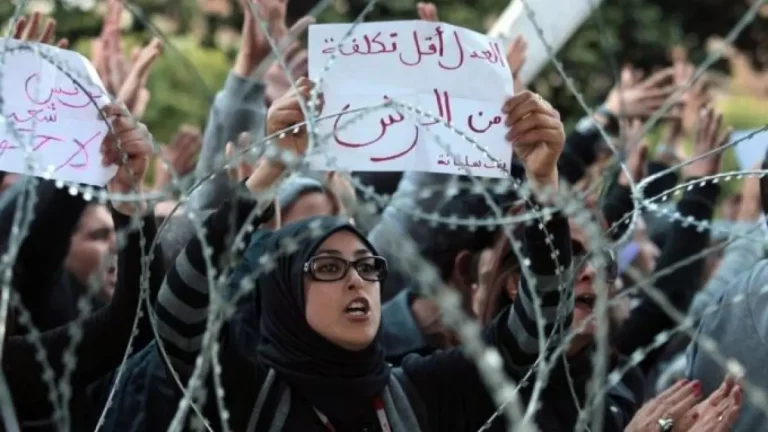

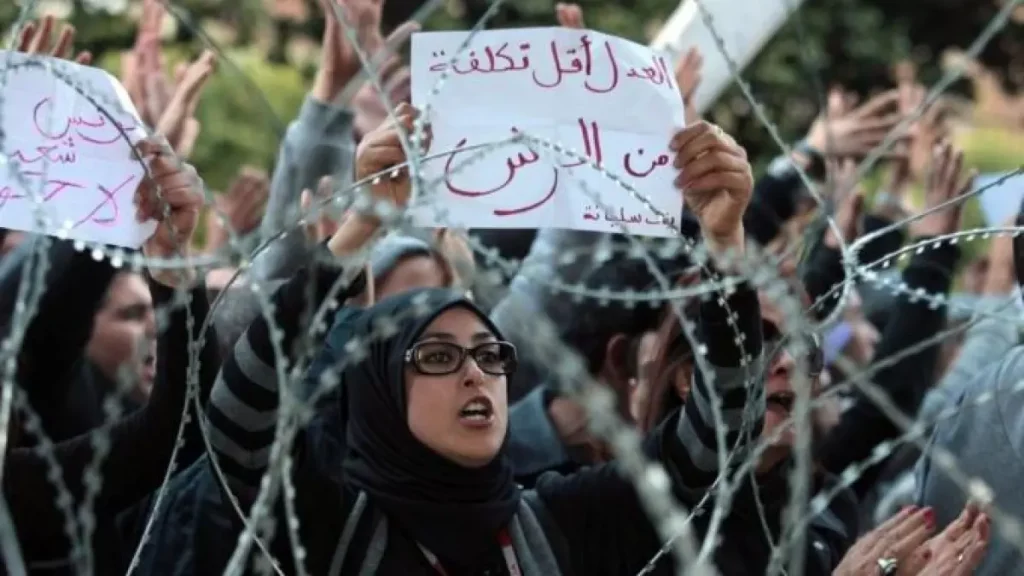
Fifteen years after the Jasmine Revolution toppled a dictator and sparked uprisings across the region, Tunisia is once again simmering with public anger. Water and electricity shortages, a stalled economy, and growing political repression under President Kais Saied have revived the same street slogans that defined the original Tunisia protests of 2011.
Background
Understanding why the Tunisian revolution started requires going back to December 2010, when a young fruit vendor named Mohamed Bouazizi set himself on fire in the town of Sidi Bouzid after police confiscated his cart. His death became the spark for what came to be known as the Jasmine Revolution, a month of mass demonstrations against corruption, unemployment, and the authoritarian rule of President Zine El Abidine Ben Ali.
By January 2011, Ben Ali had fled the country after 23 years in power, making Tunisia the first domino in what became the wider Tunisia Arab Spring, a wave of uprisings that soon spread to Egypt, Libya, Syria, and Yemen. Unlike several of those countries, Tunisia managed to hold free elections and adopt a new constitution guaranteeing political freedoms, earning it a reputation as the Arab Spring’s lone democratic success story.
That reputation, however, has unraveled over the past five years. On July 25, 2021, President Kais Saied suspended parliament and later dissolved it entirely, assuming sweeping emergency powers in a move his supporters called a necessary correction and his critics labeled a coup against the country’s fragile democracy.
Details
Tracing the Tunisia Arab Spring timeline from 2011 to today shows a country that has moved from euphoric transition to deep disillusionment. The years following Ben Ali’s ouster brought genuine gains: free elections, an independent press, and a constitution seen as one of the most progressive in the Arab world. But what happened in Tunisia in 2015 tested that fragile democracy severely.
That year brought a string of deadly attacks: gunmen killed 22 people, mostly foreign tourists, at the Bardo National Museum in March, followed by a beach massacre in Sousse in June that killed 38 people, and a bombing that targeted a presidential guard bus in Tunis that November. The attacks devastated Tunisia’s tourism industry and pushed the government to declare a state of emergency that, in various forms, persisted for years afterward.
Tunisia’s struggles with unrest are not confined to the post-2011 era either. Decades earlier, Tunis riots in 1967 erupted amid regional tensions following the Arab-Israeli Six-Day War, when demonstrations in the capital turned violent and targeted the city’s Jewish community, forcing many Jewish Tunisians to emigrate in the years that followed.
In the current moment, Tunisia after Arab Spring looks starkly different from the hopeful transition of a decade ago. Saied has dismissed dozens of judges, criminalized what his government deems false media reporting, and arrested major opposition figures, including nearly all of the country’s political party leaders in a single sweep in February 2023. Freedom House’s democracy score for Tunisia has fallen sharply since 2021. Rights groups describe the drop as a systematic rollback of civil liberties.
The immediate trigger for the current wave of unrest is more practical than ideological. Water and electricity cuts have lasted up to two weeks in some regions this summer, compounding economic hardship already deepened by inflation, unemployment, and a government that rejected an IMF financing deal while quietly implementing many of the fund’s harsher austerity measures anyway.
Quotes
Mohamed Abbou, a former minister of state and secretary-general of the Democratic Current party, said the current crisis stems directly from Saied’s style of governance, arguing that the rule of law has been replaced by a climate of intimidation and threats. He added that Tunisia has lost credibility internationally due to the instability surrounding its laws and taxation.
Protest organizer Wissam S., speaking with demonstrators from the opposition coalition Nafas during a recent rally on Habib Bourguiba Avenue, said Tunisians took to the streets to hold the system of governance accountable and expose its failures, framing the demonstrations as a civic duty rather than a partisan act.
President Saied himself inadvertently fueled public anger earlier this year when he described the country’s situation as having “reached a critical point” during a visit to the coastal region of Nabeul. Opponents quickly turned the phrase into a protest slogan, and it was later used in a protest song by Tunisian rapper Ayoub criticizing inflation, unemployment, and political repression.
Impact
The renewed unrest carries regional significance well beyond Tunisia’s borders. As the country that ignited the broader Tunisia Arab Spring, its trajectory has long served as a bellwether for whether Arab democratic transitions can survive long term. A further slide toward authoritarianism would deal a symbolic blow to hopes that first emerged during the original Tunisia protests of 2011.
Economically, the crisis threatens to deepen Tunisia’s isolation from international lenders at a moment when the country badly needs financing. Saied’s rejection of IMF terms, combined with reports of declining health that have raised fresh uncertainty about succession, has left investors and foreign governments watching closely for signs of instability.
For ordinary Tunisians, the impact is measured in daily hardship: prolonged utility outages, rising prices, and a shrinking space for political dissent. Civil society groups warn that continued crackdowns on press freedom and arrests of political prisoners could further erode public trust in state institutions already weakened by years of upheaval.
Conclusion
With protests continuing under the banner of the same “Dégage” slogan that helped drive Ben Ali from power in 2011, Tunisia’s political future remains genuinely uncertain. Analysts caution that public opposition to Saied should not be mistaken for nostalgia for the pre-2021 political establishment, since much of the anger stems from unmet economic promises rather than a desire to return to old party politics.
Whether this latest wave of unrest produces meaningful change, or simply adds another chapter to Tunisia’s long post-revolutionary struggle, will likely depend on how the government responds to mounting pressure in the coming months. Saied’s own political and physical health may end up shaping that outcome as much as anything else.
Frequently Asked Questions
Is Tunisia in danger right now?
Tunisia is not currently experiencing armed conflict or a security crisis in the traditional sense, but it is facing a serious political and economic crisis that analysts describe as the most significant since the 2011 revolution. Recurring water and electricity shortages, high inflation, and a sharp decline in civil liberties have created what commentators call a genuine climate of national distress. While street protests have grown larger and more frequent throughout 2026, they have generally remained peaceful, with riot police deployed but no reports of the kind of mass violence seen in some other Arab Spring-affected countries.
What is the political condition of Tunisia?
Tunisia’s political system has shifted dramatically since President Kais Saied suspended parliament in July 2021 and later dissolved it entirely, moving to rule largely by decree under a new constitution that concentrated power in the presidency. Since then, the country has seen the arrest of major opposition figures, the dismissal of dozens of judges, and new laws criminalizing what the government considers false information, developments that Freedom House and other watchdog organizations say represent a significant democratic backslide.
Is there a conflict in Tunisia?
Tunisia is not currently engaged in armed conflict, either internally or with any neighboring country, and the recent unrest has taken the form of political protests rather than violent confrontation. That said, the country has experienced serious security incidents in the past, most notably the 2015 terrorist attacks at the Bardo Museum and in Sousse, which killed dozens of people and led to a prolonged state of emergency. Today’s tensions are better described as a political and economic standoff between the government and a growing opposition movement, rather than a conflict involving armed groups or military confrontation.