
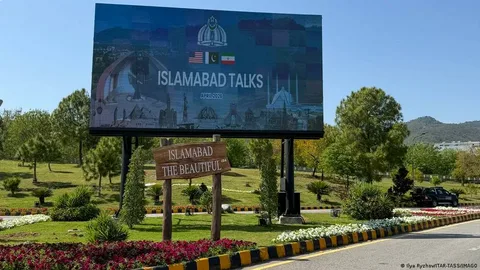
Pakistan says it is doing everything in its power to bring the United States and Iran back to the Islamabad talks, as the Middle East conflict continues to escalate despite brief pauses in fighting. The Foreign Office confirmed on Thursday that Islamabad remains deeply engaged in diplomatic efforts and views dialogue as the only real path forward.
Background: How the Islamabad Talks Began
The Islamabad talks between the US and Iran did not happen overnight. They were the result of weeks of quiet, intensive diplomacy by Pakistan and Qatar working together behind the scenes. The two countries facilitated the signing of a Memorandum of Understanding (MoU) on June 18, 2026 a historic breakthrough that gave the world a moment of cautious hope.
The MoU was designed around two key goals: reopening the Strait of Hormuz, which had been closed since the US-Israeli military strikes on Iran in February 2026, and setting up a 60-day window for deeper technical-level negotiations. It was seen as a major diplomatic achievement and the first real signal that a long-term de-escalation was possible.
What Happened After the Islamabad MoU?
For a few weeks, things seemed to be moving in the right direction. The guns went quiet, shipping began to ease, and there was talk of follow-up rounds of the Islamabad talks 2 process. But that calm did not last long.
On July 7, Iran attacked commercial vessels in the Strait of Hormuz including a Qatari LNG tanker claiming that the United States had violated the terms of the MoU. The US responded with multiple waves of military strikes on Iranian targets. Since then, the Islamabad talks have effectively been on hold, and the conflict has expanded to new fronts including Iraq and Egypt.
This is the difficult situation Pakistan now finds itself trying to navigate. The Islamabad talks latest update from the Foreign Office suggests that while the situation is fragile, Islamabad has not given up.
What Pakistan Is Saying Now
Foreign Office spokesperson Tahir Andrabi addressed the media on Thursday and did not shy away from acknowledging how difficult things have become. He said Pakistan notes “with concern” that the security situation in the Middle East “remains precarious despite the relative calm of the past few days.”
But Andrabi was also careful to leave the door open. “We welcome all efforts aimed at sustaining cessation of hostilities and resumption of dialogue between Iran and the US,” he said. He added that Pakistan was doing its “utmost” to bring both parties back to the Islamabad MoU, so that all issues can be resolved “in the spirit of the agreement.”
On the Strait of Hormuz specifically, Andrabi noted that negotiations between the parties remain ongoing. “Let me add that the negotiations between parties are ongoing to normalise the situation, particularly the situation in the Strait of Hormuz, as well as to de-escalate,” he said. He also urged both Washington and Tehran to exercise “maximum restraint” and return to the technical-level talks agreed upon in the MoU.
Pakistan seeks breakthrough in US-Iran peace talks not just as a mediator, but also because the country has significant economic and strategic stakes in regional stability from trade routes to energy security.
Why Did the Islamabad Talks Fail to Hold?
This is the question everyone is asking. Why did the Iran-Pakistan talks, and the broader Islamabad diplomatic framework, fall apart so quickly after the MoU was signed?
There are a few honest answers. First, trust between Washington and Tehran was paper-thin from the beginning. Both sides came to the Islamabad talks with deep suspicions of the other’s intentions, and it did not take much for that trust to crack. Second, the MoU lacked a strong enforcement mechanism. When Iran claimed the US violated the deal and attacked the Hormuz shipping lane, there was no clear neutral body to arbitrate the dispute and both sides escalated instead.
Third, the Iran delegation at Islamabad talks 2 discussions had faced significant internal pressure at home. Hardliners in Tehran viewed any deal with the United States as a form of surrender, particularly while Iranian soil had already been struck by American and Israeli forces. That domestic pressure made it very difficult for Iranian negotiators to hold firm to their commitments.
And from the American side, the political will to absorb Iranian violations without responding militarily simply was not there. The US struck back every time Iran made a move.
The Wider Conflict: How Far Has It Spread?
The situation has deteriorated well beyond what anyone expected when the Islamabad talks 2026 framework was put in place. On Wednesday alone, explosions struck a natural gas loading port in Egypt and a drone hit a US-owned floating storage tanker in the Mediterranean. The US and Saudi Arabia launched joint strikes on Iran-backed groups in Iraq, retaliating for attacks on American troops and Saudi oil infrastructure.
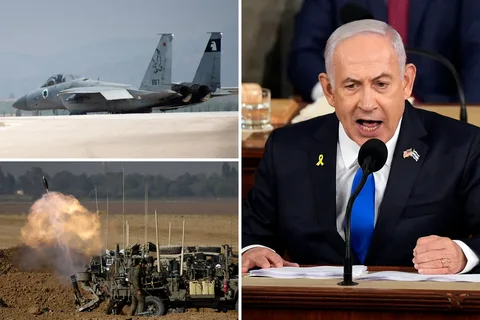
Then, on Thursday the same day Pakistan’s FO was holding its press briefing the US carried out what military officials described as a “heavy wave” of retaliatory strikes on Iran, in response to Iranian attacks on US bases in Jordan. More than 600 American troops have been wounded since the war began in February.
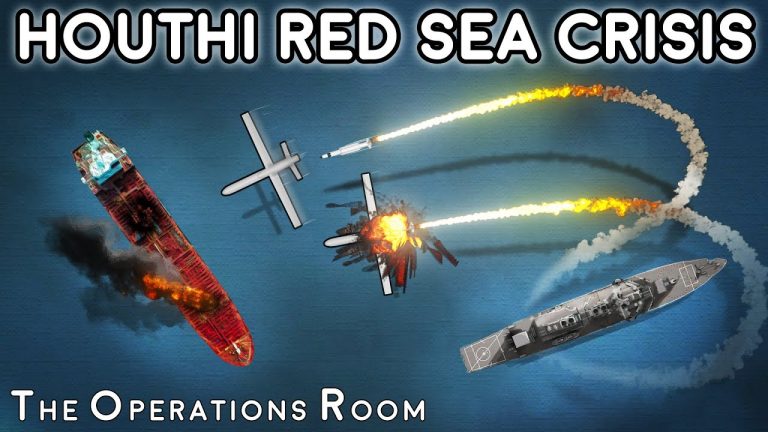
The Houthis in Yemen have also imposed a naval blockade on Saudi Arabia, effectively extending the war to a second major global shipping chokepoint. Oil markets, insurance costs, and global supply chains are all feeling the pressure.
Why Pakistan’s Role Still Matters
Even with all this chaos, Pakistan’s diplomatic role remains important and arguably irreplaceable. Islamabad is one of the very few countries that has a working relationship with both Washington and Tehran. It is a Muslim-majority nation that the US trusts enough to use as a channel, and Iran sees as a neighbour and fellow member of the broader Islamic world.
The Iran-Pakistan talks framework, built alongside Qatar’s parallel diplomatic track, gave both sides something to stand on when they wanted to step back from the edge. Pakistan is now trying to rebuild that floor before the situation becomes completely unmanageable.
Whether Islamabad can actually succeed is far from certain. But the fact that Pakistan continues to push publicly and privately for the Islamabad talks latest round of negotiations shows that it has not written off the possibility of peace.
What Comes Next
The next few days will be critical. If the US and Iran can hold back from further escalation, there may be a window to restart the Iran-Pakistan talks process and bring the Islamabad talks 2 delegation back to the table. Pakistan and Qatar have both been cited as active mediators, and any resumption of talks would likely happen through their combined diplomatic channels.
The FO spokesperson pointed to the Pakistan-Qatar joint statement of June 22 as the guiding framework. That statement laid out specific steps for both sides to follow and remains the most concrete roadmap available for a return to dialogue.
Pakistan’s message to both Washington and Tehran is clear: the Islamabad MoU is still valid, the spirit of the agreement still stands, and there is still a way out but both sides have to want it.
Frequently Asked Questions (FAQs)
Why is Pakistan hosting US-Iran talks?
Pakistan stepped into this role because it occupies a rare diplomatic position it has working relationships with both the United States and Iran, which very few countries in the world can claim. Islamabad has long maintained open channels with Tehran based on shared geography, Islamic solidarity, and economic ties, while also remaining a key security and economic partner for Washington. When the US-Israeli conflict with Iran erupted in February 2026, Pakistan, working alongside Qatar, saw an opening to serve as a neutral facilitator. The result was the Islamabad MoU of June 18, 2026 a deal that briefly halted hostilities and set up a roadmap for longer-term talks. For Pakistan, this is also a matter of national interest. A prolonged conflict next door disrupts trade, raises energy costs, and threatens regional stability at a time when Pakistan’s own economy is already under significant pressure. Pakistan seeks breakthrough in US-Iran peace talks not just out of goodwill, but because stability in the Middle East directly affects Pakistan’s economy, energy supplies, and the welfare of its large diaspora working in Gulf countries.
Did the US-Iran talks fail in Pakistan?
The Islamabad talks did not fully collapse, but they are currently suspended after serious violations on both sides eroded the fragile trust built during the MoU process. After the deal was signed on June 18, 2026, Iran attacked commercial shipping in the Strait of Hormuz on July 7, claiming the US had violated the agreement. The US responded with military strikes on Iranian targets, and the cycle of escalation quickly unravelled the gains made during the Islamabad talks 2026. Pakistan’s Foreign Office has been careful not to declare the talks dead. Instead, it has continued to describe them as “ongoing” at the technical level and has urged both the US and Iran to return to the commitments they made under the MoU. So while the Islamabad talks latest situation is bleak, the diplomatic framework including the Pakistan-Qatar joint statement of June 22 is still technically alive. Whether both parties have the political will to come back to the table remains the central and unanswered question.
Why did Iran hit Pakistan?
Iran has not directly struck Pakistan. This is an important distinction. The conflict has been between Iran and the United States, with Israeli involvement in earlier stages. Some confusion may arise from the fact that Pakistan is deeply involved in mediating the Iran-Pakistan talks and the Islamabad diplomatic framework, which has put Islamabad at the centre of the news cycle. There was a separate and unrelated incident in January 2024 when Iran fired missiles into Pakistan’s Balochistan province, targeting what it claimed were militant positions linked to Jaish ul-Adl a group responsible for attacks on Iranian security personnel. Pakistan condemned that strike strongly and briefly recalled its ambassador from Tehran. Relations were later repaired. In 2026, however, Iran and Pakistan are on the same diplomatic page regarding the US-Iran conflict, with Islamabad actively working to bring both sides back to the Islamabad talks rather than being a party to the fighting. The Iran delegation at Islamabad talks has consistently treated Pakistan as a neutral and trusted mediator, not an adversary.